Buffalo, NY to hold special refugee health care summit

They must be having health problems with refugees in New York.  If you live in the area, it might be worth your while to try to get into this meeting.  LOL!  After all, you are a “stakeholder” too!
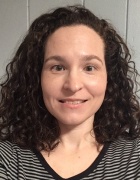
Jessica Scates: Health care providers must provide culturally engaged care. http://sphhp.buffalo.edu/global-health/about-us/our-staff.html

From University of Buffalo Reporter:

Every year, 1,500 to 2,000 refugees and asylum-seekers come to Buffalo — one of the top refugee resettlement areas in the United States — driven by social and political upheaval, war, economic and agricultural distress, and poverty.

Before they leave their homelands, they are provided health assessments, vaccine updates and any necessary medical treatment. But when they get here, it’s a different story. They often face substantial and complex problems when they try to gain access to the physical and mental health services required by them and their families.

To explore these challenges and develop models for exemplary refugee health care systems, the University at Buffalo will sponsor Buffalo’s first collaborative Refugee Health Summit on April 24 at the UB Educational Opportunity Center, 555 Ellicott St., Buffalo.

Participation in the Refugee Health Summit, which will take place from 12:30-7:30 p.m., is by invitation only. If interested in attending, contact Jessica Scates at jmscates@buffalo.edu.

[….]

It will feature major participation by Western New York’s four resettlement agencies: the International Institute of Buffalo, Catholic Charities of Buffalo, Jewish Family Service and Journey’s End Refugee Services, and by representatives of the refugee community itself.

[….]

Jessica Scates, coordinator of the OGHI, notes that as part of their orientation to Buffalo, refugees are educated about health care and health systems. “The challenge is to ready local health professionals to provide culturally engaged care to individuals from a variety of backgrounds,” she says. “Cultural education for local medical providers is especially important in addressing barriers to care, which can be complicated and difficult to resolve.”

Since there is an expanding Muslim population there, do you think they get into care for women and girls who undergo female genital mutilation?

See our archive on Buffalo, here.  See also our refugee health issues category with 209 previous posts.

Dr.Taylor Haynes, a gubernatorial candidate in Wyoming, speaks out on refugees

We have been reporting since early February on the controversy in Wyoming about opening the state for the first time to refugee resettlement—a proposal from Republican Governor Matt Mead.   All of our previous coverage is here.

Dr. Taylor Haynes

The Casper Star Tribune has been the source of many stories on the growing political firestorm and here is one more article (mostly about Dr. Haynes’ primary challenge) in which the refugee proposal is discussed.

By the way, Casper, along with Gillette, are the two cities being considered by the US State Department and its contractor (Lutheran Family Services Rocky Mountains) as resettlement sites.

Just a reminder, opposition to formal (contractual) resettlement does not bar refugees from living in Wyoming.  Legal immigrants are permitted to move around and live wherever they wish in America.

Haynes speaking about refugees from the third world:

“To make them our problem doesn’t solve their problem.”

Haynes, a medical doctor, also raises an issue that is increasingly on peoples’ minds—fear of diseases entering the US with refugees. (See our ‘Health issues’ category).

From the Star Tribune (emphasis is mine):

Gov. Matt Mead and others are learning more about refugees and evaluating options to possibly create a plan in Wyoming for refugee resettlement. Wyoming is the only state without a formal resettlement program.

Haynes opposes the idea.

“First there is a cultural language problem, which is a barrier to them being self-sufficient,” he said. “Second, there are communicable diseases from central Africa,” which is where a lot of refugees who need to resettle are from.

Communicable diseases include HIV, Ebola, Rift Valley fever, he said.

Haynes acknowledged some Americans have HIV and AIDS, “so why would you risk importing any more?”  [Refugees with TB and with HIV/AIDS are being permitted entry into the US and taxpayers are responsible for the cost of their treatment.—ed]

While plenty of people from Central America move to the U.S., learn English and become successful, Haynes said, it’s easier for them because many American citizens are fluent in Spanish and can speak to them while they’re learning English. Culturally, they’re similar to Americans, Haynes said. That’s not the case with Africans, he said.

Haynes acknowledged that in engineering school he and his classmates had popular professors from India, China, Taiwan and Pakistan.

“We’re talking about individuals who have made an effort to get the degree, they’ve made the effort to get into our culture,” he said. “These people were Hindus, Sikhs and obviously Muslims, all on the same campus. It was not an issue.”

But many refugees are not educated or prepared culturally for the United States. A Wyoming community of 35,000 cannot support 2,000 refugees.

“We can’t solve their problem by bringing them here,” he said. “We have to help them with humanitarian aid, and my heart goes out to them. To make them our problem doesn’t solve their problem.”

Read the whole Casper Star Tribune article for more on the campaign.

Dr. Haynes website is here.

Minnesota government official: Somalis signing up for Medicaid in big numbers!

Jesson: We are successfully passing their care on to the federal taxpayer!

It’s just a short piece in Voice of Alexandria.

As the Obamacare deadline approaches (whenever that is!), Somalis are signing up in large numbers for Medicaid in Minnesota thus taking the burden of their healthcare off “welcoming” Minnesota and placing it on US taxpayers.

Mosque visits were successful.

(St. Paul, MN) — Officials say efforts to enroll Somali immigrants for health coverage via Medicaid in Minnesota have been largely successful. Human Services Commissioner Lucinda Jesson says with the help of the Somali Health Solutions group, enrollment expectations are being exceeded.

She says they had a goal of enrolling 500 before the end of march and have already enrolled over a thousand and many of them in public programs. Jesson says the outreach efforts have included events at mosques and community centers throughout the state.

She says the high numbers are especially encouraging, because a recent Minnesota Health Access Survey shows that people of color are more likely than whites to be uninsured.

How many Somalis in Minnesota?

For new readers, besides the hundreds/thousands?* of new refugees being resettled in Minnesota each year, in 2012 over 2000 secondary migrants (largely Somalis) went to live in Minnesota.

By the way, this 2011 post is still one of our top posts on most days—how did we get so many Somalis in Minneapolis?

*Until recently we could see the statistics at a US State Department contracted website about how many of which ethnic group were being resettled in every resettlement city and town in America, but the feds have removed from public view those website pages at WRAPSnet.  Heck, I can’t even get on the website anymore!   Your US Senator or Congressman can request those statistics, including the religions of the refugees resettled. 


Foreign-born represent most of US TB cases

The other day we reported that refugees were being screened more seriously abroad and treated before setting foot on US soil (or that is what we are told anyway).

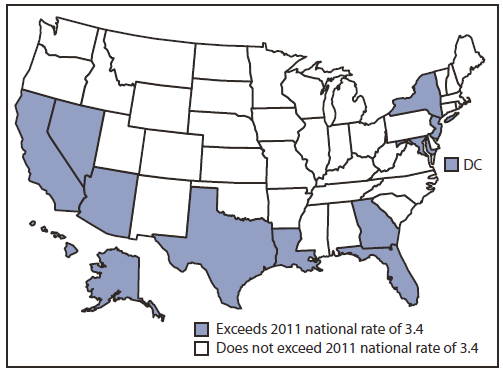
States with the highest rates of TB in the US. A few years old but still useful. http://www.cdc.gov/mmwr/preview/mmwrhtml/mm6111a2.htm

Here is yet another article on tuberculosis—Hispanics and Asians have the highest rates of TB in America.

The article goes on to say how much this is going to cost us (the taxpayers!) going forward.

From voxxi.com:

Though the rate of tuberculosis (TB) in the United States is dropping, among certain racial and ethnic groups that is not the case. According to recent data, immigrants and those who travel to other countries frequently have the highest TB occurrence.

This means Hispanics, Asians, African Americans, and non-Hispanic whites born outside of the United States carry the largest TB burden in the country.

The issues stems from high rates of tuberculosis around the globe, with the highest incidence reports coming from Eastern Europe and Central Asia. According to the World Health Organization, many of these cases–approximately 450,000–are the drug-resistant form of TB that has developed from improper medication usage and medical protocols.

Not only do we have ‘asylum seekers’ from Mexico, but the largest group of OTMs are Chinese and Indians. Are they being tested the minute they come across the border?  I sure hope we are protecting our border guards!

In the United States, foreign-born individuals had a 13 times greater TB incidence than US-born persons and accounted for 64.6 percent of TB cases in 2013. Of these, more than half originated from one of five countries: Mexico (20 percent), The Philippines (12.6 percent), India (8 percent), Vietnam (7.4 percent), and China (6.1 percent).

Almost all of the drug-resistant TB in the US is among the foreign born!

The rate of tuberculosis among immigrant populations varies slightly from the country of origin, however. Among Asians in the U.S. who are foreign-born, there is a 95 percent rate of TB infection, compared to 75 percent of Hispanics, 40 percent of African Americans, and 23 percent of non-Hispanic whites born outside the United States. Foreign-born persons also accounted for 88.4 percent of the resistant TB cases reported in 2012.

Then this struck me as very funny—minority populations will have to be concerned with the cost of treatment going forward!  What the heck!  It is the US taxpayer that will have to bear the cost of treatment!

The latest data, presented through several Centers for Disease Control (CDC) studies, suggests there is a major dilemma minority populations in the U.S. will soon have to face; cost of treatment.

[….]

Marks suggests TB treatment on average can cost around $17,000; however, drug-resistant TB is another matter, costing approximately $134,000 (rising to $430,000 for extensively resistant TB ). Adding productivity losses to treatment costs brought the estimated per case cost for treating drug-resistant TB to $554,000 per case.

See our ‘health issues’ category with 206 previous posts on health issues involving refugees and immigrants.

San Jose refugee workshop: depression keeps refugees from getting/keeping jobs

And, that makes their kids ashamed of them.  A psychiatrist will facilitate workshop to help parents cope.

Where is psychiatrist Song? Search the photo—she is crouching among the kids.

From the San Francisco Examiner (Hat tip: Joanne):

The Immigrant/Refugee Parent Project, a collaborative effort by several immigrant groups, will host a workshop in San Jose later this month to allow parents from various immigrant communities to share their challenges raising children in the United States.

The parents, many of whom have fled wars and persecution in their home countries, will have the opportunity to discuss their experiences, ask questions, meet new people and sample each other’s cooking.

Launched last year, the program is facilitated by adult/child psychiatrist Suzan Song…

No job=no respect:

Although the parents come from diverse cultures, Song noted their concerns are often remarkably similar. One common challenge is how children tend to more easily adjust to local cultures and learn English faster than their parents. This can lead to kids shaming their parents for not being more American, Song noted, adding that some parents say being unemployed makes it hard to command their children’s respect.

Song said while the parents are generally eager to find work, many refugees suffer from depression and post-traumatic stress disorder, which can make it difficult to get and keep a job. Conflicting social behaviors can be another source of friction.  [Like girls not wanting to wear the hijab!—ed]

At least these kids are ashamed (so far) with non-working parents living off the US taxpayer, unlike generations of inner-city kids who go on to lifelong dependence on welfare themselves—and pass it down to their offspring!

Keeping these refugee kids ashamed might in fact be their ticket to upward mobility!