I don’t know what it is lately but, health news is all over the place.
It sure is a good thing we have Obamacare to take care of everyone (see Obamacare for refugees, here).
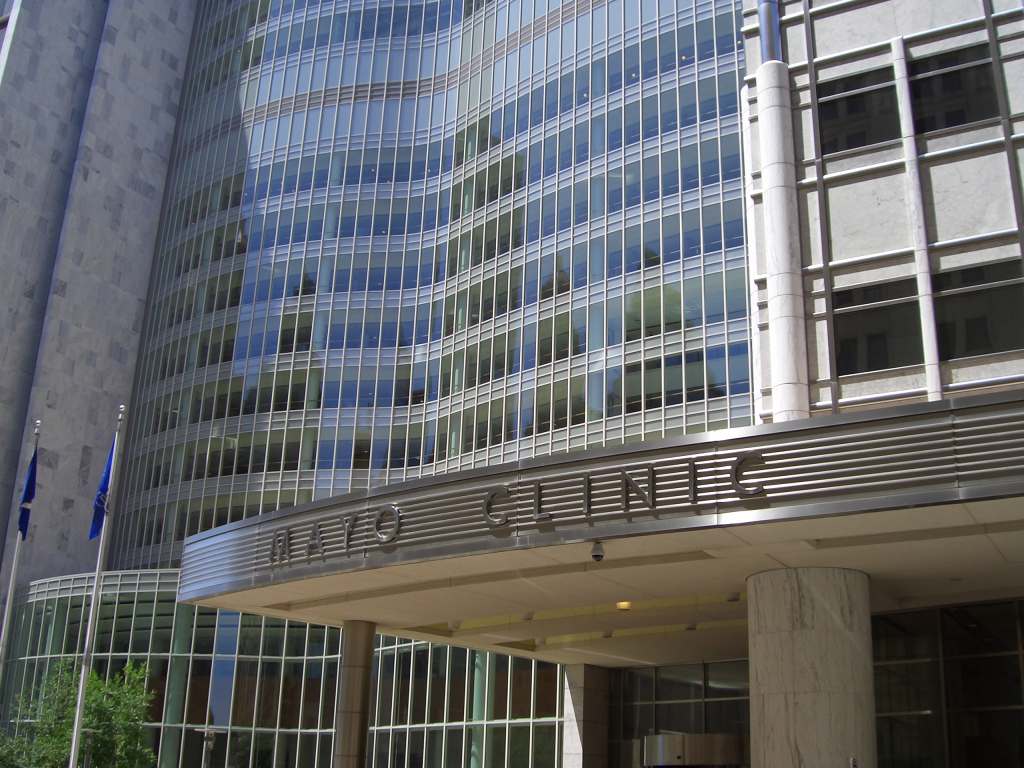
This is a bit of technical news about a study on Somalis from the Mayo Clinic in Rochester, MN:
Objective
To study the frequencies of chronic hepatitis B virus (HBV) and hepatitis C virus (HCV) infection, and their associations with hepatocellular carcinoma (HCC) in immigrant Somalis seen at Mayo Clinic in Rochester, Minnesota.
[….]
Conclusion
Both HBV and HCV occurred frequently in this sample of Somali immigrants. However, HCV was the major risk factor for HCC. Screening Somali immigrants for HCV infection may enhance the prevention, early detection, and optimal treatment of HCC.
Hepatocellular carcinoma (HCC) is liver cancer which I learned, here.
Hepatocellular carcinomas (HCC) are also known as primary liver cancers, hepatic tumors, or hepatomas.
HCC develops in the liver and affects 20,000 to 25,000 people in the United States each year.
Conditions or diseases associated with HCC include:
Cirrhosis
Heavy and long-term use of alcohol
Chronic infection with hepatitis B or hepatitis C
And, so it has with the election of Abdi Warsame to the Minneapolis City Council.
Dayton to Warsame: Your time has come
The Star Tribunehas another glowing profile of the first Somali-American (Englishman?) elected to such an important post in a major America city.
After Somali immigrants failed to elect one of their own to the Minnesota Senate two years ago, a small group of them joined supporters of the victor, Kari Dziedzic, for a campaign event in her father’s home in northeast Minneapolis.
Gov. Mark Dayton, who was there, urged the East African attendees not to give up, saying their time would come.
One of the Somali-Americans in the crowd that day was Abdi Warsame, who became the first member of his community to win election to the Minneapolis City Council this month, two decades after Somali refugees began arriving in the state.
“I felt like he was speaking to me that day,” Warsame said.
His landslide victory in the Sixth Ward race signals the rising political influence of Somali-Americans in Minneapolis and offers a window into the changing demographics that also swept into office the council’s first members of Hmong and Mexican descent.
But Warsame’s win was different from that of the other immigrant candidates, Blong Yang and Alondra Cano, in that he relied more heavily on bringing members of his cultural community out to the polls — some for the first time.
“He couldn’t have done it without other communities in the Sixth Ward, but everyone recognizes the Somali vote was important for him. It was really impressive,” said Ryan Allen, an assistant professor at the University of Minnesota who is studying Somali-Americans’ experience in the Twin Cities.
Somali immigrants have created mosques and nonprofits and gotten involved with civic life in ways that outsiders have not immediately seen, he said, and “all of that activity built a base that Warsame was able to take advantage of.”
Warsame joins Ahmed Hassan, elected the same night as he was to the City Council in Clarkston, Ga., as the highest elected Somali-Americans in the United States.
There is more, read it all. I’m still wondering how Warsame came to be an American citizen after being resettled and raised in England. You can’t just pop on over from England and become an American citizen. There is mention in the story that he has a 7-year-old daughter in Texas who he doesn’t want to talk about (he came to the US in 2006). Maybe he married his way in?
Diversity wheelbarrows! Do you think the Tampa refugees will get these through their federal grant?
Maybe, maybe not! I know a little about farming and I’m not sure even with an $85,000 grant from the US government, refugees in Tampa will be able to support and maintain much food production on 6 acres of land.
This is yet another feel-good story about refugees with no work “finding” satisfaction and “community” by growing foods they are familiar with back home inspired by none other than Michelle Obama’s pronouncement on refugee gardens—“It’s a model for the nation, for the world.”
Go here for the Refugee Agricultural Partnership Program and see if your city is getting gardening grants. The Tampa project is first on the list.
Pastors Joseph Germain and Berhanu Bekele started the garden 3 1/2 years ago. Germain led a congregation filled with refugees and noticed that many were leaving the state because they couldn’t find a livelihood.
He wanted to find a way to help them settle and find community, something often missing in resettled immigrant populations.
A little helpful background for new readers on what refugees in Tampa receive from the feds:
About 9,000 refugees live in Tampa, said Janet Blair, Community Liaison for the SunCoast Region Refugee Services Program offered through the Department of Children and Families. They come from countries including Burma, Iraq, Somalia and Sudan.
Refugees must prove to the U.S. Department of Homeland Security that they are unable or unwilling to return to their home country because of fear of persecution based on race, religion, nationality, political opinion or membership in social groups. They come to Tampa with legal status and a small set of benefits — cash assistance, Medicaid and food assistance for eight months — provided by DCF.
The goal is to enable refugees to find employment within the first eight months, Blair said. After a year, they become eligible to apply for citizenship.
At first there was admirable private Christian charity!
Nearly four years ago, Pastor Germain attended a meeting of people who work with refugees. He mentioned what he had seen in his congregation. Bekele, pastor of St. Mary’s Ethiopian Orthodox Church in Tampa, said he had 6 acres of land.
Most of the people from his congregation came from agricultural backgrounds, Germain said. It was a perfect marriage of resources. The refugees could tend a garden and plant any crops they chose, including plants from their native lands if the soil was right for it. Refugees could do what they wished with the crops, even selling them on the side if they had extra.
Bekele and Germain received $10,000 from the Allegany Franciscan Ministries, enough to buy plants, tools, chickens, sheep and goats. But foxes got to the chickens, and the grant ran out. The pastors had been essentially sustaining the garden on their own.
Who needs private charity when here come the feds!
Now the group has received almost $85,000 from the federal Office of Refugee Resettlement, a division of the Department of Health and Human Services, which has stepped up funding of community gardens across the country.
If any of you live in the Tampa area, or any other community garden getting federal grants (here), keep an eye on this project and let us know how it’s going. BTW, I wonder if this counts when immigrant advocates claim refugees are more entrepreneurial than Americans? (The latest hot open-borders talking point!)
The photo is from a post back in Maywhere we learned that similar refugee gardens had gone bust in Ft. Wayne, Indiana. No one wanted to work!
We’ve told you about this case before, it has gone on since at least 2010. Four Somali refugee men were found guilty of supporting the terror group al-Shabab (sometimes al-Shabaab) in Somalia, but now they claim their constitutional rights were trampled by the NSA.
Masjid Al-Ansar where one of the guilty men led prayers for years. Photo: Amita Sharma (KPBS)
A San Diego federal judge Thursday rejected a new trial bid by four Somali immigrants convicted of terrorism-related charges earlier this year.
Judge Jeffrey Miller disputed the men’s claims that the controversial National Security Agency surveillance dragnet violated their rights.
The case against the men was initiated after the NSA found a San Diego phone number in 2007 linked to the terrorist group al-Shabab. The number was traced to San Diego cab driver Basaaly Moalin. A jury found Moalin and three other local men guilty in February of sending money to al-Shabab. The men contended that the NSA phone records program trampled on their constitutional rights against illegal searches.
[….]
Three of the four men are scheduled to be sentenced Monday.
So now we get to take care of them in prison. How about deportation?
Except for the “maybe,” that is the title of the story in The Tennessean yesterday, but one only needs to read down a few paragraphs to learn that is not the conclusion that should have been drawn from the news—it is The Tennessean editor’s wishful thinking.
Researchers were not able to “tease out” the information sought by lawmakers—do refugees use welfare to a greater extent then the American-born population? And, no one keeps track of the taxes they pay either.
Mohamed-Shukri Hassan: We’re not looking for welfare, we want the jobs!
A new study of foreign-born refugees who live in Tennessee has found they contributed almost twice as much in tax revenues as they consumed in state-funded services in the past two decades.
But limitations of the study — an unprecedented research effort by the state — left the state lawmakers who asked for it with questions on Tuesday.
A committee of House and Senate lawmakers requested the study last summer to try to understand the impact of refugee services on the state budget. They were especially interested in whether there has been a shift in how those costs are covered by state and federal funds. [Here is our earlier report, from August, about the initiative by TN lawmakers—ed]
[….]
Making “conservative estimates,” researchers said that since 1990, the state has spent $753 million on services for refugees — including for schooling and health care — and received almost twice as much, $1.3 billion, in tax revenues from them.
But, but, but!
Researchers couched their analysis with caveats about the data collected, prompting lawmaker questions on Tuesday.
The researchers said both in the study and in answers to questions that they struggled to get some federal data and found most state agencies don’t track whether the people they serve are refugees.
There was no mechanism for tracking which services refugees used, said Krista Lee, senior fiscal analyst, requiring researchers to make certain assumptions. For example, they had to assume that refugees enroll in public schools, government assistance programs and TennCare, the state’s Medicaid program, with the same frequency as the general population.
“From the information we could find, there wasn’t anything substantial stating they wouldn’t be in a similar standing as current citizens,” Lee said.
That assumption left some lawmakers skeptical about the study’s findings. Rep. John Ragan, R-Oak Ridge, said a major impetus for the study was to tease out whether refugees are more likely to rely on government assistance.
Somali: We aren’t looking for welfare, we want the jobs!
“We’re not here for the government programs or any welfare; we’re here for the jobs,” said Mohamed-Shukri Hassan, 27, a Somali naturalized in 2009.
For ambitious readers, we have an entire category on Nashville here.
Update! Reader tomasrose gives us more information on the study:
The way this study was structured, any group that moves to Tennessee – be it, for sake of illustration, the entire graduating class from the London school of economics or the entire population of Bangladesh – will make the same incredibly high per capita net positive impact on Tennessee’s finances. The study assumes that all new arrivals will pay the same taxes and use the same amount of social services as the average Tennessean. According to this study, Tennessee would become a very wealthy state if it took all the refugees that come to America. That is more than absurd of course.