
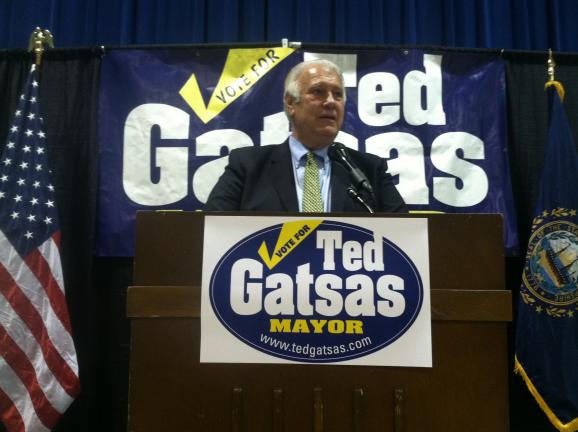
NH Mayor: Still too many refugees being placed in Manchester

We’ve written dozens of posts over the last few years about Manchester, NH and its refugee overload.  For those of you struggling with overload in your cities and towns, Manchester’s plight is instructive.  Once the US State Department and their resettlement contractors get an ethnic seed community established, it’s almost impossible to stop the flow.

In the case of Manchester, the Mayor and council went so far as to get a bill introduced in the state legislature to give them some rights to call for a moratorium if the city became too overloaded.  It failed. And, interestingly, now even some refugees are saying there are too many in Manchester and THEY CAN’T FIND WORK.  (Someone please tell Grover Norquist and the Gang of Eight—Senator Kelly Ayotte too—that there are immigrants in need of work in New Hampshire!).

From AP at the Nashua Telegraph (Hat tip: Joanne, others):

While many Bhutanese have transitioned well to life in U.S. – and they are all better off than they were in refugee camps – many, especially those older than 40, are struggling, Niroula [refugee featured in this article] said.

“Bhutanese are facing lot of challenges, because they are jobless,” he said.

The refugees aren’t the only ones having trouble coping with the transition. The growing number of refugees could be jarring for one of the least diverse states in the country. In the past decade, the number of immigrants in New Hampshire has grown by 36 percent, outpacing national growth by 6 percent.

Refugees are still a fraction of the population in the state’s largest city. A task force estimates there are 3,500 in Manchester out of a total population of 110,000. State Department figures show that between 2000 and 2010, almost 2,500 refugees were resettled in the city, just over half New Hampshire’s total during that period.

A central fear is that because services for refugees are frontloaded to their arrival, those who don’t transition well immediately are falling through the cracks. That could become costly for the city.  [Unfunded mandate?—-ed]

Mayor Gatsas: the city needs a break!

 In November 2011, Mayor Ted Gatsas, a Republican then newly elected to his second term, drew national attention after asking the State Department to stop resettling refugees to Manchester. In a recent interview, he said he still believes the city could benefit from a break in their arrival.

“We’ve got refugees in this community that don’t know the language, don’t have a job, and what I’ve been saying is let us catch our breath. Let us get these people into working society, so they’re good examples of the city of Manchester,” he said. “You can’t do that by bringing 300 more refugees on top of that.”

Surprise (not!):  Resettlement contractors don’t communicate with community!

They [Bhutanese/Nepalese] are the most recent wave of refugees to land in New Hampshire. Several thousand African and Middle Eastern refugees – mostly Iraqi, Somali and Sudanese – were resettled there in the first part of the last decade and continue to arrive in much smaller numbers.

During the last session, Gatsas led a failed push pass a bill at the state level giving municipalities the authority to enact a one-year moratorium on new refugee resettlement. Among the issues he raised at the time was poor communication between the city and the resettlement agency, though he said that relationship has improved.

Look out Nashua!  This is standard operating procedure, when the contractors get blow-back and big problems develop in a community, they simply start new seed communities not far away.

To take some of the pressure off Manchester, close to 50 will be resettled in nearby Nashua.

Contractors are keeping an eye on that other pocket of resistance—Tennessee—where there has been some success in getting the state to re-exert its right to say NO to the federal government.

Saba Berhane, director of the refugee services division with the U.S. Committee for Refugees and Immigrants, said the mayor’s request is unusual and most resettlement communities welcome refugees, despite occasional challenges. But lawmakers in Tennessee passed legislation limiting resettlement, though a moratorium provision was stricken. Most recently, the legislature there killed a bill to that would have required refugee resettlement organizations to reimburse the state’s costs related to refugees.

Manchester is overloaded! Even the refugees get it!  Why don’t the contractors?

…Bishnu Dahal, 53, said using a translator that the number of refugees is making it hard to find a job and she wouldn’t mind seeing new refugees settle elsewhere. Several others agreed.

Endnote:  We previously wrote about resettlement contractor—Carolyn Benedict-Drew—quoted in this article, here in April.

Somali family recovering with the help of Utica agencies after apartment fire

What is wrong with this picture?

From the Utica Observer-Dispatch (hat tip: Joanne):

Apartment with nine kids in it catches fire when Mom goes shopping, but, although Mom has been here since 2006, she can’t speak enough English to deal with this emergency.

Somali mom (Do I detect a baby bump? Or, just a lot of fabric?). Photo: Mark DiOrio / Observer-Dispatch

UTICA —

On Feb. 22, Johara Abdi came home to a nightmare.

Her Adrean Terrace apartment was on fire with her 4-year-old daughter Halima Haji still inside.

And the Somali-Bantu refugee didn’t know enough English to communicate with emergency responders.

“I went to go shopping. When I get here, I see a lot of fire,” Abdi said through an interpreter. “I couldn’t (communicate). It was very difficult life for me.”

Emergencies, such as fires, are terrible situations for anyone, especially for refugees and immigrants who speak little or no English.

A five bedroom apartment!  Can you imagine what that cost someone!

Abdi and her nine children, ages 2 to 17, were displaced from the five-bedroom apartment at 64 W. Adrean Terrace, by the fire, which originated in the kitchen.

Temporarily living in a four bedroom place while housing authority renovates them a bigger place.  How many bedrooms did they have in Somalia?

The Municipal Housing Authority has found them a new apartment and is in the process of renovating in, said authority consultant Bob Calli. “We’re shooting for the middle of the month to move them into the apartment.”

Until then, they are living in a four-bedroom apartment, and space is at a premium.

Then get this, the Dad isn’t living with the family because there isn’t enough room.  Or, could he have another wife in town?  Is there ever any curiosity by reporters and editors when they hear a line like that?  With nine kids (the youngest is 2!), clearly he found some time to stop by, but not enough time to be around to save the kids from a fire.

Abdi’s husband, Omar Dhume, works a minimum-wage job and is learning English. The money he earns is not enough for the family to get a larger apartment or house, and there’s not enough room for him to live with his family, he said.

This article is about the one little girl who was injured, but is recovering (who is paying her medical bills?), and Mom is worried about her.

“What’s going to happen?” Abdi asked. “Will she grow up a normal person, will she have mental problems? As a mom, I feel like she’s not the same as other kids.”

No comment.

Utica is one of New York state’s most “welcoming” cities.  I looked up all the stats for NY, and do plan to post on the numbers one of these days!  The city has taken 5,095 refugees since 2001.

Oh, great, there is more.  They are teaching the kids a Somali language and Arabic in Utica, here.

Federal officials visit refugee-overloaded Lewiston, ME: we feel your pain, but isn’t much we can do

This is a bit of old news from January that I just came across today.  I hadn’t seen it, so I figured you might not have either.

Laurence Bartlett (DOS) and Eskinder Negash (ORR) listen to complaints in Lewiston, ME. Photo: Scott Taylor Sun Journal

Seems that head honchos from the US State Department and the Office of Refugee Resettlement traveled to Maine (and elsewhere) to calm the locals.

But, how many times have we been told that everything is copacetic in Somali-overloaded Lewiston?  If everything was just peachy these two wouldn’t have bothered to go there in the first place.

From the Lewiston Sun Journal:

LEWISTON — Federal immigration and refugee resettlement policies will continue to be felt by local communities, federal officials told a roomful of city and social agency representatives Wednesday.

Eskinder Negash, director of the federal Office of Refugee Resettlement, and Larry Bartlett, director of the Office of Refugee Admissions, discussed immigration policies at Lewiston City Hall.

It was part of a two-day trip through Maine, one of many similar meetings held around the country* throughout the year. A similar meeting was held Tuesday in Portland.

Desired by whom?

Immigration policy is shaped by two factors: a desire to help less fortunate people and fiscal realities at home.

The humanitarian industrial complex wants more refugees, but it’s up to local folks to pay for it and tolerate the cultural upheaval!  That is not exactly the words used, but that is what they are saying!  To me, the “humanitarians” are like little children who want more stuff regardless if Mommy and Daddy have the money to pay for it.

When the “humanitarians” say jump, the feds ask, “how high?”

“There is no greater responsibility than that (which) we get from community leaders to make sure refugees get the support they deserve,” Bartlett said. “But there are many pressures from the humanitarian side of our country to grow this program.”

Too bad that some cities “find themselves” in a tough place!  We are willing to listen but that’s about all we can do!

Cities such as Lewiston find themselves in a tough place with little federal support when refugees begin calling it home.

“In some ways, we have a challenging program and you feel the effects on a community level, and we have to thank you for that,” Bartlett said. “We don’t have all the answers and that’s why we have these discussions to hear what the problems are.”

For local officials, the biggest problem is a lack of federal aid for education, English language and other resettlement programs.

Heck, the State Department doesn’t have money to give to communities (only to our contractors!), and it’s up to the state to decide how much money to send to struggling overloaded towns.  Sun Journal story continued:

Bartlett said his office, part of the State Department, has no programs designed to help at the local level. Negash, whose office is part of the federal Health and Human Services agency, said there is federal help, but it’s limited.

“The money goes to the state,” Negash said. “The money always goes to the state, and the state has all the discretion it needs to use the money.”

Bartlett:  We just carry out the will of Congress.  We feel your pain, but not much we can do about it.  Criticize us, but ain’t nothing gonna change!

Those funding and policy priorities are decided by Congress, the officials said.

“This is the way this country has designed this program to work,” Bartlett said. “We know it works, but it’s not perfect and we accept criticism willingly.”

Readers, if you live in overloaded refugee resettlement hotspots, you must complain to your Member of Congress and US Senators.  And, don’t be afraid of someone calling you a racist! This is one more of a long list of state’s rights issues abused by Washington.

* By the way, not long ago we reported on the ‘we-feel-your-pain roadshow’ to Ft. Wayne, Indiana.

For new readers, click here for our extensive archive on Lewiston, ME.  Be sure to see this post on Maine as a welfare magnet and the role of Catholic Charities in bringing Somalis to Maine in the first place.

For our Maine readers, your Senators Angus King and Susan Collins want MORE refugees and immigrants.  They both voted for S.744, the amnesty bill.

ORR to open regional offices to oversee resettlement of more diverse refugees, and to get them “services”

They want to “advocate for services in the best interest of refugees.”   What about the taxpayers?

Readers, I know it can be boring as heck to read about the minutia involved with the US Refugee Resettlement Program, but it’s important to have some knowledge of how the bureaucracy works.  I learn new things every day!

Former refugee Eskinder Negash, Director of ORR, formerly a VP at contractor US Committee for Refugees and Immigrants

Apparently in response to bumps in the road with resettlement, the Office of Refugee Resettlement in the Dept. of Human Services will soon open five regional offices.  The offices will help guide the myriad agencies involved in getting services (welfare benefits) and such to refugees.  And, it is assumed, to help stem the growing tide of resistance by communities which cannot afford more impoverished refugees.

Thanks to a reader for directing us to Eskinder Negash’s most recent letter to State directors and other “stakeholders” (I hate that word).

If you are new here, you might want to see our updated ‘Refugee Resettlement Fact Sheets’ linked above in our header.  We also have a ‘where to find information’ category.

This is the letter (in its entirety) posted at ORR’s website.  Thanks to a reader for directing us to it.

TO: State Refugee Coordinators
State Refugee Health Coordinators
National Voluntary Agencies
ACF Regional Administrators
Other Interested Parties

FROM: Eskinder Negash
Director
Office of Refugee Resettlement

SUBJECT: Office of Refugee Resettlement (ORR) Regional Offices

Background

Since 1980, when Congress created the Office of Refugee Resettlement (ORR), the mandates of ORR and consequently, the resettlement network have expanded.  While ORR historically resettled a wave of refugees at a time, from a specific country, due to a specific conflict, today ORR resettles refugees from over 60 different countries of origin in a given fiscal year.  ORR now also serves asylees, special immigrant visa holders from Iraq and Afghanistan, certain Amerasians, victims of trafficking, survivors of torture and unaccompanied alien children.  Over the past 30 plus years however, although ORR’s populations, programs and grantees have expanded, ORR’s office and staff predominantly remain centralized in Washington, DC.

Through sections 412(a)(2)(A) & (B) of the Immigration and Nationality Act, Congress showed its intent of having ORR regularly consult with state and local governments and nonprofit voluntary agencies concerning the sponsorship process, strategies for placement, and policies for refugee resettlement.  Additionally, the Government Accountability Office (GAO) in its most recent report “Greater Consultation with Community Stakeholders Could Strengthen Program” echoed the sentiment of Congress by emphasizing the importance of outreach and engagement at the local level, and specifically recommending that the Department of Health and Human Services (through ORR) collect and disseminate best practices related to refugee placement and engagement with community stakeholders.  Moreover in State Letter #10-09, ORR named outreach as one of the six guiding principles to effective resettlement, specifically outreach to various organizations and stakeholders, to identify opportunities for collaboration in the best interests of refugees.

ORR is located within the Administration for Children and Families (ACF).  ACF operates ten regional offices to oversee the administration of ACF programs such as Temporary Assistance for Needy Families (TANF), Child Care, and Head Start, in a given jurisdiction.  ORR is one of only several remaining offices within ACF that does not have a regional presence to oversee the administration of one of its main programs.  In 2006, ORR’s Unaccompanied Alien Children (UAC) program began operations with a field presence.  Today the UAC program has 23 Federal Field Specialists in six states across the country where UAC shelters and programs are concentrated.  In terms of refugee programs, over the past few years, ORR has endeavored to increase consultation and engagement with regional stakeholders, by promoting collaboration between ACF Regional Administrators and the resettlement network, and by introducing the resettlement network to ACF regional programs.

Today, the refugee resettlement program faces new opportunities and challenges some of which include: accessing and maximizing benefits for refugees under the Affordable Care Act and operating under a tightened fiscal environment.  In order for refugees to succeed, it is vital to strengthen the resettlement program; to have strong advocates at the federal, state and local levels educate mainstream social service agencies and governments about ORR populations, and convene meetings to promote linkages with mainstream stakeholders.

ORR Regional Offices

After thoughtful consideration, ORR has decided to establish regional offices.  ORR regional offices will be physically located within ACF regional offices.  With a regional presence, ORR can partner with State Refugee Coordinators, State Refugee Health Coordinators and Ethnic Community Based Organizations to advocate for refugees; specifically ORR can work to educate stakeholders, promote collaboration, gain knowledge to inform policy and advocate for services in the best interests of refugees.  [Who is going to advocate for the taxpayers?—ed]

ORR will open up to five regional offices in Atlanta, Chicago, Dallas, Denver, and San Francisco (and potentially additional regional locations).  ORR staff will serve as regional representatives and will work with most states within that ACF region (see ACF Regional Map).  The ORR regional representatives will report to the Division of Refugee Assistance (DRA) within ORR.

Please direct any questions on this State Letter to Mitiku Ashebir, Division Director of DRA at mitiku.ashebir@acf.hhs.gov or Ken Tota, ORR Deputy Director at kenneth.tota@acf.hhs.gov.

Where are they sending refugees?  Will your town be next?

Last month I attended an ORR meeting in Lancaster, PA and Mitiku Ashebir referenced a meeting in July between the US State Department and the ORR and he called it a “joint quarterly placement meeting.”  I said this in my post:

….the feds are having ORR-PRM joint quarterly placement meetings.  The next one will be in July.     Before any new site is opened (usually because some contractor thinks it would be a good place), ORR-PRM will visit the site together and decide if it will be “welcoming.”

I have twice e-mailed Mr. Tota to ask where and when the meeting will take place and have had no response.

Ft. Morgan, CO article discusses the challenges of refugee overload

No jobs! Disrespect for rental property! Don’t speak English! Need more child care! Not enough housing for refugees!

Back in 2008 we wrote about “welcoming” Ft. Morgan, CO home of agribusiness giant Cargill.  By the way, do you think Senator Jeff Sessions was referring to Cargill when he said the meat packers were driving the S.744 train and the Gang of Eight (cheap immigrant labor!), here?

If so, since there are so many unemployed refugees, why do we need more immigrant labor?

Cargill Meat Solutions in Ft. Morgan, CO. I’m now wondering if the meat packer giant, probably the largest employer there, controls the newspaper.

A few years ago, Somali refugees which had caused problems in Greeley and were fired  by JBS Swift after a row over prayer times during work  began flowing to a thrilled-to-have-them Ft. Morgan (or at least the Ft. Morgan Times was thrilled).

Here is one of many many posts on Somalis shopping for the most accommodating meat packers.  We have a whole category on Greeley, JBS Swift and Somalis, here.

In 2008, the Ft. Morgan Times actually editorialized saying that Refugee Resettlement Watch (not by name, but who else would it be), was a blog teaching people how to chase refugees away, and represented the “dark ugly underside” of America.  Click here for my take on their broadside.

Here is what the editor said about us!

Of course, if it were up to some people, Somali refugees would not have a chance to resettle anywhere in the U.S. There is even a Web site devoted to teaching Americans how to chase refugees of various sorts out of town.

This is a kind of insanity, since everyone except Native Americans are immigrants. Unfortunately, it shows the dark, ugly underside of our great country.

Just now, in trying to figure out how to post this latest news from the Ft. Morgan Times, I realize we have dozens of posts on the problems Ft. Morgan has had with its refugee overload going back five years (click here for the whole listing).  There were tensions in the community, in 2010 they brought in Justice Department community facilitators,  the Chief of Police went to Denmark to learn how to deal with Somali Muslim refugees, there was even a Somali honor killing.  I had never heard of the federal facilitators before Ft. Morgan, had you?  Here is what the article in the Ft. Morgan Times said then:

Essentially, it is a mediation agency which helps deal with cases involving changing community demographics, hate crimes, demonstrations and emotionally charged issues…

Fast forward to last week:

Based on this story in the Ft. Morgan Times, it sure sounds like, ho-hum, the town is still having problems with its Cargill-generated immigrant overload. (Hat tip: Joanne).  But, Cargill doesn’t have enough jobs for all the immigrants so that is the rub (why then do we need more immigrant laborers as per S.744?).

A quarterly meeting was hosted by the following:

Joe Wismann-Horther of Colorado Refugee Services, OneMorgan County Executive Director Brenda Zion and Ryan Gray of Lutheran Family Services Rocky Mountains hosted the quarterly refugee services meeting Tuesday.

The news report is written like it’s just someone’s lengthy notes of the meeting.  Here are some of the points that interested me:

* Refugees don’t speak English so go unemployed and they take lousy care of rental property.

Among issues mentioned were the need for properties to be taken better care of, day care for refugees, support for business development and employment.

Outside of jobs at Cargill Meat Solutions, there are few local jobs for refugees who do not speak English very well.

One idea is to look at how to develop job skills and how to work with Fort Morgan’s Workforce Center, said Joe Wismann-Horther of Colorado Refugee Services.

Local agencies and businesses could discuss how to develop employment options for refugees who do not work at Cargill.

Cargill only has a limited number of jobs, said Shirley Penn, coordinator for Cargill’s and Morgan Community College’s Workplace Education program.

[….]

It is difficult for refugees to take classes in business when they do not have high-level English skills, said OneMorgan County Executive Director Brenda Zion.

[….]

Some refugees do not understand what is expected with properties they rent, such as weed control, said Fort Morgan Police Chief Keith Kuretich.

* Colorado Refugee Services rep says more refugees are coming because after ten years they can bring family.  What the heck? They can bring family anytime, they need not wait ten years.  What he is obliquely referring to here is that Somalis were banned from 2008 until recently to bring their “family” members because the State Department uncovered massive fraud in 2008.  Gee, about 30,000 were not family members!  They had lied. Either the reporter didn’t know enough to clarify what was said by Wismann-Horther, or it was purposefully left out of the story.

The city may see a new development for refugees soon, as they are in the U.S. for 10 years and can start bringing relatives from their native countries, he said.

The U.S. refugee program is overseeing that possibility by requiring DNA testing to make sure people really are relatives, Wismann-Horther said.   [At this point wouldn’t you think someone would ask/report to the public what that is all about!—ed]

* We only allow refugees from certain countries for a limited time—say what!  There is no rule about this, I personally think that contractors are out scouting for new ethnic groups because they tire of the ones they have been resettling after a time.

And, Wismann-Horther is wrong about Somalis, we are bringing a very large number this year. We are on target to rival the top years (during the Bush Administration) with possibly 9,000-10,000 if the present trend continues.

He said that immigration from places like Bhutan and Burma are falling off now, as have immigrants from Somalia. The U.S. refugee program only allows people from countries for a limited amount of time.

Wismann-Horther told the gathering to get ready for the Congolese as the “next stream.”    We know—50,000! Are you ready for your share, Colorado?

* Surprise! Not enough housing for all the refugees.

A huge issue is the “zero vacancy rate” in Fort Morgan, she [Board of Realtors Director] said. New people come to the city and cannot find anywhere to live.

Wismann-Horther at that point goes on about possibly building new housing (for jobless immigrants who are having problems keeping their present properties maintained?)

The article goes on and on, you can read it all here.

Signing off from the dark ugly underside of America!