No meds for ill Canadian child as demands rise for refugee applicants to receive health care

One of the most troubling questions for community members in a city or town where large numbers of refugees are arriving is—why are we doing this when we have our own needy people not being cared for?

I hear it all the time.  It goes something like this: ‘we have people (Americans/our neighbors) going hungry, homeless in the streets, or the elderly in need of attention and care and yet we can bring in tens of thousands of impoverished people from elsewhere in the world?  Why are our own needy so much less attractive?’

That is the question being asked in Ontario, Canada as Canadian health care can not afford Madi Vanstone, but are being pressured to care for refugee “claimants” who may or may not even be granted asylum.

Madi Vanstone’s meds vs. refugees’ meds?

Can you say “death panels” in Canada’s health care system?

Thanks to reader Joanne, here is the story at the Toronto Sun (emphasis mine):

TORONTO – Little Madi Vanstone is one beautiful child — with a major health problem.

The 12-year-old has a rare form of Cystic Fibrosis (CF) and requires a life-saving drug, Kalydeco, to keep her breathing.

The big problem is the drug costs $348,000 a year — and it’s not covered by OHIP.

[….]

Madi’s dad, Glen, a pipefitter, has insurance benefits that pay for 50% of her drug bill. The drug manufacturer picks up 30% — but that leaves the family paying $5,770 a month to keep their daughter alive.

[….]

They [the community raised money—ed] did what Canadians have done for generations — pulled together to help a child in need.

That’s what makes Monday’s announcement by the provincial health ministry so galling.

This province is trying to shame the feds into reinstating care for refugee claimants.

Really?

We can’t even afford life-saving drugs for a child who has lived in this province all her life. Whose family has paid taxes for generations.

But in a foot-stamping, blame-the-feds act of cynicism, apparently we have enough money to pay for health care for refugee claimants.

[….]

….the province adamantly won’t pay [for Madi—ed].

But we do have enough money to pay the very generous Ontario Drug Benefit Plan (ODBP) for people here as refugee claimants and those awaiting deportation.

Are we nuts?

And, here it is—one more sensible question from citizens regarding pressure from Canadian Doctors for Refugee Care. If these doctors care so much for the refugees why can’t they treat them for free!

Let refugee claimants hold bake sales for their health care, as Madi’s family has done.

….. Dr. Phillip Berger, of St. Michael’s Hospital and a member of Canadian Doctors for Refugee Care, said sick children and pregnant women can’t get care and cancer patients are denied chemotherapy.

If doctors care that much, they can treat refugees for free.

There is more, read it all (click here).

Update!  Doctors for Refugee Care win in Ontario—refugee healthcare reinstated.

Ah the challenges! Getting Somalis to sign up for MNsure

Paul Bunyan and Babe the Blue Ox, symbols for MNsure. Immigrants want to know who the heck they are!

MNsure, of course, is Minnesota’s Obamacare exchange.   They are looking for the young, healthy, legal immigrants to make it work.  The part I don’t get is, how is it going to help premiums for all if the immigrant is unemployed and will likely just be pushed onto Medicaid?

Here is the news from Minnesota Public Radio about how to get tens of thousands of Somalis signed up:

The Somali 24 Mall and mosque in Minneapolis is a serpentine maze of stalls, where merchants selling sandals, cell phones, prayer rugs and pots try to lure the throngs of shoppers.

Most days you won’t find health insurance among the wares. But that’s what Asli Ashkir was trying to sell recently — in Somali and English.

Ashkir isn’t an insurance agent. She leads Somali Health Solutions,* an organization designed to introduce people to MNsure, the state’s new online health insurance marketplace.

Minnesota is home to at least 83,000 uninsured immigrants who may be eligible for health coverage through the state’s new insurance marketplace. But convincing them to use the new exchange is proving to be a communications challenge.

“The government will be at your side…..”

Ashkir’s organization has crafted a decidedly Somali outreach plan that includes telephone and in-person assistance in Somali. On her visit to the mall, Ashkir enlisted the imam in the mall’s mosque to talk about the program during the midday prayer.

“Whatever the Imam says is highly respected,” she said. “He is the leader in the religion.”

Setting up shop at the mall also was strategic. On Fridays, when few Somalis work, the shopping center attracts young, uninsured men — a demographic that’s critical to the economics of the exchange.   [They would have to be employed men with a decent salary to make it work! Right?—ed]

Hassan Abdi of Minneapolis followed the imam’s advice and stopped by. Abdi, who is unemployed, dropped his health insurance earlier this year because it cost too much and covered too little. He had not heard of MNsure and wanted to know the cost.

“Sometimes, it’s difficult to get the insurance that covers all of your needs,” he said.

Price is a chief concern among the people she’s talked to about MNsure, Ashkir said.

“But there’s help available from the federal as well as the state, that’s what we keep telling them,” Askir said. “You will be supported if you don’t make enough. The government will be at your side to help you. Then, they like that.”

About the photo:  Minnesota Public Radio says that symbols chosen for MNsure’s logo are unfamiliar to most immigrants.  No kidding!

*By the way, I tried to find some financials for Somali Health Solutions, but could not.  I couldn’t even figure out in my cursory search if they are a non-profit organization.

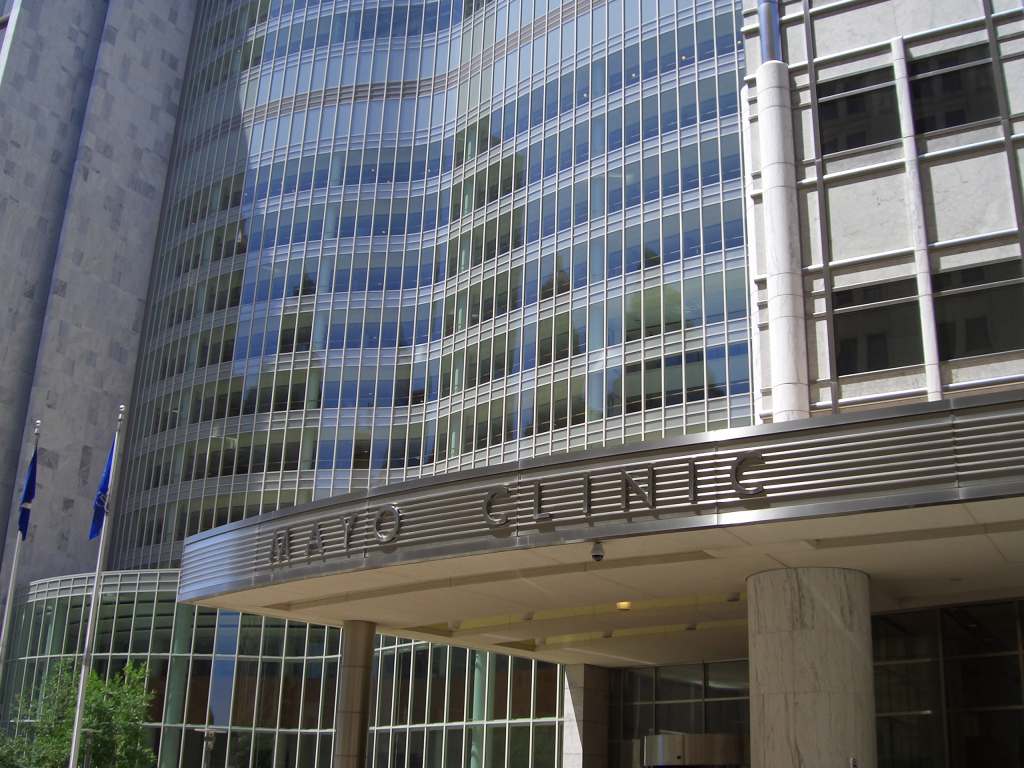
Mayo Clinic: Somalis should be screened to head off liver cancer

I don’t know what it is lately but, health news is all over the place.

It sure is a good thing we have Obamacare to take care of everyone (see Obamacare for refugees, here).

This is a bit of technical news about a study on Somalis from the Mayo Clinic in Rochester, MN:

Objective

To study the frequencies of chronic hepatitis B virus (HBV) and hepatitis C virus (HCV) infection, and their associations with hepatocellular carcinoma (HCC) in immigrant Somalis seen at Mayo Clinic in Rochester, Minnesota.

[….]

Conclusion

Both HBV and HCV occurred frequently in this sample of Somali immigrants. However, HCV was the major risk factor for HCC. Screening Somali immigrants for HCV infection may enhance the prevention, early detection, and optimal treatment of HCC.

Hepatocellular carcinoma (HCC) is liver cancer which I learned, here.

Hepatocellular carcinomas (HCC) are also known as primary liver cancers, hepatic tumors, or hepatomas.

HCC develops in the liver and affects 20,000 to 25,000 people in the United States each year.

Conditions or diseases associated with HCC include:

Cirrhosis
Heavy and long-term use of alcohol
Chronic infection with hepatitis B or hepatitis C

CDC: Majority of US cases of TB in 2012 among the foreign-born

TB Surveillance Report

A Tennessee reader sent me the 2012 report from the Centers for Disease Control and Prevention about the incidence of Tuberculosis in the US.

It is interesting to note that although the number of cases has dropped slightly from 2011, we still had 9,445 cases in the US and 63% of them are among the foreign-born population.  (It sure is a good thing we have Obamacare to take care of the expensive meds for all these people!—right?)

Also of interest is that the states which have the highest number of refugees—California, Texas, New York, and Florida—also have the most TB cases (although the largest number of cases are from Mexico! not from the top-sending refugee countries).

Here is a bit from the Executive summary:

In 31 states, ≥ 50% of TB cases occurred among foreign-born persons (Table 34).
In 8 states, ≥ 70% of TB cases occurred among foreign-born persons (Table 34).
In 3 states, ≥ 75% of TB cases occurred among foreign-born persons (Table 34).
In 10 states, ≥ 75% of TB cases occurred among foreign-born persons (Table 34).

Scroll to the bottom of Table 34 and note that Wyoming, which takes no refugees! and is likely the least diverse state in the country, has the fewest cases.   BTW, Vermont which has here-to-fore been the least diverse state (and still may be) won’t be for long because the refugee contractors are busy resettling refugees there.

Also from the summary:

In 18 states (Arizona, California, Connecticut, Hawaii, Idaho, Kansas, Maryland, Massachusetts, Minnesota, Nevada, New Hampshire, New Jersey, New York, Oregon, Utah, Vermont, Virginia, Washington), ≥ 70% of TB cases occurred among foreign-born persons

When you visit Table 6, note that Mexico is the top sending country for TB to America.  And, of course the Mexicans are not arriving as refugees but as illegal aliens.

Does anyone know if when they do those questionable studies of how much immigrants contribute to the local economy whether they factor in the cost of treating difficult diseases?

And, when refugees and migrants move around the US, does anyone track them to be sure they stay on their TB meds?  Maybe it’s in the full report, here (200 plus pages), but I didn’t read the whole thing.

Update:  Superbugs could erase a century of medical advances, here.

Next big health issue for refugees—drug-resistant Malaria

Refugees being treated on the Thai border. Photo: Mae Tao Clinic

Burma and the Mekong River area of Southeast Asia is the breeding ground.

From The Irrawaddy (emphasis mine):

WASHINGTON — US experts are raising the alarm over the spread of drug-resistant malaria in Burma and several Southeast Asian countries, endangering major global gains in fighting the mosquito-borne disease that kills more than 600,000 people annually.

While the communicable disease wreaks its heaviest toll in Africa, it’s in nations along the Mekong River where the most serious threat to treating it has emerged.

[….]

The report warns that could be a health catastrophe in the making, as no alternative anti-malarial drug is on the horizon. The UN World Health Organization (WHO) is warning that what seems to be a localized threat could easily get out of control and have serious implications for global health.

“Absent elimination of the malaria parasite in the Mekong, it is only a matter of time before artemisinin resistance becomes the global norm, reversing the recent gains,” writes Dr. Christopher Daniel, former commander of the US Naval Medical Research Center, in the report for a conference at the Washington think tank Tuesday.

[….]

Nowhere are the challenges in countering the threat to drug-resistance greater than in Burma. Some 70 percent of its 55 million people live in malaria-endemic areas, and as a nation, it accounts for about three-quarters of malaria infections and deaths in the Mekong region, the report says.

[….]

It’s an issue of regional concern as Burma has large transient populations in its border regions, including ethnic minorities displaced by fighting and migrant workers who cross borders.

There is more, read it all.

The US resettled 16,299 Burmese refugees to your towns and cities in fiscal year 2013 alone (second only to the number of Iraqis which topped 19,000), click here.  Were they all tested?

Update:  Superbugs could erase a century of medical advances, here.