Pittsburgh: Language barriers complicate refugee mental health treatment

A radio station reporter has discovered that Pittsburgh, PA has taken a lot of refugees in need of health treatment (including mental health treatment) that they may not be getting.  I’ll bet it’s happening where you live too, and partly because no one is available to translate for the mental health provider.

Esar Met was not normal in the camp. If a reporter figured that out, surely the US State Dept. knew.

The issue of cities and counties being responsible for appropriate interpreters came up the other day when we wrote about the Utah murder case where the Salt Lake City police must have figured any Burmese person would do to communicate with the newly arrested Esar Met.  Met is a Muslim, probably a Rohingya.  If he is Rohingya he speaks a Bengali dialect.

So, think about it, according to federal law, local governments are required to provide interpreters, not just in law enforcement cases, but when helping refugees get the appropriate medical treatment and in the hundreds of languages and dialects spoken by refugees.

Increasingly, we are hearing of mental health problems in the refugee community going unattended.  Add the cost of all this (treatment and translators) when determining if yours is to be a “welcoming” community for refugees.

The US State Department resettles refugees with mental problems as they surely knew Esar Met was not normal.

In the Utah rape/murder case an article in the Salt Lake Tribune in 2008 tells us this about the accused murderer (below).  Interestingly his mother did not want to come to America, but the US State Department figured Met would make a good addition to a multicultural America—help diversify Utah!

A challenged son » About a mile away, people at Mae La knew Esar Met was not normal. He often sat alone, talking and laughing to himself in the Muslim section of the camp where his family lived. Or he played with children years younger, shooting rubber bands in the camp’s narrow lanes, flicking marbles across the rocky, dirt patches that were his neighbors’ yards.

He was the eldest of eight children, but when he argued with his younger brothers, he was the one to cry.

As a boy, he could not remember what he learned in class. His mother, Ra He Mar, knew her son was not very smart and worried he might become even slower as he grew older. After he had to repeat second grade, she let him drop out of school.

Friends told her the family should find someone to “check his brain,” but Esar’s parents thought they couldn’t afford to have him tested.

I’m surprised there is no insanity plea in the case yet, maybe it is still coming.
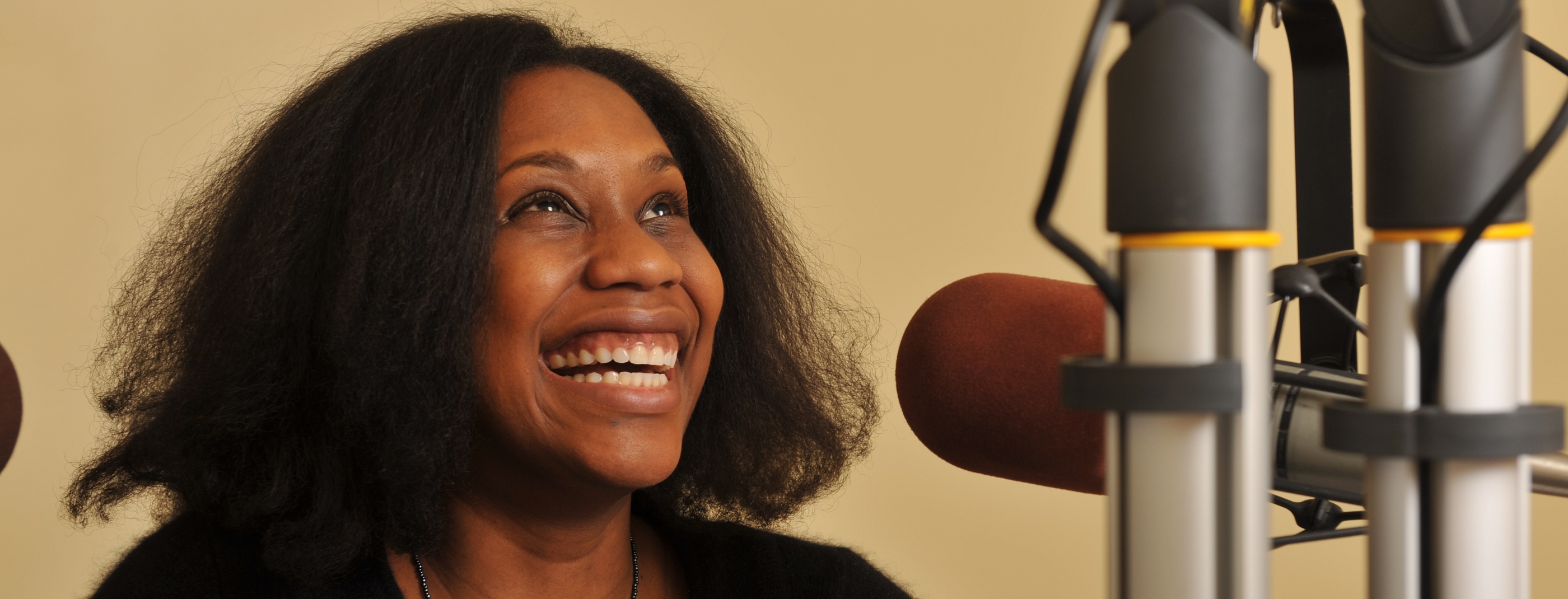
Reporter Erika Beras: no system in place when refugees are new to the town.

Back to Pittsburgh where there is NO SYSTEM IN PLACE for dealing with mental health issues and language barriers.

From 90.5 WESA (NPR in Pittsburgh), thanks to reader Joanne:

Refugees to the region face a number of challenges, unfamiliarity with a different language is even more complicated when trying to obtain health care.

90.5 WESA Behavioral Health Reporter Erika Beras is embarking on a month-long series on the challenges refugees face in the Pittsburgh area to obtain health care. She says her interest in the topic was sparked by the high population of refugees in Pittsburgh.

“The refugee community here has grown and grown. And in that time I’d been talking to providers and I’d been in different situations at specialty courts and I keep hearing stories about different refugees who have come in with different issues and how people are struggling to meet their needs. They don’t quite have a system in place after the first few months a refugee is in town.”

Mental health challenges throughout the US:

As Project Editor for the Reporting on Health Collaborative, William Heisel also finds the system to be often unprepared or overwhelmed by immigrant mental health cases.

“When you’re talking about refugees, they’re coming with acute needs…Refugees are coming from conflicts that most of us will never experience and so they, in addition to having the trauma they need to get over, they have language barriers that make it difficult for them to access health care, many of them have low income status, they’re disconnected from their communities and so we are seeing this throughout the U.S. as a pretty big challenge.”

So who is responsible for refugees when they first arrive in Pittsburgh?   Catholic Charities, Jewish Family & Children Services and AJAPO (Acculturation for Justice, Access & Peace Outreach) (here).   Ms. Beras needs to start her investigation right here—with these three federal contractors.

For ambitious readers, this is our 190th post on health problems and refugees.  See Health issues category here.

Centers for Disease Control attempts to keep Americans safe as refugees enter US

When I wrote the post yesterday about Syrian refugees carrying polio to surrounding countries, I went off on a google search of other medical problems relating to refugees (something we have written a lot about in previous posts in our health issues category).

I was especially interested in intestinal parasites as just the day before a friend told me how the presence of parasites can cause all sorts of other health problems not considered initially connected to the parasites.    I see that the Centers for Disease Control has an entire section of its website devoted to health issues involving refugees, here (Immigrant and Refugee Health).

The tapeworm diet—stay slim with intestinal parasites!

As for those parasites, the CDC has guidelines for treatment before the refugees even enter the US, but that they are not always followed:

These guidelines are recommendations for the International Organization for Migration (IOM) physicians and other panel physicians who administer overseas predeparture presumptive treatment for intestinal parasites. While most recommendations have been implemented, not all refugee populations listed in this document are receiving all recommended pre-departure medications, due to funding restrictions and logistical challenges.

I’m presuming that the federal refugee contractors (and their approximately 300 subcontractors) are training all of their volunteers about health safety precautions when dealing with newly arrived refugees who may have TB, HIV/AIDS, polio, or parasites to name just a few highly communicable health risks.

Obesity in Somali women noted in Swedish study

Unrelated to the CDC, but not worth a whole post on it’s own, is this medical news from Sweden. Somali women get fat on western diet, have low self-esteem, feel alienated from society and have a higher risk of heart attacks.

The last-decade incidence of myocardial infarction (MI) has diminished dramatically in most age groups but not in middle-aged women in Sweden. There has been a large influx of immigrants and it has been shown that immigrant women have a higher BMI and are less physically active than Swedish women.

[….]

The study revealed that Somali migrated women in Sweden had changed their diet and experienced weight increase. They reported low self-esteem and little motivation for physical activity. They understood that they had a higher risk for heart disease as compared to Swedish women and they had, in general, a preference for big body size. The women of this study are, in combination with other risk factors, at a high risk of myocardial infarction. They all revealed a general knowledge about the relationship between obesity and inactivity and enhanced risks for heart disease. They had a preference for a larger female body image. They expressed low self-esteem, loneliness, and alienation from society.

Since the study was so small, the recommendation is for a larger study.   I think we can assume, however, that parasites are not the primary cause of the women’s health problems in this case.

The cartoon is from this article about the dangers of tapeworm dieting!

Polio coming out of Syria with refugees; UN to blame?

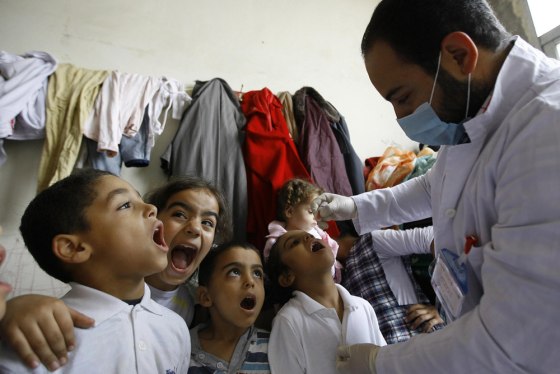
Syrian refugee kids get polio vaccine in Lebanon
Mohammad Zaatari / AP

Refugees from rebel-held areas most vulnerable.

The New York Times published this opinion piece from medical professionals about the likelihood that unvaccinated Syrians will bring polio with them to neighboring countries.   They place the blame on the UN.

From the NYT (Syria’s raging health crisis):

 Across Syria, coverage went down to 60 percent in 2012, and was as low as 50 percent in the embattled eastern city of Deir al-Zour, a front line between government and rebel forces. The latest W.H.O. figures from 2013 show that the level is now down to 36 percent in largely rebel-held Deir al-Zour Province, although it has remained at 100 percent in government-controlled areas such as the western stronghold of Tartus.

Given these conditions, it was no surprise to medical practitioners that a polio outbreak occurred. The question is why the international community did not prepare better for this eventuality. A disturbing part of the answer is that the United Nations itself has aggravated the situation.

Like other United Nations agencies, the World Health Organization works directly with the Syrian government. The W.H.O.’s Syria office is in the Ministry of Health building in Damascus; many of its staff members are former ministry employees. A recent Reuters report on how the Assad government uses red tape and threats to prevent the provision of aid in opposition areas has raised doubts about the ability of the W.H.O. to act with impartiality.

The W.H.O., working with the Syrian government, excluded Deir al-Zour from a polio vaccination drive that began in December 2012. According to the W.H.O., the province “was not included in the campaign as the majority of its residents have relocated to other areas in the country.” Ten months later, this was the province where polio re-emerged.   [I think the greater likelihood here is that no aid workers wanted to risk their lives with the Islamic militants who don’t want children vaccinated.—ed]

There is no evidence that most of the province’s one million residents had, in fact, migrated. The United Nations World Food Program continued to distribute food there throughout 2012 and 2013 (with occasional interruptions because of worsening security conditions). In December 2012, the agency reached 69,000 people in Deir al-Zour.

Last month, an investigation by the German weekly newsmagazine Der Spiegel charged the W.H.O. with obstructing the testing of polio samples from the Deir al-Zour region. These samples had been presented by an agency working under the aegis of the Syrian National Coalition. It took nearly a month to get the test results — positive for poliomyelitis — and then only from an independent provider in Turkey. By that time, thousands of displaced people had moved within Syria or fled as refugees to neighboring countries, most likely spreading the disease.

There is more, read it all.

The photo is from this story at NBC News from November.  It is worth reading.

Just a reminder, we have a ‘health issues’ category here at RRW with 187 previous posts about refugee health problems.  A couple of recent posts in the category address the growing concern about Syrians with polio.

Burmese refugee: All I want for Christmas is my HIV/AIDS drugs

My alerts are filled with news of charitable groups giving Christmas parties and other gift-giving events for the ‘holiday’ season.  I’m fully convinced that we have no more poor Americans remaining.  When I grew up it was all about Appalachia.  But, I guess those folks have moved on up.  Or, as fans of Nascar and Duck Dynasty, they aren’t so attractive to the do-gooder crowd.

This article from Tulsa, Oklahoma says the 5,000 Burmese who have arrived there since 2007 are living “on the fringe” which makes me wonder how we keep hearing that 80% (or more) of refugees have become self-sufficient within their first year in America.

Here is the news from Austin, Texas about the needy Aung Min family.  Hat tip: Joanne.

They want a another baby and they need to keep Dad free of HIV/AIDS long enough to conceive one!

Uka has to stay HIV-negative long enough to conceive a sibling for Okee. Nice shoes!
Photo:Ralph Barrera The Statesman

Uka Aung Min spent two days resting on the floorboards of a car, trying to be invisible. He would take little sips of water and eat only a little bit after dark. As a student protester, he was no longer safe in Burma.

The car took him from Burma, also known as Myanmar, to Thailand and then Malaysia, where he would spend 11 years in a refugee camp. There, he met his wife, Naw.

Now this makes no sense.  Because he was HIV-positive he was allowed to come to the US, but the pregnant wife was left behind?  And, if refugees are becoming self-sufficient, how on earth did he wander homeless from Alaska*** to Texas.   Was no one, no contractor, monitoring his care and his meds?  Wasn’t the whole reason he was given a ticket to America was to get his HIV drugs?  Does no curious reporter wonder how this is possible?

After Naw became pregnant with daughter Okee, Uka Aung Min, 32, learned he was HIV-positive. With no medicine available to him in the refugee camp, he was allowed to become a refugee to the United States.

First he settled in Alaska, and then he came to Austin. At times he was homeless, but eventually he was able to move his family here and meet Okee, who is now 2, for the first time.

Goodies are flowing in, but they need money for HIV/AIDS medicine! (For rent, utilities, internet etc. as well!)  Didn’t we learn that the whole reason Uka Aung Min got into the US was so he would be treated for AIDS?

Since being featured in the Statesman (Season for caring) program, the Aung Mins have received a couch and love seat, beds from Factory Mattress, dental care from Aloha Dental, an iPad and bookshelves.

They still have a lot of needs: rent and utilities assistance; a car; day care for Okee to enable Naw, 36, to attend English language classes in January; Internet service; dressers; dining room furniture; and a toy box. They also would love help paying for medicines to keep Naw HIV-negative while conceiving a brother or sister for Okee. Gift cards for clothing, groceries and gas would be appreciated. Okee loves to draw, and they would like to give her crayons and paper.  [Crayons and paper have got to be cheaper than those high-heeled shoes for a two-year-old!—ed]

So where was Catholic Social Services of Alaska when it came to monitoring Uka?

***I wondered who might be responsible for letting Uka Aung Min wander America and become homeless without AIDS drugs and it sure looks like it was Catholic Social Services of Alaska.  LOL!  They claim to have a self-sufficiency rate of 79%.  Was Uka’s AIDS so bad he couldn’t work? Is he working now?

The resettlement contractors will be quick to tell you that this is America and people are allowed to move without checking in with anyone, however, this story just reminds us that there are refugees with communicable diseases (like HIV/AIDS and TB) who are moving around with no one monitoring whether they are staying on their meds!

For more on refugee health issues, check out our category here with its 186 previous posts on the problems!

Minnesota study: autism hits Somali kids harder, IQs lower

Heretofore it was assumed that Somali kids in the Minneapolis area had a higher rate of autism then white kids, but this new study says the difference is slight.   Our earlier postings all focused on Somali community activists blaming America for autism that they claim they never had in Africa—like the whole vaccination controversy that has been pretty much debunked in scientific circles. Some families reportedly went back to Africa in disgust.

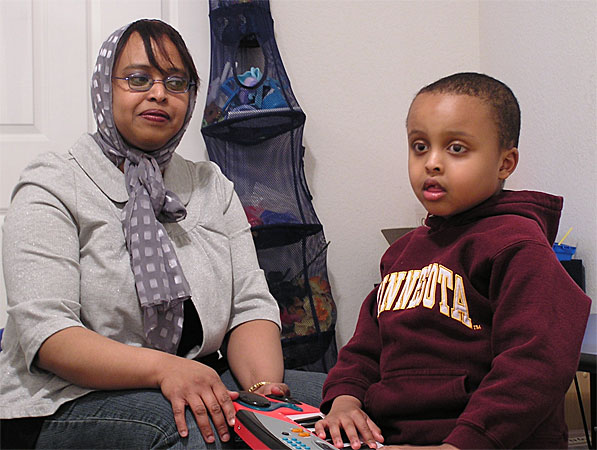
Minnesota Somali woman with autistic son

My unscientific earlier guess centered on the lack of Vitamin D Somali mothers (covered from head to toe in a northern climate) likely received during pregnancy, but these statistics don’t fit that theory well as American blacks do not have the same levels of autism as the Somalis or the white people in the study.

My other theory, also just a guess! is based on the possible genetic affects of in-breeding in polygamous families.  Here are all of our previous posts on Somalis and autism.

So why, according to the new study, is it hitting Somali kids harder (not that there are significantly more cases!)—-the Somali kids’ IQs are lower and so the condition manifests itself more starkly than those with higher IQs.   This of course raises the question, not answered here: what is the average IQ of the Somali population as a whole compared to the white population?   Uh oh!

From the Star Tribune (emphasis mine):

Autism might not be any more prevalent among Somali-heritage children in Minneapolis than it is among white children in the city, but the severity of the developmental disorder appears harsher in this minority group.

In a much-anticipated report released Monday, University of Minnesota researchers found statistically similar rates of autism symptoms among 7- to 9-year-olds in Minneapolis, regardless of whether they were Somali or white. But all of the Somali-heritage children with autism also had related intellectual disorders — defined as scoring 70 or less on IQ tests — compared with a third of autistic children in the study overall.

“Somali children are much more likely to also have an intellectual disability, which means their symptoms, their characteristics, the ways in which autism presents itself in these children are very different,” said Amy Hewitt, the lead author of the study and a senior research associate in the university’s Institute on Community Integration.

Concerns about the prevalence of autism among Somali children surfaced among parents in 2008, and were validated in 2009 when a report from the Minnesota Department of Health found that Somali preschoolers were two to seven times more likely to receive autism services from the Minneapolis public school system.

The U study, released Monday, was an outgrowth of that Health Department report, and is the largest examination ever in the United States of autism prevalence among Somali immigrants’ children.

Rather than counting the number of children signed up for autism services, or even who have received a diagnosis of the developmental disorder, the researchers examined medical records from thousands of participating families and evaluated whether children met the medical criteria for autism — regardless of whether it had been diagnosed.

The net result was that one in 32 Somali children in the study met the diagnostic criteria for autism, compared with one in 36 white children. The rates were notably lower at one in 62 for non-Somali black children in Minneapolis, and one in 80 for Hispanic children. The rates for the Somali and white children were higher than national averages as well.

There is much more, read it all.

It is a good thing we have Obamacare now to pay for all this on-going medical treatment for refugees!

Photo is from this story, one of many, where Somalis were demanding answers about why their kids were afflicted with autism at a higher rate (or so they thought) than white American kids.