Bhutanese refugees, depressed, accuse UN of separating families

We have written a lot lately about Bhutanese refugees in America with a very high rate of suicide. Here is one story I’ve had kicking around from New Hampshire that I never got around to posting.

But, this was a big surprise to me.  It seems that refugees left behind in camps in Nepal are also depressed and are developing serious mental illnesses.   This is just a reminder to the do-gooders who think bringing refugees to the West and dropping them off in troubled city neighborhoods to work as cheap laborers is always an act of kindness, consider this news:

From ekantipur.com (emphasis is mine):

 Though third-country resettlement of Bhutanese refugees has provided relief to many, the initiative has been the cause of pain for some.

Durga Devi Odari, who was once a lively, happy person, has been on medication for the past three years. Odari went into a state of depression when her parents were flown to the USA and her brother to New Zealand. Her dreams of settling abroad, for which she even divorced her husband, were shattered.

She can’t find her parents!

“I am not sure about finding my parents and I do not know if I will ever be able to find my loved ones,” said Durga.

Durga’s case is not an isolated one: many refugees awaiting resettlement are battling with depression. As the number of people in the camps decreases, depression is becoming a serious issue for those remaining.

Though the United Nations High Commissioner for Refugees (UNHCR) and Transcultural Psychosocial Organisation (TPO) has not officially confirmed the numbers of those with depression, mental disorders, and drug dependency inside the camps, the increase in activity of the TPO, which specialises in providing counselling services, has fuelled speculation that the number of those facing depression is increasing.

Refugees claim UN has separated families!

While the UNHCR has made assurances that they would not separate families without parental consent, some refugees claim that the UNHCR’s actions demonstrate otherwise.

The UNHCR has been working with TPO since 2008, two years after the initiation of the resettlement process.

According to Sanchahang Subba, Secretary of the Beldangi Camp, he receives hundreds of letters per day by those seeking the whereabouts of their loved ones.

How did we come to bring 70,000 Bhutanese to America?    

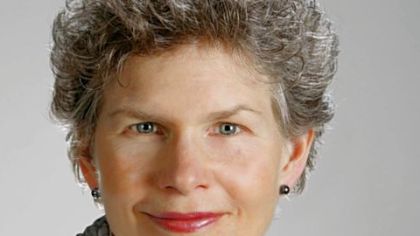
In 2007: Ms Sauerbrey blamed the refugee leaders in the camps in Nepal for the “intimidation”.

We’ve been writing about this subject since 2007 when then Asst. Secretary of State Ellen Sauerbrey (a Bush appointee) announced the decision to help the UN clean out its camps for Bhutanese/Nepalese in Nepal.  Here is one re-cap.   Keep in mind the UN and our State Department were never in a hurry to clean out the Palestinian “refugee” camps.

Just now I was looking around further on the history of all of this and was reminded that camp leaders were furious when the third country resettlement began and I suspect the woman in our story above, who divorced her husband to try and be resettled with her parents, was probably married to a camp political leader.  The leaders wanted to keep the pressure on Bhutan to take them back until we stepped in and brought tens of thousands of them to the US to work in meatpacking and other menial labor jobs.

Other than our need for cheap labor (and the contractors’ needs for refugee numbers because they are paid by the head!), what was our national interest in getting involved in a dispute involving Nepal and Bhutan?

Here is another writer a year ago on the same topic.

The photo is from this BBC story where Sauerbrey said sending the Bhutanese to western countries (the US took the lion’s share) was all done for “humanitarian” reasons.

Mental illness: new ticket to America?

Searching around the world wide web one can find much being done in Tanzania and Africa generally in the mental health field. http://www.gmhi.org/

An appeals court in Richmond, Virginia has granted asylum to a man who says his treatment for mental health problems in Tanzania amounted to persecution.   The general understanding of what constitutes a legitimate claim for asylum usually contains these elements:

The refugee/asylum seeker must demonstrate a “well founded fear of being persecuted for reasons of race, religion, nationality, membership of a particular social group or political opinion.”

No doubt the applicant in this case was fearful, but his complaint does not fit the definition.  There is, however, an ambitious movement afoot by immigration lawyers to expand the definition beyond its original intent.  One could conclude from this case that anyone treated badly for myriad reasons in their home country was eligible for asylum if they could get themselves into the US in order to apply.

One thing that struck me in this news is that the man was denied in lower courts and the Court of Appeals split, so one of the judges wasn’t buying the story and there must be much more to this case then we are being told.

From UPI.  (Hat tip: Pungentpeppers)

RICHMOND, Va., Jan. 22 (UPI) — A federal appellate court panel has ruled a bipolar man who said he was repeatedly tortured in Tanzania should qualify for asylum in the United States.

The Homeland Security Department tried to deport Tumaini Temu back to Tanzania in 2010, four years after his temporary visa expired.  [For what reason did we originally grant him a temporary visa to get into the US?—ed]

Temu applied for asylum and claimed he was persecuted in his home country due to his mental illness, which is considered demon possession in Tanzania, Courthouse News Service reported.

An immigration judge and the Board of Immigration Appeals denied his application, but a three-judge panel of the 4th U.S. Circuit Court of Appeals in Richmond, Va., reversed the decision on a split vote.

[….]

Temu came to the United States after his family rejected him, and he was diagnosed with bipolar disorder.

Get ready for a parade of crazy asylum-seeking Tanzanians in need of meds through Obamacare!  And, just a reminder, once granted asylum these new “refugees” are given access to all of the social services (welfare programs) available to refugees.

Endnote:  I just now searched around for more on the treatment of mental health problems in Tanzania and in Africa generally and note that there is much happening there, and throughout Africa, to help those with mental illnesses.  We don’t need to be moving them to America!

See our Health issues category (here) for more on refugee mental health problems.

More on refugee mental health issues from Pittsburgh

Translation services are going to cost your “welcoming” community a bundle going forward (not to mention the cost itself of mental health treatment for immigrants).

This is another in a series of articles written by reporter Erika Beras and published here at the local NPR station.  We have mentioned previously two of Ms. Beras’s excellent investigative reports, here and here.

From WESA (Pittsburgh’s NPR station).  Emphasis below is mine:

Barbara Murock, Immigrants and International Initiative Manager for Allegheny County’s Department of Human Services. Does your county have such a position?

Pittsburgh was once an immigrant foothold. European and Middle Eastern immigrants and black migrants from the Jim Crow American South built the city into what it is. But when industry began to shutter in the ’70s, people started moving away in droves. And for a long time, people didn’t move in.

It’s only been in the last few years that census numbers have ticked upward. Some of that is young people moving to Pittsburgh from other cities, but it’s also refugees. Several thousand have been resettled here in the last few years by four resettlement agencies, and others move here after being resettled elsewhere.

In some ways it’s a perfect fit: There is ample employment and affordable housing stock. But in some critical ways, it’s not a good fit at all.  [What is the ample employment in Pittsburgh?—ed]

“Pittsburgh is about 20 years behind the rest of the country when it comes to immigrants,” said Barbara Murock, the Immigrants and International Initiative Manager for Allegheny County’s Department of Human Services, a relatively new initiative. “We’re still learning and we’re at a tipping point in terms of having enough immigrants that we need to start developing systems and programs and pathways for people to obtain services that they need.”  [What is that going to cost the taxpayers of the county?—ed]

Those services include everything from having interpreters in a slew of languages in the courts and schools and drug and alcohol treatment centers.

However, making services available is more than just language. For refugees, a lot of what they don’t understand is cultural.

What follows is a section worth reading about how in some cultures it is taboo to seek any mental health treatment.  Note one star of the story has “situational depression.”  I guess that means he has become disenchanted with life in America.  One proposal for reform I’ve mentioned previously is for the resettlement contractors to set aside money (preferably theirs!) for an airfare fund to send refugees back to their home country who are not cutting-it in the US.  Some want to go home but are trapped here in nasty jobs at low wages and can’t afford the airfare.

Federally mandated translation services could bust your city or county budget!

Those services are expensive and not always easily accessible. The cost of an interpreter, even on the phone, can be high. The translation services the center uses averages $5,000 a month. They also use in-person interpreters, staff who speak a variety of languages.

[….]

By law, health care providers that receive federal monies such as UPMC have to provide interpreter services, and they do in more than 200 languages. That number is only expected to grow as the number of refugees in the community grows and changes.

Readers should try to find out what translation services are costing your local government.  It isn’t just health care services that must provide an interpreter, but the court system as well.   Even when some refugee has a minor traffic problem and ends up in local court—he or she must have a translator!

Pittsburgh: Bhutanese have more health problems

Last week we reported on the mental health issues plaguing America’s 70,000-strong Bhutanese refugee population and now according to reporter Erika Beras, here at New America Media, it seems they are also being plagued by diabetes they got after arriving in America.  Type II diabetes is associated with too much weight gain.   Sure is a good thing Obamacare has come along to take care of them!

And get this!  Pittsburgh now has 4,000-5,000 Bhutanese (mostly Hindu) refugees.   That population growth is only since 2008!

Bhutanese family in Pittsburgh sees first snow! Reporters love these refugee snow stories! http://www.alleghenyfront.org/story/new-natural-world-bhutanese-refugees-brave-pa-weather

From New America Media:

On a typical weekday morning, 47-year-old Tek Nepal is moving about the Mount Oliver duplex he shares with his wife, sons, daughter-in-law and grandchild.

He works nights, so he gets his family time in the mornings. And often, that time centers around eating. Those meals used to consist of lots of starches. But since a Type 2 diabetes diagnosis last year, they have changed.

“I don’t eat rice at all. I don’t eat potatoes. I try to eat a lot of green vegetables like lettuce, spinach … carrots, and I don’t eat totally fried things,” he said, showing off a chart of appropriate foods on his kitchen wall.

Nepal is ethnically Nepalese. He was resettled in California as a refugee, moved to Tennessee, then Pittsburgh, which has a lower cost of living and boasts a growing Bhutanese-Nepalese population. Before coming to the U.S., he spent 17 years in refugee camps in Bhutan.

About 4,000 to 5,000 ethnically Bhutanese-Nepalese refugees call Pittsburgh home. Having migrated in the last six years, it’s a new population that is falling into an old immigrant paradox.

Nearly 26 million Americans have diabetes, and another 79 million are pre-diabetic, up sharply over the last few decades. Included among those statistics are newer Americans, people such as Nepal who came here as refugees. According to a study published in the journal Human Biology, an immigrant’s risk of obesity and hypertension — indicators of diabetes — grow with every year they are here.

At the Squirrel Hill Health Center, a federally qualified facility that provides the bulk of initial and follow-up care to refugees, Chief Medical Officer Andrea Fox is perpetually busy. She spots trends in her patient population. Rarely do the Bhutanese come to the U.S. with a diabetes diagnosis, but they’ve found a high prevalence of the disease in those they treat.

[…..]

The Centers for Disease Control and Prevention monitors refugee populations. Among their priority health conditions for the Bhutanese are anemia, B12 vitamin deficiency and mental health. They haven’t been tracking diabetes numbers.

There is a lot more.  Check out the nice kitchen!

See our ‘health issues’ category for 191 previous posts on refugee health problems.  We have them all—HIV/AIDS, TB, intestinal parasites, mental health issues, and now diabetes.

Bhutanese refugees in the US still committing suicide at high rate….

…..resettlement agencies responsible for solving the problem!

That’s what the Wall Street Journal blog reported earlier this week (thanks to two readers for sending it).

UN and the US in its infinite wisdom scattered the ‘Bhutanese’ refugees to the four winds.

Before I give you the highlights from the WSJ, this is how we came to have tens of thousands of Bhutanese refugees in America.  After nearly 20 years of a stalemate between the tiny countries of Nepal and Bhutan, the United Nations basically got sick of running the camps in Nepal (unlike the Palestinian camps they have been running for 60+ years).

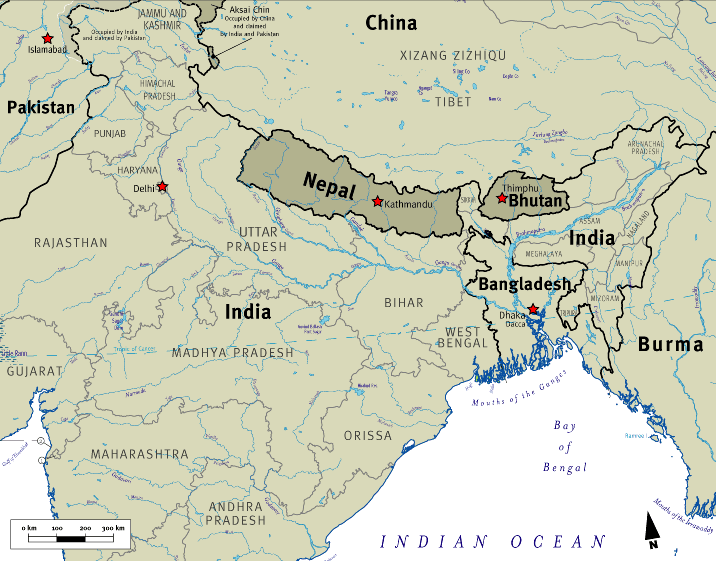
The Bhutanese refugees are ethnic Nepalis (mostly Hindus) who had lived in Bhutan for decades, but were expelled by the government trying to keep Bhutan for its religious (mostly Buddhists) and ethnic majority.  Nepal didn’t want them back either.

So, the US State Department (under Bush Asst. Secretary Ellen Sauerbrey) announced in 2007 that we would resettle the lions’ share of the refugees—60,000.  How we had any national interest in this situation is still beyond me, and I don’t know how we couldn’t have persuaded (with some international aid) those two small countries to work it out is troubling.

Honestly, I am so cynical now I believe we brought them here for cheap docile captive LEGAL laborers!  And, the resettlement contractors needed more bodies to resettle since they are paid by the head to bring ’em to your towns and cities.

And, maybe, just maybe, every ethnic group in the world is not going to melt in the mythical American melting pot! How would you like to have been protected and cared for in a camp for your whole life and then dropped into the heart of some American city—often in slum neighborhoods—and expected to make it!

Here is what the WSJ said (emphasis mine):

Before Menuka Poudel left the refugee camp in Nepal where she and her family sheltered for almost two decades after being displaced from Bhutan, the 18-year-old spoke to me about her hopes of pursing her college education and living the American dream.

Just over a year later, on Nov. 30, 2010, she was found by her mother hanging in an apartment in Phoenix Arizona, where her family had moved a month before. They had hoped to begin a new life under a resettlement program for Bhutanese refugees who had fled cultural and religious persecution.

Ms. Poudel, who was still breathing when her mother found her, was taken to St. Joseph’s Hospital and Medical Center in Phoenix where she was pronounced dead the following day, according to her family.

The young woman was one of over 30 Bhutanese refugees who have taken their lives in the U.S. since the summer of 2008 when the resettlement program began.

The problem of suicide in the community seems to be worsening: Since the start of Nov. 2013, seven Bhutanese refugees have killed themselves after resettling in the U.S.

[….]

As of Oct. 2013, there were around 71,000 Bhutanese refugees living in the U.S., according to the United Nations High Commissioner for Refugees.   [Originally we were only taking 60,000!—ed]

Mismatch between their idea of the American dream and the work they do in America (yeh, like working the line in a slaughter plant, if they even find a job!).

“Different psychological stressors occur at each stage of the resettlement process,” the study said. Once refugees are relocated, factors such as inability to find work, increased family conflict and symptoms of anxiety, depression and psychological distress are associated with suicidal thoughts, it added.

After resettlement, many young Bhutanese adults seem to find a mismatch between their idea of the American dream and the availability of work and quality of pay in the U.S. [What! We are told all the time that refugees are finding plenty of employment!—ed]

Those working with the Bhutanese community in America say there is a lack of support and provision to deal with the problem.

Organizations that resettled them are responsible for solving the suicide problem!  Hah!  Don’t hold your breath unless they get some (more!) taxpayer grants to do it.

Mr. Subedi [community volunteer in Philadelphia] says that to tackle the problem properly and highlight the issue among Bhutanese refugees, a U.S.-wide campaign by the organizations responsible for the resettlement program is required because the community in general is a self-contained and introverted culture.

We have written many posts on the Bhutanese resettlement.  Click here for all of them.  Here are our posts on Bhutanese suicide.  We are also putting this into our Health issues category as it relates to what we have been saying lately about refugee mental health problems.