In a decision hailed as a win for refugee rights, a federal judge in Canada ruled Tuesday that the “Safe Third Country Agreement” between Canada and the U.S. is invalid because it fails to guarantee migrants’ rights to liberty and security, in effect an admission that the U.S. is not a safe country for those seeking refugee protection.
Canadians for Justice and Peace in the Middle East called the ruling “a victory for asylum seekers.”
The bilateral agreement known as STCA, which went into effect in 2004, requires migrants presenting themselves at official Canada-U.S. border points of entry to be returned to the country where they first arrived to present their claims under the assumption that claimants “could have found effective protection” in either of the two countries.
The Canadian Council for Refugees (CCR), Amnesty International, and the Canadian Council of Churches brought forth the challenge along with refugee claimants including Nedira Mustefa, an Ethiopian national.
Mustefa tried in 2017 to enter Canada from the U.S. but was returned to American soil where she was immediately imprisoned and held in solitary confinement for one week—a time she told the court was “a terrifying, isolating, and psychologically traumatic experience.” She was then detained with others who had criminal convictions and “did not know when [she] would be released, if at all.”
Dorota Blumczynska
In a statement welcoming the ruling, CCR president Dorota Blumczynska said:
“The court could hardly fail to be moved by the testimonies of the appalling experiences of people in the U.S. immigration detention system, after Canada closed the doors on them. Their experiences show us—and convinced the court — that the U.S. cannot be considered a safe country for refugees.”
Rwandan refugee, 39, faces up to 10 years in prison after admitting arson attack on Nantes cathedral
A Rwandan refugee could face up to 10 years in prison after admitting setting fire to Nantes cathedral.
The 39-year-old man, who has solely been identified by his first name Emmanuel, worked as a volunteer security guard at the 15th-century Cathedral of Saint Peter and Saint Paint which set alight last week.
Three fires had been started at the site on July 18 and it took 104 firefighters to control the blaze which tore through the building and caused millions of pounds worth of damage.
The Rwandan refugee was questioned for a second time yesterday by prosecutors and he was placed under formal investigation early this morning after confessing to setting fire to the cathedral, French newspaper Le Monde reported.
[….]
Emmanuel was being housed by the Nantes diocese, having arrived in France five years ago, and was one of seven security guards at the cathedral.
On the day of the fire he was responsible for locking up the cathedral, which was started in 1434 and took more than four centuries to complete.
Hours later, fire and thick black smoke could be seen pouring out of the building, causing millions of pounds worth of damage.
The main organ, which dated back to 1621, was completely destroyed, along with priceless stained glass.
[….]
He served at the altar,’ said Father Champenois, before Emmanuel was charged. ‘He was well liked. He was a Rwandan refugee who took steps to obtain papers in France.’
Michel Bourcier, the cathedral organist, said: ‘We have been saying hello and good evening for several years. He is extremely courteous.’
It is presumed that “Emmanuel” is a Christian, but you never know since when advancing their cause, Muslims are permitted to lie.
And, don’t forget! Just because a refugee is (or says he is!) a Christian it doesn’t automatically mean he/she is a good person!
Race war???
Reader Paul sent this yesterday ( a post from last year) about the coming race war in Europe. It’s a good read and it might be worth buying the book.
I remembered this post from nearly eleven years ago when I responded to a readers comment just now.
Of course, I’ve been saying that gnashing our teeth about how we got here (in chaos) is likely a waste of time at this point when we need to be devoting our full attention to getting Trump re-elected and saving our economy and our selves! Nevertheless, this might be a useful reminder of the Left’s goals in adding more and more poor black and brown people to American towns and cities.
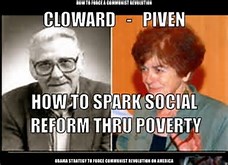
If you are a regular reader, you know one of the themes we have been writing about is what I call “community destabilization,” we have a whole category for those posts, here. And, you know we write about the Cloward-Piven strategy as part of that discussion.
Cloward and Piven, while professors at Columbia University (Obama’s alma mater), penned a 1966 treatise in Nation magazine in which they outlined a strategy to bring about a revolution in America.
I wrote about it most recently, here. Simply stated the strategy involved flooding the welfare system with so many impoverished people that the system would collapse and that would pave the way for a new form of government—a government that would redistribute the wealth and provide a guaranteed income for everyone.
Below is another shocking segment from that article. We are often lectured about what is the moral thing to do about refugees, but let me ask all of you, what is moral about this Far Left strategy?
Remember immigrants and refugees are today’s poor. As unfashionable as the word is, frankly, I call this strategy to place as many people as possible on the welfare system and use them for promotion of a radical political ideology downright evil.* (Emphasis below mine)
To generate an expressly political movement, cadres of aggressive organizers would have to come from the civil rights movement and the churches, from militant low-income organizations like those formed by the Industrial Areas Foundation (that is, by Saul Alinsky), and from other groups on the Left. These activists should be quick to see the difference between programs to redress individual grievances and a large-scale social-action campaign for national policy reform.
Movements that depend on involving masses of poor people have generally failed in America. Why would the proposed strategy to engage the poor succeed?
First, this plan promises immediate economic benefits. This is a point of some importance because, whereas America’s poor have not been moved in any number by radical political ideologies, they have sometimes been moved by their economic interests. Since radical movements in America have rarely been able to provide visible economic incentives, they have usually failed to secure mass participation of any kind. The conservative “business unionism” of organized labor is explained by this fact, for membership enlarged only as unionism paid off in material benefits. Union leaders have understood that their strength derives almost entirely from their capacity to provide economic rewards to members. Although leaders have increasingly acted in political spheres, their influence has been directed chiefly to matters of governmental policy affecting the well-being of organized workers. The same point is made by the experience of rent strikes in Northern cities. Their organizers were often motivated by radical ideologies, but tenants have been attracted by the promise that housing improvements would quickly be made if they withheld their rent.
Second, for this strategy to succeed, one need not ask more of most of the poor than that they claim lawful benefits. Thus the plan has the extraordinary capability of yielding mass influence without mass participation, at least as the term “participation” is ordinarily understood. Mass influence in this case stems from the consumption of benefits and does not require that large groups of people be involved in regular organizational roles. [Of course not, the smart people, the elite radicals, would call all the shots!]
Moreover, this kind of mass influence is cumulative because benefits are continuous.Once eligibility for basic food and rent grants is established, the drain on local resources persists indefinitely. Other movements have failed precisely because they could not produce continuous and cumulative influence.
When you read the Nation article, note that Cloward and Piven were very conscious of the concept of the ‘presumption of good intentions.’ In other words, they knew that this political strategy would go undetected for a very long time because it would be hidden from their average do-gooder minions by the presumption that this was all about aiding the downtrodden.
I must say this ‘strategy’ is the only logical explanation for why we are still pouring refugees into the US right now when there is little or no work for them and they are being “warehoused” in decrepit apartment buildings, like those in Bowling Green, KY. Incidentally, even if refugees have chicken plant jobs they still receive various forms of public assistance because the meatpackers no longer pay a living wage.
I wonder did Cloward and Piven ever anticipate the involvement of big businesses as allies in the revolution? See this post from August in which I list strange bedfellows on the open borders issue.
* I have to laugh, after I posted this, I see that Ann Coulter also suggested Far Left Liberal strategies were “evil” when she said their motto is:
Well, that is what the New York Times wants you to believe.
I’m not interested enough to search the data, but this story from Houston is a familiar one as the legacy media wants you to believe that the Chinese virus can find the poor and downtrodden while the rich are spared.
You know it isn’t true and as a matter of fact, as my continuous reporting on refugee camps worldwidehas demonstrated, packing hundreds of thousands of unwashed people into squalid living conditions hasn’t hastened the spread of the virus.
You can read the story yourself, but I was interested in a bit at the end about an unhappy Burundian refugee and wondered how Burundians are now flowing to America. And, why on earth we are still bringing them!
The virus found a crowded Houston neighborhood, sparing one nearby
At an African market in another part of the neighborhood, Anaclet Rukata said that he had friends who had become ill but that he worried less about the virus than about his uncertain future.
A 39-year-old refugee from Burundi, he lost his job with a catering company in the Chevron headquarters when the pandemic caused the first wave of closures. His 55-year-old mother, also a refugee, lost her job too, he said.
That day, he was working behind the counter as a favor to a friend who owns the market. “He doesn’t make enough money to pay me,” Rukata said.
And he had just received word by email that his unemployment benefits would be cut off at the end of the month.
Can’t Mr. Rukata’s resettlement agency pony-up some funds to help him survive?
Does it make any sense to bring one more impoverished, low skilled refugee to live in America when so many Americans are unemployed and suffering? NO!
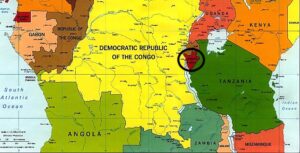
So, in summary, we are mucking around in Africa, in tiny Burundi, which has a corrupt leader and the consequent unrest which since 2015 has caused hundreds of thousands to flee the country to neighboring countries.
Those countries don’t want them and somehow it becomes our responsibility to deposit them in poor neighborhoods in America where they catch the COVID, complain, and jump on the BLM bandwagon. Does any of that make sense?
I just checked the data and we admitted 2,591 Burundians to the US since FY2015 (through today). 2,591 most likely unemployed and BLM agitators in the making!
We don’t talk often enough about the vast amount of money that leaves the US each year and flows to third world countries around the globe—dollars that prop up entire countries.
(In case you have ever wondered why countries like Honduras, Guatemala and El Salvador don’t want their people to come home, this is why!)
These ‘remittance’ dollars, earned by migrants of all stripes, or gained through welfare handouts from governments, are dollars lost to the US economy.
Well, with fewer migrants working, fewer dollars are going to the third world (to places like Somalia!) says an Irish NGO operating in the US in an op-ed published in the Sun Sentinel.
As infections surge among migrant workers, the global economy feels their pain | Opinion
The economic fallout of Covid-19 in the developing world has prompted a global conversation about increasing aid for poor countries, but the lack of government assistance pales in comparison to the loss of remittances from family members working abroad.
The recent spike in Covid-19 infections in Florida is ravaging migrant workers, leaving many out of work and in unprecedented social and financial strain – and subjecting them to stigma and scapegoating by leaders seeking to score political points. While isolating these migrant workers may or may not slow the spread of infections, it is just one example of factors that will accelerate economic hardship worldwide—particularly in developing nations. The combination of health and economic impacts on our invisible workforce will contribute to a secondary pandemic of worsening poverty and hunger, which we cannot ignore.
The economic fallout of Covid-19 in the developing world has prompted a global conversation about increasing aid for poor countries, but few have acknowledged that assistance from governments pales in comparison to remittances from family members working abroad.
The pandemic is sapping these remittances at a devastating rate. The World Bank estimates that international family remittances will fall by 20% in 2020,resulting in $110 billion in lost income for families living close to the poverty line, meaning they survive on U.S. policymakers need to understand that migrant workers are a vital organ not only of America’s agricultural community, but of the entire global economy.
There are 164 million migrant workers around the world providing irreplaceable services in their host countries. In 2019, these workers sent a whopping $554 billion back home to impoverished nations. That far exceeds all international aid budgets combined.
Remittances sustain many developing nations. Haiti receives over 30% of its annual GDP from citizens living abroad — many of them in the U.S. It’s estimated that as much as $2 billion dollars comes to Somalia each year in the form of remittances, and other countries such as South Sudan and Bangladesh are also highly dependent on this income stream. In all, it’s thought that about 800 million people across 125 countries rely on money from relatives abroad.
[….]
We have established extensive cash distribution programs, which provide regular funds to extremely poor and disadvantaged families, helping them through the toughest times. For example, the Somali Cash Consortium distributed over $18 million last year through its established networks. We are looking to expand this work across various countries, where possible, as the effects of the pandemic bite.
There are a lot of desperate migrants (Antifa and BLM are only too happy to stir them up!) in America and if the virus panic continues it becomes even more important for you to prepare your family and to keep them safe.
I suspect many of you are busy reading the news (and posts like mine), but don’t waste too much time reading and yakking on social media, make sure you leave enough time to get prepared—make sure you have supplies, your home is secure—and if this all blows over, thank God, but get ready just in case.
This reminds me, I recently joinedParler because I am sick of Twitter and I’ve never been too enamored of Facebook either. I don’t know why I bothered joining another social network because I don’t have enough time in my day to do it justice.
And, I fear that chit-chatting at these sites is distracting from taking the necessary steps for an end-of-year crisis that I believe is inevitable. The only question remaining is—how bad is it going to get?



 We don’t talk often enough about the vast amount of money that leaves the US each year and flows to third world countries around the globe—dollars that prop up entire countries.