That is one of the interesting facts we are learning while reading through ORR’s Key Indicators for Fiscal Year 2015. We have been telling you about it (see here and here).
The Office of Refugee Resettlement (ORR) has recently been compiling statistics on such things as employment opportunities and whether your state has generous social service benefits and healthcare to help refugees get the very best care they can get.
I found the ‘Access to Health Care’ on page 18 of the Statistical Abstract enlightening.
By the way, if yours is one of 26 states expanding Medicaid, yours will be a more “welcoming” location than the 19 (stingy) states which have not.
Access to Health Care
Access to health care and health insurance is an important consideration in refugee placement and resettlement decisions. Depending on their circumstances, refugees may be eligible for different types of health insurance, including Medicaid, Children’s Health Insurance Program, Refugee Medical Assistance (RMA), employer-based plans, and private insurance available through the Health Insurance Marketplace. However, many refugees are uninsured. In fact, one third of refugees from ORR’s Annual Survey in 2011 lacked medical of any kind throughout the preceding year. In addition, the availability of “safety net” health services varies by state.
Initial placement decisions can have a long-term impact on refugees’ health outcomes;
For example:
* Treatment for chronic Hepatitis B and Hepatitis C can last up to one year. People with these conditions who are resettled in a state where RMA is the only health insurance option will be less likely to start or complete treatment.
* Refugees with HIV will require specialized care; the availability of long-term health
insurance and the robustness of local Ryan White programs (especially, waiting periods to
access anti-HIV medications) should be considered when making placement decisions
regarding people with HIV.
You really should check out the report, you will learn a lot about how generous (or not) your state is and how well refugees are doing finding jobs and keeping them.
And, how is your TANF (Temporary Assistance to Needy Families)? There is a very detailed state-by-state list of how much refugees get and what the rules are in your state.
Oh, and we learned one more thing! ORR is using your tax dollars for “gaining socio-political support for the refugee program.”
For new readers, we have an extensive ‘health issues’ category, click here. You may be surprised to learn that in addition to HIV and Hepatitis, we take refugees with TB, venereal diseases and parasites as well.
I’ve said it before and will say it again, the general public may not fear a terrorist attack from so many Muslims entering the US (legally and illegally), but they will get mighty excited if their kids come home from school with TB (or parasites even)!
This week a reader brought to our attention this very thorough and important report on the health status of refugees resettled in Texas in calendar year 2013. We didn’t know such reports existed, but apparently in some states where the state itself still has some control over the program, reports like this one are generated.
We assume that in certain states, especially Wilson-Fish states, where contractors (like Catholic Charities) have complete control of who is resettled and how many in a state, that such information is not readily available to the public. Is the contractor even keeping records?
So here is what we are learning about Texas refugees from the “Texas Refugee Health Program Report 2013”here. Open: Epidemiological Report. There is lots of really interesting information about which counties refugees went to etc., so check it out. Here are just some bullets that interested me.
Paging Dr. Obama, the refugees are SICK!
* Texas reported 10,729 new refugees in the state in calendar year 2013. 7,195 were regular refugees, smaller numbers were Cuban parolees, asylees, and those holding special immigrant visas (Iraq and Afghanistan).
* Refuges from Iraq, Cuba and Burma make up the largest groups.
* 92% of arrivals were health-screened which means that about 858 were not screened for one reason or another. Why?
* 91% of arrivals needed an interpreter (imagine what that is costing Texas). Be sure to see the pie chart with the myriad languages which health practitioners must wrestle with.
* 3,583 of the arrivals were screened for Tuberculosis and 19% tested positive (that is about 680!). If you carried out this rate for 100,000 plus refugees resettled in the US every year (and every one was tested) we are looking at over 19,000 refugees each year entering the US with a positive TB skin test. Now some will argue they might not have active TB, but that doesn’t mean they won’t become active at some point in time. So, who monitors these people as they move on to other cities and states?
* 293, of those screened, tested positive for Hepatitis B.
* 97 were positive for HIV (remember you pay for their treatment!)
* And, surprisingly there were 76 cases of syphilis largely in the Cuban sample.
* We didn’t see anything about mental health, a common problem with refugees, but it could be there. See our ‘health issues’category for posts on mental health and refugees.
* There were 231 newly arrived refugees over age 65 and even one between 91 and 95 years of age.
For some end-of-summer reading fun, go here (especially you Texans!).
Our reader sent us reports for Utah ( go here). And, in Minnesota, out of 2,125 refugees screened, 474 tested positive for TB (22%).
We sure are lucky to have Obamacare taking care of all these “new Americans” health needs, aren’t we?
Every time we turn around we find one more legal reason foreign nationals can stay in the US.
The one federal program (besides refugee resettlement/asylum) we have noted most often on these pages is Temporary Protected Status a ridiculously named program since it is rarely temporary. We still have Central Americans living here legally ten years and longer after some storm/earthquake roughed-up their landscape. Their “temporary refugee” status (allowing them to work and do anything a legal immigrant can do, and since they get drivers licenses, they probably vote!) simply gets extended every 18 months or so. See our complete TPS archive by clicking here.
In fact, Liberians have been begging again for an extension of their legal status in the US, guess they will get their wish.
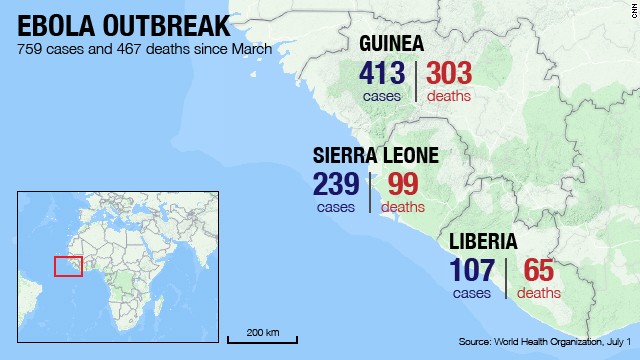
Here is a press alert from USCIS entitled: Ebola Outbreak-related Immigration Relief Measures to Nationals of Guinea, Liberia and Sierra Leone Currently in the United States.
From a July CNN story. http://www.cnn.com/2014/07/03/health/ebola-outbreak-west-africa/
Release Date: August 15, 2014
U.S. Citizenship and Immigration Services (USCIS) is closely monitoring the Ebola outbreak in West Africa. USCIS offers relief measures to nationals of those three countries who are currently in the United States.
Immigration relief measures that may be available if requested include:
Change or extension of nonimmigrant status for an individual currently in the United States, even if the request is filed after the authorized period of admission has expired;
Extension of certain grants of parole made by USCIS;
Expedited adjudication and approval, where possible, of requests for off-campus employment authorization for F-1 students experiencing severe economic hardship;
Expedited processing of immigrant petitions for immediate relatives (currently in the United States) of U.S. citizens;
Expedited adjudication of employment authorization applications, where appropriate; and
Consideration for waiver of fees associated with USCIS benefit applications.
For more information on USCIS and its programs, please visit www.uscis.gov, call the National Customer Service Center at 1-800-375-5283, or follow USCIS on Facebook (/uscis), Twitter (@uscis), YouTube (/uscis) and the USCIS blog The Beacon.
The Associated Press is reporting that Florida and Texas top the list of states with the greatest number of people who may be booted from health coverage under the Obama/Pelosi Affordable Care Act. Immigrants have until September 5th to produce documents showing their eligibility. I guess this also means they have been enjoying subsidized health coverage for some time already.
MIAMI (AP) — Nearly 100,000 Floridians who bought health insurance through the Affordable Care Act could have their taxpayer-subsidized coverage canceled if they don’t send citizenship and immigration documents to confirm their eligibility by Sept. 5.
Federal health officials sent out letters in English and Spanish to consumers Tuesday warning there was an inconsistency between what they wrote on their health insurance application and the immigration and citizenship information that the feds have on record. Officials will reach out to consumers two more times by phone and once via email before the deadline. The documents must be submitted by Sept. 5 or coverage will end Sept. 30.
Many consumers have already been contacted five to seven times, but still haven’t responded, senior health officials said on a conference call Tuesday.
Of the 8 million people around the country who signed up for private coverage through President Barack Obama’s law, more than 2 million at one point had discrepancies of one sort or another that could have affected their eligibility. That number has been greatly reduced — but the remaining cases are proving difficult to untangle.
Nearly 1 million U.S. consumers have immigration-related inconsistencies with their applications. The feds have closed 450,000 cases and another 210,000 are in progress. But 310,000 consumers haven’t submitted any documents, including 93,800 in Florida.
Florida has the highest number, followed by Texas with 52,700, according to data from federal health officials.
By the way, legal refugees should have no problem getting coverage under Obamacare and in fact the Office of Refugee Resettlement is looking to states which have expanded Medicaid under Obamacare to be states they will target with more refugee placement. See news about “Key Indicators” here.
Editor: This is a guest post by reader ‘pungentpeppers’ giving us a more vivid picture of what is happening with illegal migration in France (and Europe generally). Note our post from earlier in the week—From Catalonia to Calais….
“In France, as here in the U.S., the press often shows illustrations of women and children in stories about illegal migrants and refugees.” But, the French are mostly “fed up.” Photo: L’Express. Pascal Leray.
From ‘pungentpeppers’ (emphasis is RRW’s):
Illegal migration is stressing the French Republic.
From Lyon in the south to Calais in the north, from the Paris suburbs of Bagnolet and Saint-Ouen, and east to the German border, and south to Menton on the Mediterranean, our basket of news from France is filled with recent worrisome stories.
Last year France ranked third, after Germany and America, among rich countries for asylum applications received. French authorities handled almost 66,000 asylum requests, but granted protection to fewer than 11,500. Some migrants, refused asylum, stay on illegally. The rest join hundreds of others who want to leave France to try their luck elsewhere. Many head for the northern port city of Calais from where they hope to smuggle themselves into the United Kingdom.
Calais in Disarray
Angry mobs of hundreds of Sudanese and Eritrean migrants desperate to leave France battled each other last week in the northern French port city of Calais. Wielding iron bars and knives, and hurling masses of stones and rocks, they fought for control of an area of land from which they could sneak onto trucks headed for the U.K. More than 50 migrants were injured in the melee. The fighters are part of a group of about 2,000 Africans and Middle Easterners currently encamped in Calais, sleeping in makeshift tents, waiting for a chance to smuggle themselves abroad. Conditions are rough, and numerous fights have broken out over food and supplies. French police have at times bulldozed the migrants’ camp sites, citing health concerns – including an outbreak of scabies – but the migrants keep returning.
Truck drivers heading for the U.K. are terrified. One driver, Tommy Harrison, was ambushed by a gang in Calais. He said: “One of them pulled a knife on me while others climbed up on top of the cab and cut a hole in the curtain to get inside. It was very frightening. There was very little I could do. About 10 of them got in. It’s hopeless going to the gendarmes [French police] because they don’t want to know, so I drove to a lorry park where I knew there would be other drivers and we got them out.”
The French blame the British for the terrible situation in Calais. If Britain wasn’t such an attractive nuisance, the migrants wouldn’t try to go there, and Calais wouldn’t be having all of this trouble.
The New “French Resistance”?
It’s obvious that France isn’t measuring up when it comes to the uninvited migrants’ expectations for hospitality. Instead of greeting needy foreigners with a warm “bienvenu” (welcome), and offering them housing, food coupons and interpreter services, the French instead give them the cold shoulder. Perhaps it’s the famed “French Résistance” technique. Migrants arrive thinking they will wear the French down – but instead the French wear the migrants down and try to make them want to leave. If going to Britain isn’t appealing, the second prime destination choice for migrants escaping the country of fine wine and camembert is the land of ale and schnitzel.
To Germany By Train
Migrants have begun to head east from France to Germany in search of the elusive European “better life”. They travel by train, using tickets purchased from smugglers. So far this year, over 1,000 illegal migrants have taken advantage of Paris-Frankfurt rail links that connect the two countries. The trend worries Annegret Kramp-Karrenbauer, the governor of the German state of Saarland. Her region is at the receiving end of the migration and is responsible for handling the asylum applicants arriving from France. As in the U.S., an increasing number of migrants pose as unaccompanied minors who are guaranteed special youth housing, medical care, and schooling paid for by local German taxpayers. German Chancellor Merkel is seeking French cooperation on the issue. Perhaps Germany should do like the French, and send the migrants back to Italy?
One Way or Round Trip?
Tens of thousands of illegal boat migrants have landed in Italy after sailing across the Mediterranean from Africa. Many of these newcomers, dissatisfied with the little that Italy has offered them, now dream of a better life in Germany, Britain or Sweden. On the way to dreamland, however, lies an inconvenient nation called France and the very bothersome French border police.
Faced with a massive influx of migrants leaving Italy, the French border police, newly reinforced, is concentrating its efforts on catching illegal travelers entering the south of France through Menton, Lyon, and other places. Many illegal migrants travel by rail, and the French border police have been arresting about one hundred a day, mostly Eritreans, on the trains and in train stations. They are then sent back to Italy. Thus the passengers, who planned a one-way trip, find that the French force them to travel round trip! Some travelers, however, show up sick.
Kidney Dialysis and a Transplant for Free!
Doctors and medical staff who treat kidney disease patients in the southern French city of Lyon are extra busy these days. Seriously ill kidney patients, from countries like Albania, Kosovo and Georgia, are arriving in Lyon seeking immediate medical treatment. Per the typical scenario, the traveler arrives at the train station very ill. He is immediately transported to a hospital emergency room. There the doctors see that the patient needs kidney dialysis. At that point the patient files for asylum, even if citizens from his country are not eligible. He then starts his emergency medical treatments. Per French law, three months after an asylum request is made, the patient becomes eligible for full free taxpayer-paid medical coverage and he is put on a waiting list for a kidney transplant. Eventually, even though his asylum claim is denied, the patient is granted special status as an “unwell foreigner”.
Per a report in the French “Le Monde” newspaper, well-organized networks are sending seriously ill patients to France as a business. The “medical refugees” arrive in Lyon knowing the full extent to which they can exploit the French system, have the names and addresses of dialysis centers in the city, and are quite open about coming to France “purely for health reasons”.
These new foreign patients are putting a serious strain on health facilities. For example, the Edouard-Herriot hospital has only 24 kidney dialysis patient beds and is running at maximum capacity. Besides the strain on medical facilities, unchecked migration is also contributing to a housing crisis in France.
Migrants Sleeping Rough: If Not Under a Bridge, Then in Front of City Hall
Migrants quit France for lack of housing, per a “Newsweek” report. “I’ve just been in Paris,” says Samuel (an Eritrean migrant), “and even the people I knew who had got asylum there were sleeping under a bridge.”
Last week a group of 200 Africans, mostly from Mali, set up camp outside the city hall of Bagnolet, a suburb of Paris. Joined by French anarchists, they demanded housing after the abandoned building where they had been squatting was destroyed in an arson fire. The local authority found housing for two families who had school-age children. However, the municipality issued a communique stating that they already have 3,000 applicants for social housing and do not have the means to relocate or house the rest of the migrants – and sent the police to evict them. The migrants then sought shelter under a highway bridge at first, but later settled themselves into another squat in the same suburb, an unoccupied building that used to serve as an employment agency.
Saint-Ouen – First Syrians, Now Kosovars or are they Kurds?
Back in April, I wrote about the refugees from Syria who occupied a city park in the Paris suburb of Saint-Ouen. After the municipality locked them out of the park, Syrian women continued to arrive, settling themselves on the sidewalk along the park fence. Because there were children with them, the French authorities expedited the asylum process and located housing for the families. The news of their victory must have spread, because in July a new group arrived on the scene.
This time, the municipality quickly locked up the park to prevent a recurrence of April’s events. Instead, the latest group of arrivals – about 40 families – set up camp on and alongside a grassy strip under a highway bridge at the entrance to Saint-Ouen. This new group was different from the April arrivals. They did not seem interested in seeking asylum. Their toddlers sometimes ran into the road amid the automobiles. The parents allowed their children to go and beg from passing motorists. During the evenings, the men fought over food and clothing donations. Per William Delannoy, the mayor of Saint-Ouen, the men were taking goods donated to them by car to local markets for resale. At the time he believed they were not refugees but Kurdish nomads from Syria. Per a later report, the municipality checked the group members’ papers and determined that although some were Syrian, most of them were Kosovar Albanians – and thus ineligible for asylum.
In France, as here in the U.S., the press often shows illustrations of women and children in stories about illegal migrants and refugees. An August “L’Express” report about the latest Saint-Ouen migrants refers to the group as “Syrians” and features at the top a photoshot showing a pair of cute little fair-haired girls grinning and flashing peace signs. How do the French people view such propaganda? Below the article, the most popular reader comment with over 100 upvotes states simply, “les Français commencent à en avoir marre!” or “the French are getting fed up!”
Editor: I was just imagining what America could look like someday with illegal alien squatters living under bridges and in encampments in US city parks (those cities away from the border!)—it will make news like that from Ferguson, MO this week look like a picnic. Americans simply won’t tolerate it, especially those who are struggling to make ends meet themselves. Or, is that sort of revolutionary “change” what some agitators are looking for?


 said it before and will say it again, the general public may not fear a terrorist attack from so many Muslims entering the US (legally and illegally), but they will get mighty excited if their kids come home from school with TB (or parasites even)!