
Tennessee concerned citizen to speak on refugees/states rights in Union City Tuesday

Editors note:  This is an example of what you can do as American patriots to help get the message out that the refugee resettlement program of the US government is flawed and in need of immediate reform—become a citizen investigator and help spread the word.

If you are in the vicinity of Union City, please get to this meeting!

The following article by special features editor Glenda Caudle is published with permission from The Union City Daily Messenger.

(Emphasis below is mine.)

Tennessee’s Citizens Pay the Price for Resettlement of Refugees Here 

Think the resettlement of refugees in Tennessee has no effect on you and your family? Think again.

Joanne Bregman, an attorney with experience in the appellate division of the National Labor Relations Board and on Capitol Hill, was a New York native and longtime liberal when she chose, with her U.S. Army veteran husband, to make a life in the South and settled in Nashville some years ago.

Although she has kept her license active, she has not practiced in the Volunteer State. But that doesn’t mean she has been uninvolved or is unaware. It means, instead, that she has focused her attention on needs that are paramount for her family and, through it all, she has not only changed many of her political opinions, but she has used the analytical skills she learned as a young attorney, coupled with the passion to do what is best for her own special needs daughter, to find a new way to use that expertise.
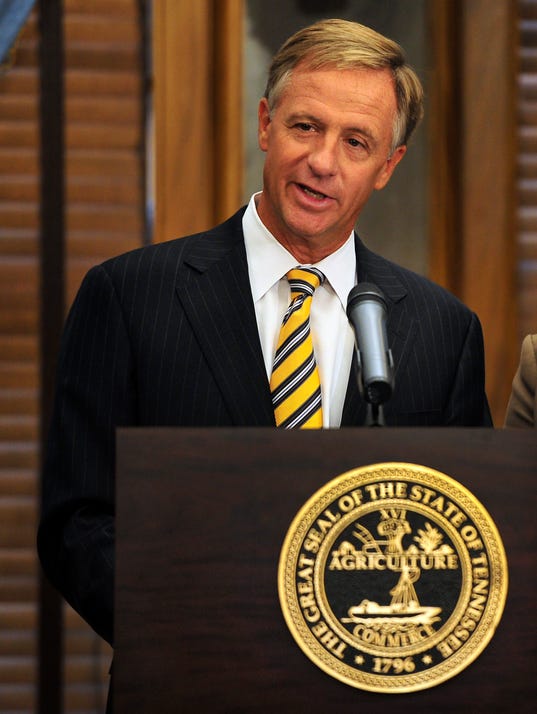
Tennessee Governor Haslam warns agencies to prepare for large budget cuts due to revenue shortfall. http://www.tennessean.com/story/news/politics/2014/09/30/haslam-asks-bigger-cuts-revenue-shortfall/16504221/

Mrs. Bregman will be in Union City Oct. 14 at 6:30 p.m. to talk about questions related to the state’s refugee resettlement program and to give local residents an idea how that program affects their lives. She will be the guest speaker at the Obion County TEA Party meeting in the family life center at Union City First United Methodist Church at 420 East Main St. There is a parking lot for the church and an entrance to the family life center behind the sanctuary on South Ury Street.

Refreshments will be served at 6:30, with the program to begin at 7.

The special guest for the local organization is a writer and speaker and a student of the federal-state relationship in the refugee resettlement program.

She is the granddaughter of immigrants who came to this country with no English language skills at a time when there were also no government programs to assist those seeking a new life.

Still, through hard work and determination, her grandfather found a job in a candle factory, while her grandmother stayed home to raise a large family, with the goal of having their children become Americans.

“Today, when I think about what they did, I feel we are taking a hand in our own destruction in this country with what we are abandoning,” Mrs. Bregman says. Describing herself as a previous “low information voter” with little knowledge of how political systems, in particular, work, she says circumstances forced her to become more politically astute and more thoroughly educated on how states and local communities are negatively affected by decisions at the federal level.

Assisting families with special needs children, she found herself unraveling some of the intricacies of TennCare on their behalf and, while she doesn’t consider herself an expert on the subject, she says she can hold her own in any discussion about the program.

She also found out about some of the problems those families were facing with an education system that was not always abiding by the rules and with a Department of Children’s Services whose background checks for employees working with nonverbal special needs children were often deficient.

That discovery and the resulting effort to see a bill passed that would address the problems served as her introduction to the Tennessee State Legislature.

“There were lots of legislators there who were very kind to us, because they understood we were just citizens. They led us and assisted us to get a good bill,” she says.

Two years later, she found herself assisting Tennessee Eagle Forum, a group with whom she shares some views, though not necessarily all. Her efforts were always as a citizen lobbyist, since her priority was in meeting the needs of a disabled daughter who required 24/7 care.

Along the way, she met Don Barnett, who has devoted years to working on the issue of refugee resettlement. Barnett, she says, was a prophet, who noted as early as 2004 that America would find herself in precisely the situation she does today, with thousands of children streaming across her southern border, because of changes in the law about dealing with minors.

Barnett requested her help with a thorny problem and, through this work, Mrs. Bregman says she was flabbergasted by the things she learned.

“It was so symbolic of where we are with our federal government today,” she says of the experience. It has been more than a year, she points out, since she was part of filing a freedom of information act request related to refugee resettlement, and she still has not received the documents; nor have representatives of legislative offices been able to shake them loose from federal clutches. The State Department denied ever having received the request, in fact.

“Things are so dysfunctional and entrenched in our federal government that it astounds me,” she says.

Nevertheless, she has pressed on in her effort to unravel information and what she has learned has continued to astound and distress her, even as it has aided in her understanding of states’ rights and the ways fiscal priorities are addressed by the government.

In 2013, she says, Gov. Bill Haslam said that healthcare costs for Tennesseans in need of assistance would gobble up 60 percent of all new state revenue. Then, a few weeks ago, he warned all departments in the state that they must prepare for 7 percent budget cuts across the board. “So he’s predicting some bad stuff, and maybe cutting some essential services,” she says.

Meanwhile, she knows first hand about the backlog of citizens with disabilities in Tennessee waiting for assistance from the state.

Tennessee has a Medicaid waiver program with a proposed two for one match of federal and state dollars that is designated to enable citizens with disabilities to live in their communities, rather than in far more expensive institutions. The problem is, the program has been a low priority and has never been adequately funded, even under Democratic leadership at the state level.

As a result there are more than 7,000 Tennesseans on a waiting list to get this important assistance.

By contrast, the State Department, relying on the selection “committees” of the United Nations, takes upwards of 70,000 refugees into this country every year and passes them on to the states. In Tennessee, these resettled refugees immediately become eligible for TennCare, while Tennesseans with desperate needs languish on a list.

In 2008, Tennessee withdrew from the federal refugee resettlement program, so the federal government simply contracted with Catholic Charities to run it, instead.

“When people in Tennessee say, ‘Stop. We don’t want this program,’ how is it possible that the feds simply go through a private agency after that?” she asks.

The refugees, she points out, don’t always come with reliable documentation about their histories, so it is impossible to tell if they have terrorist ties. Think the mention of that fact is a scare tactic? Then consider that two refugees in Bowling Green, Ky., were charged with providing material support to al-Qaeda, and that is only one example.

If the program worked the way the federal government optimistically describes it, Mrs. Bregman says, most of the money to help these refugees would come from private donations, with federal dollars simply augmenting the program. The fact is, however, private funding is far outstripped by dollars that come from the pockets of taxpayers in the states.

What would happen, Mrs. Bregman asks, if instead of spending the money on refugees, Tennesseans chose to spend it on their most vulnerable citizens?

There is no Constitutional authority for making the states responsible for the costs of the federal program, Mrs. Bregman contends, and yet, it happened anyway, and the feds continue to go around the state authority and contract with private agencies to get the refugees “settled.” The term encompasses sign-up for SSI and all public benefits, plus immediate entry into the education system. While the federal government offers this amazing largesse in the land of opportunity, however, the states pay the price — which means taxpaying citizens pay the price, both in dollars removed from their pockets and services lost or delayed for themselves and their families.

The refugee resettlement issue and other 10th Amendment concerns will be the focus of the Nashville citizen volunteer’s program locally.

The community is invited to attend and learn what the federal government is up to and what they can do to alter the picture, relying on the Tenth Amendment to the United States Constitution.

Readers, Tennessee is at the forefront of challenging the federal refugee resettlement program.   We need more people like Joanne Bregman and Don Barnett sounding the alarm—fearless citizens concerned for the future of America in all 50 states!

About Tennessee Governor Haslam’s budget shortfall, guess he didn’t read about the immigrants getting all the jobs in Tennessee, here.  So, if the immigrants are working, where is the money going—overseas, as remittances, maybe?

See all of our extensive coverage on Tennessee by clicking here.  See especially Tennessee is a Wilson-Fish state and learn what that means—feds and a private contractor circumvent state government.

Taxpayers fund savings accounts for refugees

How do refugees get money for cars, houses, education, businesses?

The program is known as Individual Development Accounts through the Office of Refugee Resettlement (HHS).

Albert Mbanfu, Director of the International Center in Bowling Green, Kentucky. http://www.bgdailynews.com/new-international-center-director/image_02fb9de4-89e7-5d6d-97e8-6cf648b73901.html?mode=jqm

This is one of the many ways your local refugee resettlement contractor is able to hand out government (your) cash to refugees and surely get a little cash for themselves for administering the program.  (There are also micro-enterprise loan programs especially for refugees as well).

The local contractor gets a grant from ORR and then refugees may sign up for the savings plan.

For every dollar they save toward certain savings goals, they are matched with a dollar from the US Treasury.  Frankly the complete unfairness of the program to American low income people is often responsible for the hard feelings toward some refugees in certain areas.

We have heard disgruntled citizens ask, for example:  how are they getting cars?

We have reported on this program often but the story we mentioned from Kentucky (yesterday) contained a reference to the program that you may not have noticed, so I thought some clarification was needed.

Here is the section of the ‘Refugees get new homes’ Bowling Green article (hat tip: Robin) that I want you to see:

When Me Meh and her family escaped Burma for a refugee camp in Thailand, they lived in a bamboo house without electricity or other amenities.

The family of 10 resettled in Bowling Green in 2009, bringing with them only some clothes and important papers, Meh said. She was 17. Meh’s two older brothers and her father started work while she went to school and her mother took care of their home.

After a couple of years, the three had saved $4,000. She said the International Center gave them a grant that matched their savings, and they were able to put a downpayment on a house.

The reader is left with the impression that this very nice resettlement contractor—the International Center—was being generous, but this is taxpayer money that was only passed-through the contractor’s coffers!

Go here for a recent list of grantees for the multi-million dollar program.  And, for more information you might want to look at page 38-40 of the FY2012 Annual Report to Congress.   While you are visiting the Annual Report, check out all of the other grant programs that refugee contractors can apply for.  You will be amazed!

Addendum:  I was once told by an official involved with the refugee program in Washington that there is no financial audit done of these resettlement contractors.

High rate of suicide among Bhutanese refugees resettled in US continues; some wish they had stayed in camps

For new readers, please visit our Bhutanese archive for background because I would have to write a book to bring you up to speed.  We have been taking thousands of Bhutanese (Nepalese) refugees ever since the Bush Administration began admitting them in 2007 (or was it 2008), it doesn’t matter, the bottom line is now we are headed toward 80,000 admitted so far and many are struggling.

According to this article as many as 55 have hanged themselves when they learned the “American dream” was a nightmare for them.

From the Los Angeles Times (hat tip: Joanne):

Som Subedi (left) on suicide watch for Lutheran Community Services (salary paid by the US taxpayer).

Som Subedi is stuck in traffic. He’s running late to check on one of his flock: a 37-year-old woman who’s among scores of newly arrived Bhutanese immigrants he watches over like a worried parent.

Ran Gurung is on Subedi’s watch list. A refugee advocate, he fears Gurung is not adjusting well since arriving in June from a camp in Nepal, where her husband mysteriously vanished. She came to the U.S. alone, with only a few relatives already here for support.

Feds didn’t want to listen at first.  Why? I suspect they didn’t want anything to interfere with the warm and fuzzy feeling they get from their do-gooder work.

That’s how Subedi discovered a disturbing trend: Bhutanese immigrants in the U.S. are killing themselves at an alarming rate. Many deaths take place during the 15-day Dashain holiday that starts in late September. The festival celebrates family and community.

He calls it the Suicide Season.

In six years, up to 55 Bhutanese immigrants have hanged themselves, using ropes or traditional scarves, and Subedi suspects the rate might be even higher. He has hounded federal agencies such as the U.S. Office of Refugee Resettlement to investigate the trend. He sent emails, made telephone calls, even traveled to Washington to address officials.

“I was bothering them,” he said. “I was a pest. It was what I had to do.”

The American dream is dangerous!

Why were people killing themselves when they were finally free of the hopelessness of the camps, able to start a new life?

Then it struck Subedi: For many Bhutanese, the American experience was just plain lonely.

He wrote a column for the Oregonian newspaper, questioning the American dream. “I am a refugee from Bhutan,” he began, describing how he once encouraged friends in the camps in Nepal to hurry to the U.S., a place he called “close to heaven.”

He wrote: “Now I see those newly arrived struggling; they question me about my ‘heaven.’ Some say they would return, if possible, to their dark refugee camps rather than face their desperate situations in Oregon. I have come to feel that ‘the American dream’ is dangerous, because people come here with great expectations. I have stopped calling the camps in Nepal.”

There is so much more, read it all.

I hope all of this gives pause to the social engineers at the UN (which promoted this resettlement because they wanted to close the camps in Nepal, while never of course wanting to close the camps housing the Palestinians!), the State Department and their paid lackeys (the church contractors).  The arrogance of Americans!  It never seems to occur to any of them that people are better off in their own cultures with their own kind of people.

We did learn just recently that the Bhutanese program is to be closed and the spaces made available to Syrians (who will be another unhappy bunch arriving in your cities soon).  Come to think of it maybe the Syrians won’t be so unhappy because the mostly Muslims mission here will be to be part of Al-Hijra thus giving more meaning and purpose to their lives in America.  The Bhutanese are mostly Hindus.

Articles sure look like coordinated propaganda campaign by US refugee contractors

Sioux Falls, Tucson, Lowell, Minneapolis, Bowling Green:  More refugees on the way!

I’ve been collecting articles that have appeared in several states over the last ten days, all sounding a similar theme—basically all is well in “welcoming” American towns and cities which have become primary welcoming resettlement sites for the US State Department and its resettlement contractors.

It appears that early October was the target date for getting the propaganda machine cranking. 

First we had the ‘welcoming’ news from “Welcoming America” about the ‘welcoming’ mayors, here.   Then there was the release of the movie in a theater near you on October 3rd entitled “The Good Lie” which I need to see to determine which of many lies about refugees the film is promoting and is there any mention of the ‘bad lies.’

And, articles in papers in at least five states (surely others too which I have not yet seen) about the program and how fabulous (did I say welcoming?) it is.  And, funny coincidence is that this is all happening as Obama released his new refugee plan for FY 2015 (which began on October 1).

Bowling Green, KY Iraqi refugee sets up new apartments for the new refugees flooding the town. See one of many posts we wrote in 2009 about how the refugee contractor was putting refugees in slums with no winter clothes: https://refugeeresettlementwatch.org/2009/10/25/whats-going-on-in-bowling-green-ky-a-presumption-of-good-intentions/

You have to hand it to them, these people are really good at planting puff-piece propaganda!

Check out the articles yourselves and see what I mean!

From Sioux Falls, South Dakota (Befriending Sioux Falls Refugees) everything is hunky dory thanks to contractor Lutheran Social Services!

About 500 refugees arrive in South Dakota each year. Last year, Lutheran Social Services of South Dakota helped resettle 389 people in Sioux Falls and 146 in Huron.

From Tucson, Arizona (Refugees Seek Safety in Arizona):

Tucson’s reputation as a welcoming city for refugees goes back at least a decade.

One of Tucson’s resettlement contractors is Catholic Charities.

Catholic Community Services assists refugees with housing, case management and learning English. In a field of work where budgets are always tight, he said funding is an even bigger challenge for his organization than adapting to the various needs of the people they serve.

The number of refugees Catholic Community Services helps has doubled from 150 in 2003 to 300 in the present day.

From Lowell, Massachusetts (Lowell still a top site for refugees):

Don’t worry!  Contractor, the International Institute of New England, is doing a bang-up job!

LOWELL — Refugees still come into Lowell to start their new lives in America, just as they always have, most notably Cambodians fleeing the Khmer Rouge. Refugees and immigrants have given the city one of the most diverse populations in Massachusetts.

The International Institute of New England’s Lowell office, the only refugee resettlement agency in Middlesex County, has seen nearly 300 arrivals in the past 11 months. As a city, Lowell trails only Worcester and West Springfield among Massachusetts cities expecting the most refugees in the coming fiscal year.

“Lowell, for a number of reasons, is still good for resettlement,” Derek Mitchell, director of the International Institute’s Lowell branch, said Friday at a meeting of refugee service providers at the Lowell Community Health Center.

From Minneapolis, Minnesota where the Hmong and Somalis are doing great we are told, here (published in Pittsburgh so residents there don’t put up resistance).

Finally, nonprofit refugee resettlement groups and political leaders in the region reached out to the Hmong, just as they had earlier to refugees from Vietnam and Cambodia.

Groups like Lutheran Social Service and Catholic Charities led the way in helping the Hmong find homes, jobs and English language classes, Mr. Allen said, and political leaders like former St. Paul mayor George Latimer openly welcomed the new refugees.

Last but not least, Bowling Green, Kentucky (Sen. Rand Paul’s hometown) is the most deceptive story of all (Refugees find new homes here).  Who are these reporters that don’t seem to know how to use google?

We have a huge archive on Bowling Green and a big chunk of it is about the housing problems in Bowling Green, not to mention the crime and the Iraqi terrorists the resettlement contractors have brought in with the refugee flood.   No worries! Bowling Green is wonderful and welcoming!

Hundreds of refugees resettle in Bowling Green each year through the International Center. The growing number of foreign-born residents makes up 10.6 percent of the city’s population, according to U.S. Census Bureau data from 2012.

Sorry, I wish I had the time and the patience because this story is so blatantly a puff-piece it makes me want to scream!

Got a recent propaganda puff-piece where you live?  Please put a link in the comments to this post!

You can bet all of these ‘welcoming’ cities will get many more refugees in the coming year and these articles were planted to help keep ‘pockets of resistance’ from developing.

By the way, if you missed it, see our FY2014 wrap-up here yesterday.

San Antonio: Surprise! Iraqi lied on refugee application; suspected links to Al-Qaida

But, the government got him on only ripping-off the taxpayer for his disability payments!  He could get ten years in the slammer (on our dime), but no mention of deportation!

The next time you hear about how thoroughly refugees are screened, remember this story!

Iraqi “refugee” leaves federal court house yesterday. Photo By JERRY LARA/San Antonio Express-News

By the way, he is not the first to lie, nor will he be the last!

From MySanAntonio:

SAN ANTONIO — An Iraqi man who was resettled in San Antonio to escape purported persecution pleaded guilty Monday to lying to get refugee status and stealing from the U.S. government.

Ahmed Khudhur Tayyeh, 39, was arrested last year after counterterrorism agents investigated him on suspicion that he had ties to al-Qaida.

He was set to go to trial Monday on charges of withholding information from the Social Security Administration and withholding information on his refugee application. He abruptly accepted a plea offer instead, pleading guilty to one count of theft from the government and one charge of making a false statement. A charge of Social Security fraud was dismissed.

As one of nearly 200,000 Iraqi refugees approved by the U.S. government for resettlement in America since 2007, Tayyeh was given a green card despite his giving conflicting stories about how he injured his leg.

In one story, he allegedly said he took a hit from an improvised bomb; in another, he said he was kidnapped by Iraqi police and shot in the leg.

[….]

In court Monday, Tayyeh admitted that on his refugee application he failed to list two brothers and claimed his father had been killed. His brothers are believed to have al-Qaida links, and his father is still alive.

Read it all.

Off the top of my head here are a few other Iraqis now spending time in US prisons on our dime.  By the way, I’ve advocated that the US State Department pick up some of the prison tabs for those they have resettled (not just Iraqis) now living in prison on us!

See, Kentucky Iraqi terrorists here.  Colorado Iraqi rapists here.  Arizona Iraqi bombs Social Security Office, here.  California Iraqi who murdered his wife and pretended Islamophobes did it, here.  South Dakota Iraqi sex trafficker gets life, here.

So much for screening!