Kentucky is being “enriched by the cultures” as World Refugee Day looms

Would someone please explain to me how communities are “enriched” by becoming magnets for impoverished refugees, many from Muslim areas of the world.  I hear that phrase, or how about this one—“diversity brings strength” —all the time.

A plea to those in the refugee industry—please explain what that means.  Are we talking about colorful clothing and foreign foods — what?   The taxpaying citizens surely aren’t enriched by the costs involved with social services and education needed by the refugees.
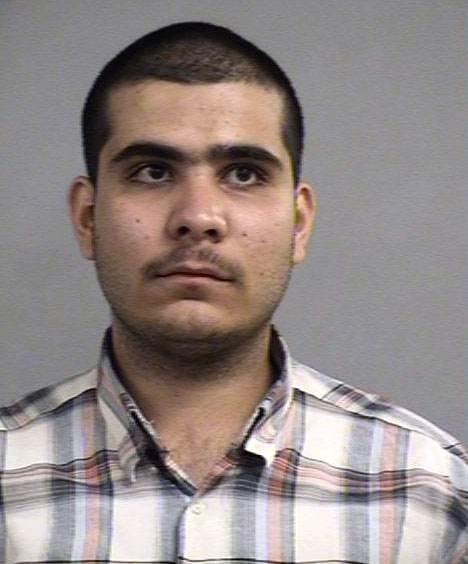
Mustafa allegedly ripped-off his refugee agency and brought cultural enrichment to Kentucky.

Lexington, Kentucky is being “enriched” we are told.  Remember “Mustafa” from Louisville, KY who is charged with ripping-off Kentucky Refugee Ministries?  Did Mustafa bring cultural enrichment?

And, by the way, readers, it is a good thing we captured some of Mustafa’s facebook page about his travels in recent years to Syria, Turkey and Saudi Arabia and his role “working” with the FBI because all that has been removed since we last visited.

Did the Iraqi refugee terrorists bring enrichment and the joys of cultural diversity to Kentucky, or how about the Congolese woman recently sued by another Congolese “refugee” for human trafficking.  Did Sifa bring enrichment to Lexington?

You are going to see fluffy articles like this one all week as World Refugee Day approaches on Friday, the 20th.

From Kentucky.com (Hat tip: Dan)

Carine [of the Congo*** and star of this story—ed] will talk about that transition at the “World Refugee Day Summit: Lexington’s Bridge to the World” at the Central Library June 20. It is Lexington’s celebration of the rich, overlooked pockets of diversity throughout this community.

World Refugee Day was established by the United Nations in 2001 to pay tribute to the courage and strength exhibited by those forced to flee their homelands and familiar routines to escape conflict.

Lexington’s celebration has a twist, however.

“Unlike New York … and many larger cities with a rich history of immigration, Lexington is not yet used to helping new neighbors resettle,” said Lindsay Mattingly, multicultural liaison at the Lexington Public Library. “We do not yet have a well-developed infrastructure that can support nonnative English speakers.”

Here is an example of a deceptive line (there always are a few in stories like this one):

While the Kentucky Refugee Ministries does a great job, she said, that organization has to adhere to time limits set by the federal government of up to six months.

The only “time limit” is that their federal dole ends at that point.  There is no law that says a resettlement agency can’t  raise PRIVATE FUNDS to continue to care for refugees they bring to your town.  In reality their job for the first six months is to find refugees a job (if they can) and get them enrolled in all the welfare programs available to them.  Then they move on to the next paying “client.”

If you are in the Lexington area, you might want to attend Friday’s event:

“World Refugee Day Summit: Lexington’s Bridge to the World” begins with a conference at the Central Library, 140 East Main Street, from 9 a.m.-12:30 p.m.

***The Congolese in Lexington:

“Lexington has the third-largest population of resettled Congolese immigrants in the country,” Mattingly said. Phoenix and Houston are ahead of us. And there are more than 90 languages spoken in the homes of students in Fayette County schools.

Bowling Green, KY (more pockets of diversity!):  population of foreign born is 10% of the city’s population!

Bowling Green, where those Iraqi terrorists were living when they were arrested, is ahead of the rest of Kentucky in its demographic change (and enrichment!) thanks largely to the resettlement of refugees that has gone on there for decades.  See this story (hat tip: Robin).   That Daily News story also tells us this:

Whites now account for a minority of births in the U.S., and by 2050, whites are projected to become a minority of the U.S. population, according to the Pew report. U.S. Census Bureau results show that from 2000 to 2010, racial and ethnic minorities accounted for 91.7 percent of the nation’s growth. In 2000, 11.1 percent of the U.S. population was foreign born, which increased to 13 percent by 2011. By 2050, 19 percent of the nation’s population is projected to be foreign born, according to a Pew report.

We have been writing about problems that cultural diversity has brought Bowling Green for years, click here for those posts.


Lancaster Lutherans run job placement service for African refugees

But, of course they are paid by you, the federal taxpayer, to provide the service.

I guess the Lancaster, PA area has run out of Americans looking for work and so Sudanese “refugees” who traveled through Libya, Egypt and the Ukraine are now working at an egg processing plant there.

There are some interesting nuggets in this story that obviously riled up local commenters (check out the comments before they disappear!).  I was struck again about how we (the US) have picked up “refugees” that have traveled through safe countries (not including Libya) and didn’t ask for asylum in say the Ukraine and wherever else they must have passed through.

REBECCA ZEMENCIK/staff photo

Be sure to check out the part of the story where the three Arabic-speaking men were dropped off by a driver in the wrong PA community and didn’t exactly receive a warm welcome.

From the Republican Herald (thanks to several readers for sending it):

SPRING GLEN – R.W. Sauder Inc., a fourth-generation family company, has returned to the Hegins Valley.

As of Jan. 1, R.W. Sauder Inc. has taken over Hegins Valley Farms and have all eight bird houses filled and fully operational. Unfortunately, the business was having difficulty filling all the positions in order to have the Hubley Township plant fully operational.

A trip to a Lancaster gym by Paul Sauder paid off in more ways than one both for both himself and his company.

“My dad was working out at the gym and got talking to this man who works with Lutheran Refugee Services in Lancaster,” Mark Sauder said. “He learned of refugees that are here from various places in the world and who need employment.”

Sauder met with Lutheran Refugee Services in Lancaster and was introduced to a program that works with companies to find gainful employment for refugees and help them to get established here in the states.

Lutheran Refugee Services resettles approximately 180 refugees to the United States [they must mean to Lancaster because the Lutherans actually resettle thousands to America every year—ed]. Refugees are individuals who are forced to leave their country because of war or persecution. In order to gain admittance to the United States, refugees must prove that they have not fought or aided in military action, but rather are victims of the conflict.

According to LRS, refugees arrive in the U.S. with a status that allows them to work. After five years, they will be eligible to apply for U.S. citizenship.

Currently, LRS is resettling refugees from Iraq, Burma and Sudan. LRS assists them for their first 90 days in the country. The goal is for all refugees to be self-sufficient at the end of that time. Because some refugees need time to learn the language and culture enough to gain employment on their own, LRS is also funded to provide assistance with their job search beyond that time. Refugees can come back to the agency for the assistance any time within their first five years in the country.

Three men from Sudan – Alhadi Gouma, Norreldin Ali and Ismaeil Shrif – are now gainfully employed at R.W. Sauder Inc.’s Hubley Township plant.

Sorry, it never rings true to me that these ‘frightened’ men are willing to leave wives and children behind in the supposedly dangerous area they came from.   No, I should rephrase that, what kind of man leaves his wife and children in danger?

“We have been in the United States for the past eight months,” said Shrif, who left his wife and other family members in order to seek a better life. “It was very scary in the Sudan. There was much killing and burning, the men in the area were constantly in danger.”

Shrif said the men traveled to Libya, Egypt and Ukraine in order to finally escape.

“I still have contact with my wife in Sudan and hope to bring her to the states,” Shrif said.

Don’t forget to read the commentary!

We have a lot on Lancaster here at RRW, click here for our complete archive on the preferred resettlement site.

Columbus, OH Somalis could lose Section 8 housing because they can’t read the legal documents

This is a post aimed directly at the Wyoming governor and any others in the nation who believe “welcoming” refugees is a freebee for local tax payers.   It is not! and you better be saving your money for the translation services required by the feds.

Columbus is right behind Minneapolis as a go-to destination for Somalis where housing is at a premium.  Remember this 2012 story—-Somalis gone wild.

From the Columbus Post Dispatch:

A Bill Clinton Executive order in 2000 (just as he was leaving office!) says states and cities better get everything translated for the immigrant masses arriving in America.

The Columbus Metropolitan Housing Authority has failed to translate key documents into Somali and Spanish despite federal requirements, jeopardizing some families’ housing, advocates say.

Leases, hearing notices and payment contracts “are complex documents full of legal jargon that can be challenging for any tenant to understand,” said Benjamin D. Horne, a managing attorney at the Legal Aid Society of Columbus. “For a new American struggling to learn a new language and a new culture, the challenge is multiplied,” he said.

The Legal Aid Society is to discuss the translation issue with the CMHA on Tuesday.

The U.S. Department of Housing and Urban Development office in Columbus also is looking into the situation, said Tom Leach, the field-office director.

Title VI of the Civil Rights Act of 1964 protects people from discrimination based on race, color or national origin in programs and activities that receive federal financial assistance, Horne said.

In August 2000, President Bill Clinton issued an executive order requiring agencies that receive federal funds to create plans to ensure that people with limited English skills would have access to services.  [Access to welfare!—ed]

Seven years later, HUD released a set of guidelines for housing providers that receive federal assistance to meet the requirements to provide translation assistance.

CMHA created a plan in 2009 but still hasn’t acted on all the provisions, said Tracey Rudy, CMHA’s chief operating officer.

Immigrant activist:  It is shameful that we might lose Section 8 housing because we can’t understand English.

Hassan Omar, who leads the Somali Community Association of Ohio, said he sees people who are having problems understanding CMHA documents two or three times a month. He usually sends them to the Legal Aid Society.

CMHA should fix the problem, said Josue Vicente, executive director of the Ohio Hispanic Coalition.

“It’s shameful that people are losing their Section 8 vouchers because they don’t understand their rights and responsibilities under the program,” he said. “There are supposed to be protections in place to keep this from happening.”

Just a reminder to “welcoming” communities, here are the top ten languages  spoken by refugees that you need to start translating.   Arabic tops the list.

Seattle: Somali refugee killed in city’s “International District”

Diversity is strength alert!

Mohamed Osman shot dead in Seattle’s International District

It is never the Somalis who are the problem!  This time it’s what else?  Too many guns!  And, the police are to blame as well!

From q13Fox.news:

SEATTLE — Police are investigating a deadly shooting overnight in the International District. The gunman is still on the loose.

Friends say the latest victim was 27-year-old Mohamed Osman, a Somali native, who moved to Seattle a few years ago.

Fourth person killed in the neighborhood this week!

Osman is the fourth person to be killed in a shooting in Seattle this week. Although the incidents do not appear to be related, many people are worried.

“It`s very scary when you live in the neighborhood that it happens in, and it can happen any time,” says Lisa Tsui, who lives in the International District.

Put a Somali on the police force and that’ll fix it!

But he says guns aren’t the only problem. He thinks the police need to do a better job, reaching out to the different ethnic groups in the city. He says this latest shooting could have avoided if police had paid more attention to the problems brewing in Seattle’s Somali community.

“The Seattle police department doesn`t have anyone with a Somali background representing the community,” he says.

Seattle is a “preferred resettlement site” for the US State Department and its contractors.   And, by the way, we have admitted another 4,508 Somalis to the US this year (added to the over 100,000 admitted so far).

Springfield, MA: State/city agencies stepping in to help impoverished Somali refugee family

How many more like this family across America?


The family of twelve was recently removed from their roach infested rental property where the electric bill had gone unpaid as well. MassLive File photo / John Suchocki


We recently learned that 63% of Minnesota’s Somalis live below the poverty line and in Oregon the estimate is higher than that (67% ).  I wonder what it is in every state where Somalis have been located?

Come and get it!

Massachusetts (home state of the ‘brains’ behind the refugee program—the now deceased Ted Kennedy) has been a “welcoming” state for refugees, as was the city of Springfield (originally!), so I guess they knew what they were getting in to, but I’m not so sure the taxpayers there were fully aware (until now!).   See Springfield mayor wants moratorium.

From MassLive (emphasis mine):

SPRINGFIELD – A lawyer for the city’s Housing office said Friday that the city remains committed to helping two refugee families that were left homeless two weeks ago when their Union Street apartment was condemned.

The two families, originally from Somalia and consisting of three adults and 12 children, have spent the last two weeks in a Greenfield hotel. Some assistance has been provided to the families by local and state agencies, officials said.

“The city remains committed to assuring that the families are afforded safe and sanitary housing,” said Lisa C. DeSousa, associate city solicitor. “We are looking forward to working with social service agencies that are charged with assisting refugee families in these types of situations.”

[…..]

The school-aged children have been transported daily from the Greenfield hotel to their Springfield schools.

The state Department of Children and Families and state Department of Transitional Assistance are believed to be helping the families.

Maybe it’s time for the cost of saving these impoverished families to fall on the US State Department and the Office of Refugee Resettlement (in Health and Human Services).  Maybe if the cost came out of their federal budget hides, instead of state and local taxpayers’ piggy banks, Congress would begin to pay attention.

I know, I know, it still comes from the taxpayers ultimately, but it’s about sending a message to the one government body that could stop the insanity.