Immigrants moving out of cities to suburbs; Minnesota Somali example

The Census Bureau has a new tracking program (Census Explorer) which allows users to follow the demographic changes in cities and towns across America.  Here is what the Star Tribune reported on Tuesday (emphasis mine):

Yussuf Shafie admits it wasn’t easy being among the first Somali immigrants to arrive in Burnsville’s schools.

Yussuf Shafie opened his Burnsville African restaurant in 2012. Photo by John Gessner

“It wasn’t as diverse as it is today, I’ll tell you that. It was hard to communicate with peers and stuff.”

But now that there’s a “huge Somali population” in the area, he says, things are going swimmingly at his year-old Tawakal Restaurant in the suburb’s downtown. Nor is the place just for immigrants; it functions as an easy point of contact for all kinds of cultures.

“It’s open to everyone who has a wallet,” he cheerfully declares. “If you have a wallet, we can get along!”

He is part of what one analyst on Tuesday called a “dramatic shift” of immigrants out of the central cities after the U.S. Census Bureau released its latest batch of data tracing demographic change.

Burnsville and Eagan emerge among the state’s top 10 destinations for East Africans, while nearby Shakopee is among the leaders for Southeast Asians. Eden Prairie is the state’s leading home for immigrants from India.

“We recently did an analysis showing that every big minority group is now majority suburban,” said University of Minnesota demographer Will Craig.

[…..]

Those moves are visible in a new online mapping program the Census Bureau unveiled on Tuesday, called Census Explorer. The program allows people to easily trace key changes in their own neighborhoods from 1990 to 2000 to today.

Of course, as we learned years ago, the federal refugee resettlement contractors are actively seeking out smaller cities and towns for resettlement of third world refugees.  So, it isn’t necessarily some great spontaneous happening.  And, then there is the meatpacker-induced demographic change!

And, come to think of it, we have been told over and over again that immigrants are re-building the inner cities in places like Buffalo or Erie, PA, this news would indicate that is just a bunch of spin and that the immigrants want to get out of the cities as fast as they can.  This news also means that ‘Welcoming America’ (Tom Negri and David Lubell) are selling Cleveland a bill of goods when they want Cleveland to seek more immigrants to re-build that city.   Sure looks like the immigrants will be out of there soon too!

The photo is from Sun This Week, here.   Just FYI Burnsville has a new mosque too!

Progressives: Tyson Foods exploits immigrant labor, destroys small towns

It is not often I agree with anything from “Progressives,” but when a reader sent me this piece from Progressives for Immigration Reform I couldn’t believe my eyes.  It is more on the report we posted the other day on Noel, Missouri and the poverty the town is experiencing as it is flooded with mostly REFUGEE laborers for Tyson Foods.

How on earth our federal CHURCH contractors can be aiding and abetting this travesty continues to be beyond my understanding.

From Progressives for Immigration Reform (emphasis mine):

In her NPR news story, In A Small Missouri Town, Immigrants Turn To Schools For Help, writer Abbie Fentress Swanson chronicles the plight of newly arrived immigrants to the small, rural town of Noel, Missouri. It seems that longtime residents there are not dealing well with sudden demographic changes. Consequently, immigrants from Mexico, Myanmar, Ethiopia, Somalia, Kenya, and the Pinglap region of Micronesia are among those feeling unwelcome and isolated in this formerly white community, which saw its population double to 2,000 in just two decades.

Many of these immigrants are so poor they cannot afford housing or healthcare. Their children often lack shoes and clothes. As Swanson notes, about 90% of the community’s children would go hungry most of the school day, if they didn’t qualify for free or low-cost meals. With such an influx of people, Noel has not been able to keep up with providing social services. There is a long wait list for units from the local housing authority, and building more housing would strain the town’s sewer system, already at 80% capacity.

Immigrants are attracted to Noel by jobs at the chicken processing plant of Tyson Foods, which employs 1,600 people. The starting wage is a paltry $9.05 per hour, which comes to $362 a week before taxes for an eight-hour, five-day week. Despite health and injury risks to workers in this industry, Swanson calls this a “decent” wage and declines to hold Tyson culpable for perpetuating widespread misery in the cash-strapped town.

The nation’s largest U.S. meat processor by sales can easily afford to pay its employees in Noel a living wage, but prefers to have the community subsidize the resulting human wreckage. After all, profit is the overriding goal, even if it must be achieved by driving wages so low that most American citizens no longer can afford to work at its processing plants. No matter – the continuous stream of cheap, compliant foreign labor will do just fine. The results are compelling….

Read about the profits Tyson Foods is making.  Then this:

Assimilation is not the real problem facing Noel, Missouri nor is it street-level bickering about matters of race, religion and values. The larger issue is what to do about rogue corporations that run roughshod over small communities in pursuit of profit, little of which is invested locally. Of greater concern is that our government wants to overload the job market even more through mass immigration policies, which will lay waste to many more small communities throughout America.

And, what do you do about federal contractors for the US State Department wearing the white hat of do-gooderism while helping Tyson Foods make the profit!

Just a reminder, Senator Jeff Sessions called out the meatpackers as being one of the driving forces behind so-called “comprehensive immigration reform” when S.744 passed the Senate in June.

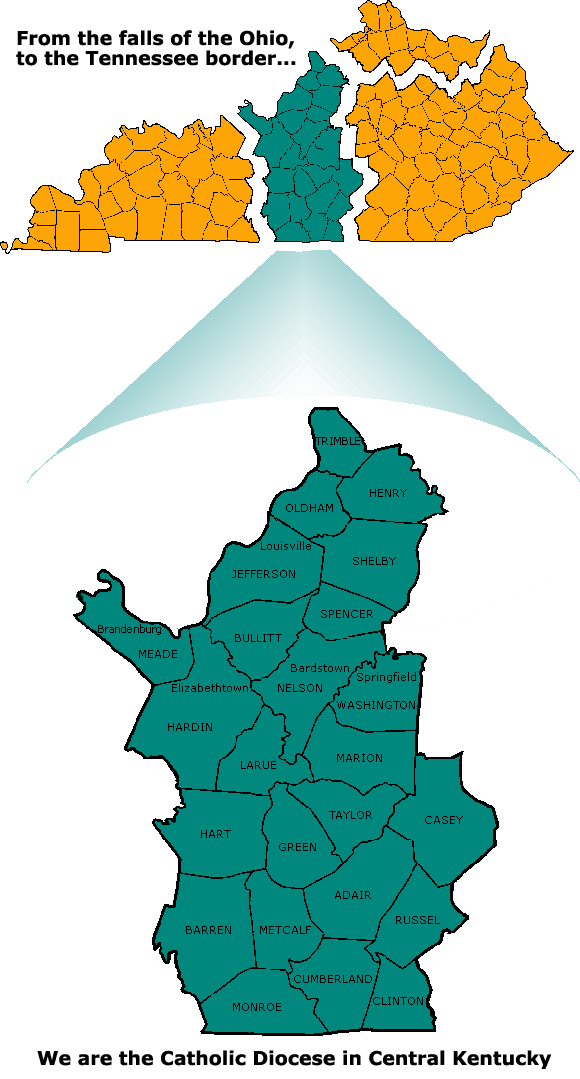
Catholic Charities raking in government bucks in Louisville, KY

When I saw this article entitled, ‘Sponsor a refugee family for holiday giving,’ I thought to myself, that’s nice they are asking Catholics to give Christmas (oops! “holiday”) gifts to refugees by “sponsoring” a family.  Of course, I immediately thought why don’t they ask churches, groups and individuals to sponsor a family for a year!

Archdiocese of Louisville’s territory.

Then half way down the gushy piece comes this section of the article filled with the usual misinformation about who really is paying for refugees—YOU!

And, get this!  Catholic Charities of Louisville has an indoctrination program that is going national in 2014—You will likely be paying them through federal grants to “educate” your kids too!

From the Examiner.com (emphasis mine):

So who brings these refugees to the United States and who financially supports them? Migration and Refugee Services (MRS) is one of the local affiliates of the United States Conference of Catholic Bishops, under newly-elected president Archbishop Joseph E. Kurtz, which assists in the resettlement process. As a branch of Catholic Charities, MRS has resettled approximately one-third of all refugees entering the United States, totaling over 10,000 refugees since 1975.  [They are surely missing some zeros because the US has now taken in well over a million refugees—ed]   Out of the 120 organizations run by Catholic Charities, MRS now ranks five. Funding of the program comes primarily from the federal government and the Archdiocese of Louisville. [Very little from private funding as you will see below —ed] From October 2012 thru September 2013, MRS has resettled over 1000 refugees in Louisville neighborhoods coming from over 20 countries. The top five nationalities are Burmese, Somalia, Iraq, Bhutan and Cuba.

MRS assists with various programs to help refugees reach the goal of self-sufficiency within six months. In addition to providing basic needs of food, clothing, shelter, furnishings and transportation, all refugees attend English classes and cultural orientation programs, receive medical services, and are assisted with job search and placement. According to Chris Clements, Community Resource Developer, “87% percent of refugees have reached self-sufficiency status within a six-month period since October 2013.” [No way! They are not self-sufficient if they get subsidized housing and food stamps, and there is no way 87% are not on one or both of those welfare programs—ed] Many refugees who had professional jobs in their own countries begin with entry-level jobs here and work their way up. “They are happy to be here and willing to work,” noted Clements. Catholic Charities have assisted by hiring some refugees. “About 40% are former refugees. [Of course that helps CC’s employment statistics!—ed]  They know what it’s like and can identify with them.” Many have opened stores and restaurants, adding to the diversity and ethnic possibilities within the community [With micro-loans funded by the feds with your money!—ed] Louisville is a welcoming place for refugees by offering a medium-size city, affordable cost of living, lower crime rate, better employment opportunities, English programs in public schools, and bus transportation.

Propaganda campaign coming to your school next year!

To heighten awareness about refugees and transitions they encounter, Catholic Charities of Louisville and local educators developed a program that will be introduced on a national level for other agencies in Washington, DC in July 2014. This curriculum guide, Seeking Refuge: Forced to Flee, takes participants into a simulated refugee camp by navigating thru a series of stations, encountering communication, medical and legal barriers. The program was initiated in various schools and parishes for the past 10 years, and its success has multiplied each year.

In building awareness about the plight of refugees, word will hopefully spread that these families arrive here with only a few of their personal belongings….

So, every child will be guilt-tripped into never again questioning why we are doing this—importing third world poverty into America while we have our own poor and needy people.

Have a look at Catholic Charities of Louisville’s latest Form 990.

They took in $13,179,017.  (page 9)

They received $11,349,920 from GOVERNMENT GRANTS.  86% of their funding comes from TAXPAYERS!

$773,162 came from related organizations (probably the US Conference of Catholic Bishops as pass-through from the federal government too!).

That leaves $1,055,935 from all other contributions.   Only 8% of their funding is from presumably private sources.

They couldn’t exist without your money.

Don’t hold your breath waiting for the ACLU to raise a question of the separation of church and state because CC and the ACLU are on the same political team.

Missouri: Tyson Foods’ transient labor creates more poverty in small town America

….and more tension among long-time residents.
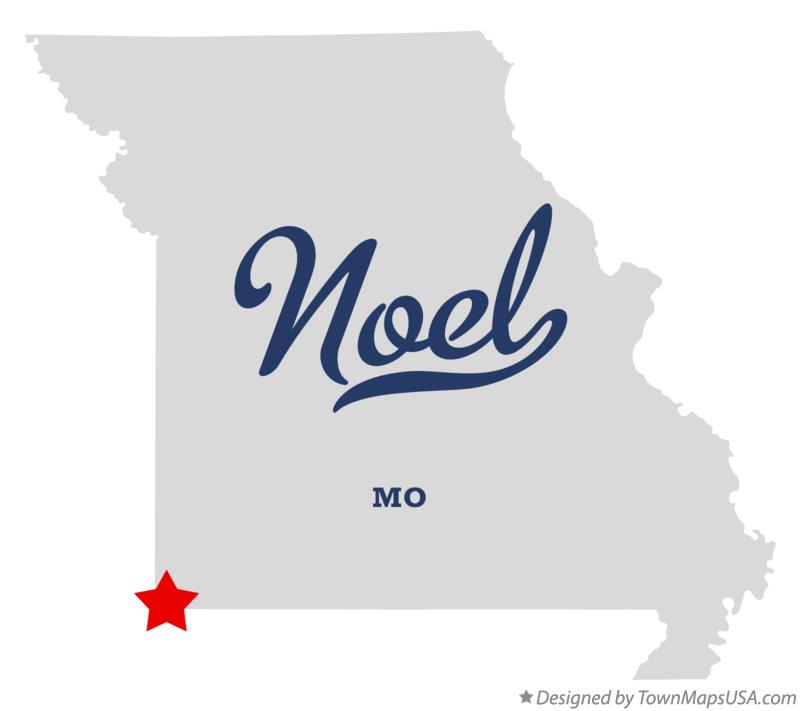
We’ve written so many times about how ‘big meat’ is disrupting the demographics of heartland America that I’ve lost count.  But, here is a story that in its brevity summarizes a pattern that will be very familiar to longtime readers of RRW.

And, let me remind you, as I always do with stories like these, that before the meatpackers discovered illegal Hispanic workers, Americans were working in meatpacking at a higher salary (decades ago) than the starting wage of $9 an hour mentioned in this article.

From GPB News (emphasis mine).  Note the photo caption which says the town of Noel is thriving, but the article tells a different story.

For centuries, immigrants in search of a better life have been drawn to America’s largest cities. Now, in part because of the meatpacking industry, recent immigrants have been seeking out small, rural towns. But many of these towns are struggling to provide the social services needed by such a diverse population that’s largely invisible to most Americans.

Noel, Mo., has been dubbed the “Christmas City” and “Canoe Capital of the Ozarks” thanks to the Elk River, which winds through town. But this Missouri town of fewer than 2,000 residents thrives because of the Tyson Foods Inc. chicken processing complex located here it alone employs about 1,600 people. Just 20 years ago, Noel had only about half as many residents, and most of them were white. Then in the 1990s, Hispanics most of them Mexican moved to Noel to process chicken. Pacific Islanders and refugees from parts of Myanmar and Africa followed.

“We do have small towns that have had 100 to 200 percent growth that have really changed overnight over the past 20 years and have a much larger immigrant population than they used to,” says Lisa Dorner, a University of Missouri education professor who has done extensive research on immigrant children growing up in small towns and suburbs. Dorner thinks such major demographic changes don’t always sit well with local residents.

“When you find yourself, as a family especially, in a place that is pretty remote and hasn’t recently been used to welcoming immigrants, you may feel pretty lost,” she says.  [I don’t know that “lost” is the right word, unless she means hopeless!—ed]

For Somali newcomers, Noel has been particularly challenging. In a recent incident, tires on more than a dozen of their cars were recently slashed. Police didn’t have a suspect and have since dropped the investigation. Some Somalis say they also feel unwelcome at local establishments.

Maybe, just maybe, they aren’t feeling welcoming toward Somalis because they staged a strike at the plant in 2011—they wanted special religious accommodation on the job.

“Overall, this community, they are not welcoming to people [who] look different or [who are of] different religions. It’s like they are still in the 1980s …” says Farah Burale, a Somali-English translator at the Tyson plant. “Because of that reason, we are isolated, we see each other in the chicken plant or on the street without saying, ‘Hi.’ “

Tyson Foods wants the town to build more housing, but the town can’t afford the infrastructure costs.

Affordable housing is also a problem here in Noel. There’s a long waiting list for open units at the local housing authority.

“You cannot rent a house right now. If you look, try to find a house, you can’t,” says Faisal Ali Ahmed, a Somali refugee who works the night shift at the Tyson plant as a forklift driver. “It’s a very difficult life. If they shut down this company now, nobody stay in this bush.

John Lafley, the mayor of Noel, says longtime residents need to be sensitized to immigrants’ needs, and immigrants need to try to fit in.

“We’re trying to assimilate people that don’t understand the American way. And they want to keep their own ways, which is not that popular,” Lafley says.

Lafley says Tyson Foods is pushing the town to allow for more housing development, but he’s concerned that Noel’s infrastructure can’t handle more units.

The schools system (66% minority children!) has become the de facto social services department trying to stem poverty in the immigrant households.

The mayor says there’s no money in the budget either to provide the social services needed in this small, remote town, which sits not far from the Missouri-Kansas-Arkansas-Oklahoma borders. For rural Missouri, Tyson plant jobs pay decent wages that start at $9.05 an hour. Still, poverty looms large here. About 90 percent of Noel school students qualify for free or reduced-cost meals. The number of homeless children has doubled in the past five years. Because the nearest food pantry and free clinic are miles away, many plant workers turn to their children’s schools for help.

Whoever wrote the caption on the photo about the town “thriving” must not have read the article!

There is more about how the teachers in the school find food and other supplies for the poor children.  And, there is more about how Tysons doesn’t supply much help to the town and must continue to hire more transient immigrant laborers as earlier ones get out of this “bush” and move on to cities in hopes of finding better work.

Also, note as you read the article that there is still fear of deportations which means that Tyson Foods must still be hiring illegal immigrant labor.

For additional reading, check out this article from back in October about how the school system has become the “safety net” for the poor kids.

I continue to be convinced that a driving force pushing refugee resettlement in America is the meatpacking industry and a few other large industries always looking to keep wages down by hiring what amounts to legal captive slave labor—people who have nowhere else to go (and rarely can they return home, although some have). 

The business model!  ‘Big meat’ pays low wages and the other needs of the immigrant laborers are subsidized by you—the taxpayers.

Utah: After nearly six years trial to begin in case of Burmese refugee who allegedly raped and murdered 7-year-old

Alleged child rapist/murderer, Esar Met, photographed in court in December 2012.
Al Hartmann | The Salt Lake Tribune

Wow!  I wondered what had happened to this case we reported back in 2008, and just tonight up pops the news that the trial will begin in January for Esar Met who we learned in 2012 is a Burmese Muslim (a Rohingya?).   The victim, Hser Ner Moo, was a Christian and both had been resettled in the same apartment complex in Salt Lake City.

Here is what a news report in 2008 said (I didn’t see it until 2012):

Rage flashed through the muddy lanes where Hser Ner Moo had once skipped rope and played hide-and-seek. In the camp, tension lingers between the Karen and Muslims, and some choose to live apart. Hser Ner Moo and Esar had lived in separate sections of Mae La.

America had made them neighbors.

Not America!—the resettlement contractors in Salt Lake City! and the US State Department! who have some naive notion that generations of “tensions” between Christians and Muslims can simply be erased by dropping people into America’s magical (mythical!) melting pot!

This is the news this evening from The Salt Lake Tribune (emphasis mine):

Prosecutors and defense attorneys still have much to do before a Burmese refugee accused of kidnapping and killing a young girl at the South Salt Lake apartment complex where they both lived in 2008 is brought to trial.

But Senior Judge Judith Atherton said Wednesday she doesn’t want to postpone the case any longer.

After nearly six years of delays, Esar Met’s three-week trial is scheduled to begin Jan. 6.

Met, 26, is charged in 3rd District Court with first-degree felony counts of aggravated murder and child kidnapping in connection with the March 2008 slaying of 7-year-old Hser Ner Moo.

On Wednesday, defense attorneys asked the judge to suppress evidence in the case they said was collected using illegal or unethical methods and petitioned the court to have prosecutors use diagrams instead of certain graphic photos that, the defense argued, are “too gruesome” for jurors.

Prosecutors called the photos relevant, saying they show the brutality with which the child was killed and the injuries she suffered.

[…..]

Atherton will issue a decision next week on whether or not a jury will be allowed to view the photos, which depict the 7-year-old girl crumpled inside a bathroom stall, bloodied and naked from the waist down, with obviously broken bones and bruised and damaged genitals.

[…..]

Hser Ner Moo disappeared on March 31, 2008, prompting hundreds of volunteers to search for her before police found her body in Met’s apartment the next night. Her family lived in the same complex, and the girl was acquainted with Met.

Read the whole article, there will be legal wrangling over whether proper interpreters interviewed the alleged killer.

All of our mentions of this Utah murder case may be found here.