Tennessee: housing market “unkind” to refugees/immigrants

Do we see a trend developing here!  It appears that the Open borders activists must have sent out talking points—tell the media that there is unfair treatment of refugees/asylum seekers and other migrants rampant in America!

We just now posted on the not-so-nice Minnesotans, here.  And, we have a story from Portland, Maine last week that we didn’t get to about problems asylum seekers are having with landlords there.

Hawa Abdullahi: We would like more low-income housing for our people. http://www.centerforrefugees.org/our-team/

Now comes the news from Nashville, a major resettlement site for Catholic Charities, that they are having problems with “fair housing” in that ‘welcoming’ city and surrounding counties.

Not mentioned, of course, are the problems that impoverished or disabled native Nashville area citizens are likely having getting housing when they have to compete with the immigrants!

From The Tennessean  (Hat tip: Joanne).  Emphasis is mine:

Immigrants and refugees in Nashville have more help than ever finding stable housing, but forces beyond their control have made life tougher in recent years.

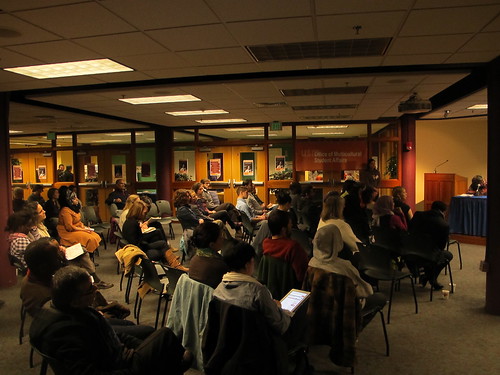
Increasing apartment rental costs have been hard on international newcomers, said Hawa Abdullahi, social services coordinator with the Center for Refugees and Immigrants of Tennessee, at a conference on fair housing in Nashville.

“We have seen a lot of rent going up, which is hard for people to cover,” she said. “We see a lot of people getting pushed … moving to Antioch, Smyrna, and places like that. It’s really getting hard right now to find apartments.”

Abdullahi spoke about immigrant housing experiences as part of the Fair Housing Matters Conference. The fight against housing discrimination has taken on new urgency locally and across the nation because of increased federal funding and new directives meant to make housing available to all people.

Abdullahi described how the refugee families she works with struggle to get by on wages that rarely top $10 per hour.

The panelists said immigrants struggle to find housing because of language barriers, discrimination, poor credit histories, and limited options near public transit.

And refugees, in particular, arrive with debt. People approved by the U.S. government to move into America to escape persecution in their home countries, they receive financial assistance for eight months but must pay back the travel costs that move them to America in the first place.  [This plane fare issue is bogus—many just walk away from the debt.  What they never tell you is that the ‘church contractor’ (in this case Catholic Charities) gets to keep a portion of the loan if it is repaid!  Only a small portion of your tax dollars are reimbursed to the US treasury.–ed]

About 1,300 refugees are resettled in and around Nashville each year — with more than two-thirds joining families that already live here.   [Just a reminder readers, that when yours has become a “welcoming” city, the first refugees arriving apply to bring their family members.  It is called chain migration—ed]

[….]

“The city of Nashville is getting better. Definitely (officials) are aware Nashville is a destination for immigrants,” Morales said. “For surrounding counties, that’s a different story.”

Nashville has been such a hot spot over the years that we have a whole category designated just for Nashville, here, with 65 previous posts.  Nashville was recently chosen by the federal government as a “preferred community” for refugee resettlement, here.

Amarillo, TX: Refugee kids living in poverty, homeless, sleep in cars

A few weeks ago we reported that Amarillo, once a “welcoming” community, is now in refugee-overload and asking the federal government to give them a break and slow the flow of refugees.  Amarillo is a ‘pocket of resistance.’

Somali women learning English in Amarillo.
https://www.texastribune.org/2014/02/21/amarillo-struggles-handle-influx-refugees/

Now, here is a story that all Wyomingites should note, poverty is increasing in Potter County with the increase in refugees arriving there and there is a cost to the local taxpayer and a social cost to the community.

From ABC News Amarillo (hat tip: ‘pungentpeppers’):

AMARILLO, TEXAS — Over the years, Amarillo Independent School District has seen an influx of students who live in poverty, many refugees. Studies show when a child is food insecure and tired, they can’t learn. That’s why the district has employed social workers to make sure their students have basic necessities.

Sabre McLean was hired by AISD 12-years ago to work at San Jacinto and Margaret Wills Elementary when the principals at the time noticed they were spending a lot of time working on social issues with struggling families instead of educating their students.

“Amarillo has a lot of homeless families, families that sleep in cars, families that stay in shelters. And every night we have kiddos that are in those situations,” said social worker, Sabre McLean.

In fact, more than 23% of Potter County families are living in poverty, that’s according to the Census Bureau. A number that’s growing along with the refugee population. Studies show when kids are food insecure, tired, and embarrassed over worn out clothes, they’re not learning.

“When kids come in and they’re dirty, they haven’t had a good nights sleep and they’re hungry. My job is to provide those services so they can be in their chair doing their job and learning,” said McLean.

She works with the students and their families making sure they’re fed, clothed, and getting help with basic needs. But the only dollars spent AISD is on these social workers salary, everything else is donation based.

Does your community have a taxpayer-funded social worker to help poor refugee kids get through a school day?

Check this out!

I visited Catholic Charities of the Texas Panhandle, one of the primary contractors resettling refugees in Amarillo and they have this handy flow chart entitled, ‘Report on Refugee Resettlement in Amarillo’, which shows exactly what we have been saying for years—the program is so complex (they need a flow chart!) that the average concerned citizen of Amarillo could not possibly sort this out without spending many long hours in research.

LOL! Of course the UN is at the top of the flow chart!

Is Amarillo, TX joining the “pockets of resistance” to refugee resettlement?

Update:  Readers may wish to contact Rep. Thornberry and encourage his willingness to speak up.  Contact info. is here—best to try the Amarillo office first then ask for a staff person who works on immigration issues.

It looks like David Lubell and his mind-police at Welcoming America’ have another emergency on their hands, this time in Texas!

In my previous post this morning I mentioned that ‘Welcoming America’ has been hired by the Office of Refugee Resettlement to help head off “pockets of resistance” to more refugee resettlement in immigrant over-loaded cities.  And, no sooner did I post it than reader Joanne sent along this hot news story—‘Amarillo struggles to handle influx of refugees‘ from the Texas Tribune.

Wyoming, why do you think the State Department needs you now?  They are running out of places to resettle thousands of new refugees entering the US each month!

US Rep Mac Thornberry: “We cannot keep going at the rate we’ve been going,”

Texas Tribune (emphasis is mine):

More international refugees were resettled in Texas in 2012 than in any other state, according to the federal Office of Refugee Resettlement. And one of the leading destinations is Amarillo, where members of Thawng’s church and other newcomers from places like Myanmar and Iraq often work in meatpacking plants.

Now local officials are worried that Amarillo’s refugee population is straining the Panhandle city’s ability to respond to 911 callers who speak numerous languages and to help schoolchildren learn English and adapt to a new culture.

“We’ve raised some red flags and said this isn’t good for some entities in the city or for the refugees themselves,” said Mayor Paul Harpole.

Amarillo, the state’s 14th largest city, with 195,000 residents, receives a higher ratio of new refugees to the existing population than any other Texas city, according to 2007-12 State Department data from U.S. Rep. Mac Thornberry, R-Clarendon. And the only Texas cities that receive a larger number of refugees than Amarillo (which received 480 in 2012) are also the state’s largest: Houston, Dallas, Fort Worth, Austin and San Antonio.

But those numbers show only a refugee’s initial placement and do not account for secondary migration, Thornberry said. Many refugees who initially settle elsewhere relocate to Amarillo for jobs or to join family members.

The State Department decides how many refugees are resettled in an area, and states review those recommendations. Last fall, the department, the Texas Health and Human Services Commission and refugee placement organizations agreed that for 2014, placements in Amarillo should be limited to family reunifications, said Stephanie Goodman, a spokeswoman for the commission.

“We cannot keep going at the rate we’ve been going,” Thornberry said.  [Readers:  we often see mayors raise red flags, but rarely is a Member of Congress brave enough to say something like this publicly!—ed]

Catholic Charities brought refugees for meatpacking jobs!  Where have we heard that before?

Now there aren’t so many of those jobs (someone please tell Grover to call off the amnesty, there are legal immigrants here looking for work!).

Even so, she soon considered Amarillo her home, and 17 years later, she’s still there. She is now interim director of refugee resettlement at Catholic Charities of the Texas Panhandle, which helps people who have fled war and persecution find homes and jobs. Many find work at area meatpacking plants, which often pay $14 an hour, Lohony said.

But Harpole said demand for workers at the plants was declining. “We just think it’s going to be more difficult for the refugees to do well here,” he said.

Educational challenges, cultural challenges and how not to go hunting for food on private property!  What! The do-gooders at Catholic Charities can’t feed them?  Shame on you!

For schools, challenges include educating students who sometimes cannot read in English or in their native language, Thornberry said.

“You look at the burden you’re placing on the school system not only to meet the testing requirements but to help integrate these kids into modern American life,” he said.

Cultural differences are also an issue outside schools, he said. Recently a refugee was found on a local ranch hunting for food.

“Obviously, it was quite a shock to some of the ranchers,” Thornberry said.

Check out our previous mentions of Amarillo—a preferred resettlement site in 2009—here.

Maine: Gee, no jobs for educated refugees, what a surprise!

Nor are there jobs for your college graduate kids!

Just now as I turned off the TV, President Obama was being interviewed about how to create more jobs and yesterday the Republicans were announcing their plan to flood the job market with both uneducated and educated immigrants for their big business donor friends, yet here is a story from Maine boo-hooing about no jobs for educated refugees!

University of Southern Maine audience listens to plight of refugees who can’t find work!

From Maine Public Broadcasting Network.  (Hat tip: ‘pungentpeppers’)  An Iraqi with a college degree from Iraq took part in panel discussion on jobs hosted by Catholic Charities of Maine among others.  I guess there are no more struggling job-seekers among the Americans in Maine!

Portland resident Sarah Mahdi came to the U.S. with a college degree, but, like many immigrants, has had trouble getting it recognized in the U.S. It’s not an unusual problem. Maine educators and other service providers are now looking for ways to make it easier for educated immigrants to find suitable jobs or further their educational opportunities.

[…..]

“When I first came to the States I just wanted to study,” said Mahdi, who was among a handful of immigrant students sharing their experiences Wednesday night at a panel discussion in Portland. The panel was organized by the University of Southern Maine’s Office of Multicultural Student Affairs, and Catholic Charities Maine.

New Mainers Resource Center uses tax dollars to help immigrants prove they actually have a legitimate college degree.

One place immigrants can turn to is the newly-established New Mainers Resource Center, one of the several service providers on hand at Wednesday night’s event to offer advice. The center’s program co-ordinator, Sally Sutton, is talking to George Dakonsa, who arrived here from the Democratic Republic of Congo seeking asylum four months ago.

“I have a bachelor’s degree in economics and finance,” he says. “I’d like it if they can help me to evaluate.”

The center was recently opened by Portland Adult Education with the aim of specifically helping college-educated immigrants in their search for suitable employment or further education. Co-ordinator Sutton says with immigrants like Dakonsa come an opportunity to breathe new economic life into the state.  [Would someone please explain exactly how they are breathing new economic life into the state!—ed]

That bad ‘ol Maine governor is at it again—-how dare he try to balance the state budget!

The New Mainers Resource Center, however, may end up being a short-lived venture. It’s meant to be a two-year pilot project funded at $75,000 a year.

But the program could be eliminated after its first year – just one small part of the nearly $34 million in spending cuts being recommended in a report commissioned by the LePage administration, looking for ways to balance the two-year budget.

Governor LePage needs to continue working on something else!  Maine has become a go-to state for asylum seekers.

Check out this article from The Free Press from earlier this month:

Maine has become known to many central African asylum seekers as a place where they can find community support as well as temporary financial assistance while they have their visas and work permits approved. Often they arrive on tourist or business visas, sometimes with forged documents. While many asylum seekers are well educated and come from financial means, the money doesn’t last long and many end up in homeless shelters while their applications are being processed.

Maine happens to be one of a handful of states that does not require proof of citizenship. All asylum seekers must show is that they are applying for asylum. Unlike official refugees, such as many in the Somali and Sudanese populations who are resettled in Maine by the U.S. State Department [and Catholic Charities—ed], asylum seekers do not qualify for any other state or federal benefits while they are applying for asylum. The whole asylum approval process can take from one to two years and it typically takes at least 150 days for asylum seekers to be eligible to legally work once approved for asylum.

See also, Maine the welfare magnet one of our top posts of all time.

One more thing….so much for the importance of educated refugees!

Reader ‘tomasrose’ sent us this comment to our earlier post about Bhutanese low-skilled laborers and the US State Department (as headhunters) bringing them in for businesses:

I spoke with a refugee from the middle east just last week and he confirmed, of course, refugees are coached in what to say to improve their chances at coming to the U.S.. One of the things he said is they hide any education they might have. If the U.S. thinks you are educated your chances of moving to the U.S. are lower. He cited an M.D. from Baghdad who told refugee officials he was a menial laborer and, presumably, would be happy to work the same jobs in the U.S.. Had he advertised his credentials as a doctor, he would have a better chance at going to one of the Scandinavian countries, but to get the U.S. he had to really dumb his resume down.

Tennesseans going around the mainstream media with “justice” website

Everyone of you concerned with the cost to your state of federal initiatives like the US State Department’s Refugee Resettlement program should be taking a cue from activists in Tennessee where they have been tirelessly attempting to dig out the cost of the program to the taxpayers of their state.  And, more importantly, they aren’t waiting for the big news outlets in Tennessee to carry their message.

‘Community organizers’ have taken a page from the Leftist playbook and have published their own website entitled, ‘tn Council 4 political justice’—justice for the taxpaying citizens of Tennessee.

Rep. Sanderson said ’60 Minutes’ story influenced him to choose more refugees over needs of Tennesseans.


Here is a recent post in which TN Rep. Bill Sanderson, a Republican, gets called out for supporting more refugees in Tennessee when Medicaid dollars are short for needy Americans.

From TCPJ:

It’s no news to anyone listening in Tennessee, that Governor Haslam is warning that projected revenue shortfalls will mean budget cuts.

Speaker Harwell acknowledged that with “revenues down a little this year, [balancing the state’s budget] will be tough.  But we will stick to the principles of fiscal responsibility and balance it responsibly.”

On January 2, 2014, The Tennessean reported: “The governor has argued that the annual growth in Medicaid spending has put the squeeze on other programs the state would like to spend money on. ‘Medicaid takes up all of our new dollars, and that’s just the hard fact,’ the governor told reporters after a Rotary Club speech last month.”

The week of January 20, 2014, the newspaper ran a series titled “Broken Trust” about the 7,100 most vulnerable Tennesseans with developmental disabilities who are forced to go without needed services because of the state’s failure to allocate the funds.

The funds needed to provide these services are Medicaid funds.  These are dollars that the State spends and the federal government matches.

Rep. Bill Sanderson believes that these state Medicaid dollars should NOT go to Tennesseans with developmental disabilities, but instead, to refugees who don’t even live in Tennessee yet.  He’s referring to the refugees that are eventually brought to Tennessee by Catholic Charities, a federal contractor that gets paid a lot of taxpayer money to bring refugees to Tennessee.

When refugees are brought to Tennessee by the federal contractors, they are immediately enrolled into any and all public assistance programs, including, state-funded TennCare, SSI, and cash welfare. The federal government used to reimburse the state for 3 years worth of what it cost the state to provide these benefits.  But typical of the federal government, they broke their promise to the states and stopped reimbursing the states for what the federal program cost.

Sanderson helped block a bill last year in the Tennessee legislature that simply sought to require refugee contractors and the agencies they work with to divulge various costs to Tennessee taxpayers from the resettlement program.  If you’ve spent any time following this federal plan for your “welcoming” state you know those numbers are not readily available—on purpose!

Last year, a bill was brought to Rep. Sanderson’s committee that was designed to help Tennessee figure out how much it was costing the state to pay for the federal program, a program that the state withdrew from in 2008 and is now run by a federal contractor.

But Rep. Sanderson who scathingly accused the bill sponsors and advocates of going on a “witch hunt against Catholic Charities,” related how he had watched a “60 Minutes” segment about refugees and it convinced him that they needed our help. He enthusiastically joined up with the federal contractors and led the effort to not pass the bill out of the committee.

Take a lesson in community organizing from Tennessee activists and follow TCPJ (see ‘follow’ link on bottom of right hand side bar).  Have you asked your state legislators what refugee resettlement is costing your state?

For more on Tennessee, see our Nashville category, here.