Maine: Somalis/others protest welfare rule change proposal

Update January 13th:  More here by Daniel Greenfield at Frontpage mag.

Leftist community organizers bused them in to the state capital from Portland and Lewiston, the twin hubs of the Somali/immigrant centers in Maine.

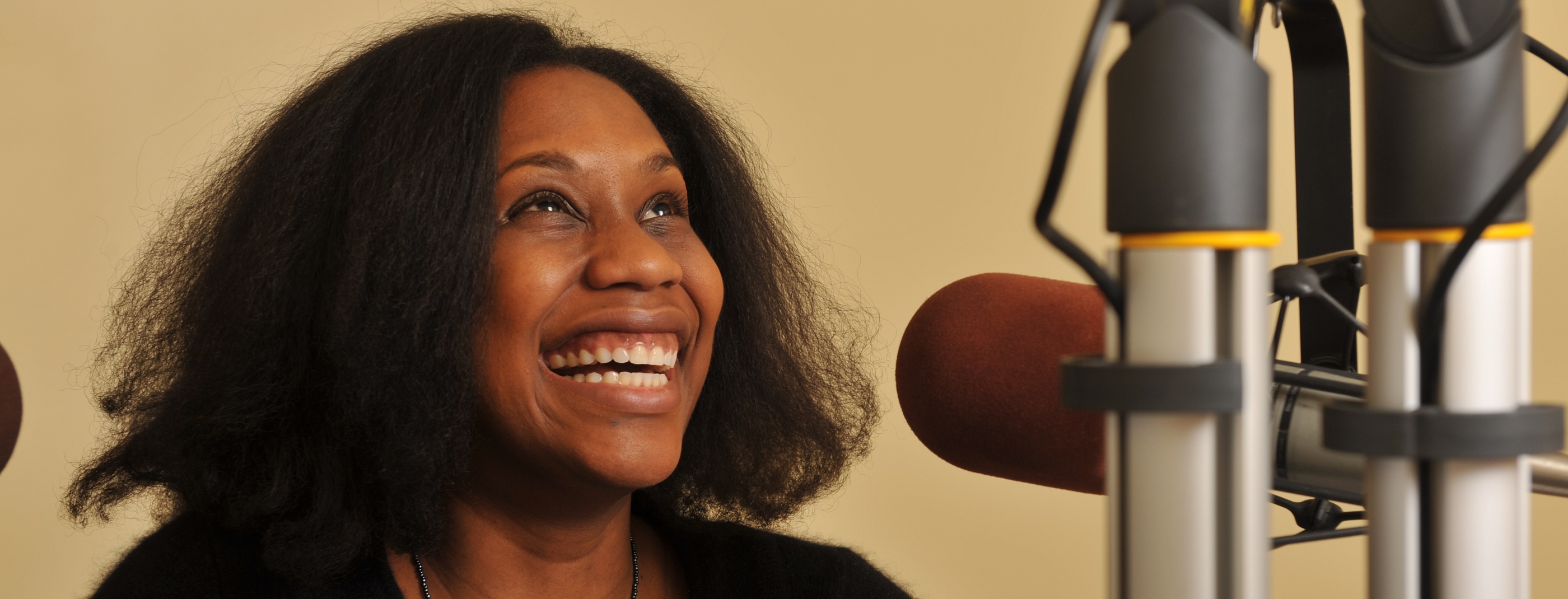
Somali community organizer Fatuma Hussein: “We are the future of Maine. We are the face of Maine.”
Photo Joe Phelan/Kennebec Journal

The Portland Press Herald story begins with an immigrant success story, a man who made it in Maine having come from a non-Muslim country.  Of course to persuade you how much refugees contribute they aren’t going to tell you about the asylum-seeking/welfare mooching Tsarnaev family nor Esar Met in Utah (the horror I will get back to shortly).

Here is the Portland Press Herald where the words ‘asylum seekers’ feature prominently in the title to gain your sympathy (hat tip: pungentpeppers).  Emphasis is mine:

On Friday, he [the star of their story] was among more than 100 people who turned out to oppose a proposed rule change that would prohibit hundreds of asylum seekers and some other immigrants from receiving General Assistance while waiting for their work permits.

“This is what the program was designed for – to help people with similar situations become self-sufficient,” he said.

Immigrants, attorneys, faith leaders and advocates for the poor urged the Department of Health and Human Services to withdraw the proposal, saying it is illegal, mean-spirited and morally wrong. They argued that it would cut off a life line for many people who arrive in Maine and apply for asylum – a process that can take years.

The rule change is being proposed by Gov. Paul LePage’s administration. The governor has made welfare reform a priority in his three years in office, and a major theme of his re-election campaign.  [Gee, maybe Gov. Christie could try something bold like this!—ed]

Asylum-seekers do not get on federal welfare until they have been granted asylum.  Remember that!  It was mentioned in our gay Russian post recently.  Refugees resettled by the US State Department and their federal contractors get taxpayer goodies immediately (see our fact sheet).

The change would align Maine’s program with federal aid programs, which don’t provide benefits to immigrants until they have been in the country for five years, said DHHS spokesman John Martins. General Assistance is funded entirely by the state and local governments, and is based now only on financial need, not citizenship status. Cities or towns that want to provide the aid could continue to do so, without state money, Martins said.

Advocates estimate that as many as 1,000 immigrants who are seeking asylum in Maine would lose access to General Assistance.  [Maine has that many in the court system seeking asylum?  I don’t believe it.—ed]

Opponents of the rule change were bused from Portland and Lewiston, cities with significant immigrant populations, for a hearing Friday before DHHS officials in Augusta.

[…..]

The change would affect primarily new immigrants who are not yet citizens and are not refugees resettled here by the federal government.  [Catholic Charities is the primary federal resettlement contractor in Maine—ed]

The taxpayers of Maine are paying a lot of money to support all these immigrants on welfare:

In fiscal year 2012, Maine communities provided a total of $17.5 million in General Assistance, $13.2 million of which came from the state budget, according to the DHHS. Portland provided $9.6 million in General Assistance to 4,376 individuals and families in the last fiscal year, with 90 percent of that money spent on food and shelter, according to the city.

Of the total spent, $2.4 million came from property taxpayers and $7.2 million came from the state [taxpayers!–ed].

Now get this! Somali community leader says they are the future of Maine [and you better take care of us!—ed].

“This proposed rule will result in increased homelessness and hunger for immigrant women and their children,” said Fatuma Hussein, the director of Somali Women of Maine. “We are the future of Maine. We are the face of Maine. The face of Maine is changing.”

Here is our previous post on Governor LePage’s initiative. Go here for all of our extensive coverage on Lewiston, and here on our coverage of Maine (lots of crimes and welfare fraud stories).  One of our top posts of all time at RRW is this one:  Somali migration to Maine: it’s the welfare magnet, stupid!

Evangelical Lutheran Church in America: all Syrians should have access to resettlement in US

The Evangelical Lutheran Church in America (ECLA) told a Senate Judiciary Subcommittee*** just that earlier this week according to Ekklesia.
They want the US government to find a peaceful diplomatic solution to the Syrian civil war and they say they are sending needed supplies to refugees.  That is all wonderful.  We would expect that of them as a Christian charity.

However, they also told the Senators this:

All vulnerable Syrian refugees should have access to the US resettlement program.

If by “vulnerable” they mean Christians, that is one thing.  But, it never means only the Christians or they would say it!  Thousands (tens of thousands!) of Muslim Syrians are hoping to get the opportunity to move to the US and Western Europe (where we see them breaking in every day!).

Here is the opening of the account at Ekklesia:

Evangelical Lutherans are asking the US government to take additional measures to meet the immediate needs of Syrian refugees.

In an Evangelical Lutheran Church in America (ELCA) ‘Statement for the Record’ – submitted to a subcommittee of the Senate Judiciary Committee in advance of a 7 January 2014 hearing about the Syrian refugee crisis – Lutherans have said that the “most vulnerable Syrian refugees should be resettled in the United States” and that, in continued partnership with the international community, US diplomatic efforts should be increased to bring about peace in Syria.

Then this (below) doesn’t make any sense to me.  They want to bring refugees to America and elsewhere AND preserve their right to return when peace comes.  Then why not propose this:  have a temporary program where they must all return to Syria when the conflict is over.  But, you know, and I know most will never return.  And, preserving a place for religious minorities is a pipe dream as we see the Middle East increasingly being populated by Muslims (with the tiny Israeli oasis).

According to the statement the ELCA, along with Lutheran partners worldwide, “plan to continue to assist as we are able to serve our neighbour in need. It is our hope that, as the subcommittee continues to deliberate, that the U.S. government will prioritise this significant humanitarian situation and make every reasonable effort to ensure that the most vulnerable Syrian refugees are identified and served in order to alleviate, to some degree, the magnitude of the refugee crisis being experienced by Syria’s neighbours; this while ensuring that resettlement does not diminish [for] Syria’s ethnic and religious communities the opportunity to fully repatriate and flourish once peace comes.”

*** This must be the hearing that inspired Senator Ted Cruz to jump on the bring-them-to-America bandwagon.

By the way, we never did make a category for Syrian refugees (should have!), however, use the tag ‘Syrian refugees’ for our extensive list of posts on the topic.

Bhutanese refugees in the US still committing suicide at high rate….

…..resettlement agencies responsible for solving the problem!

That’s what the Wall Street Journal blog reported earlier this week (thanks to two readers for sending it).

UN and the US in its infinite wisdom scattered the ‘Bhutanese’ refugees to the four winds.

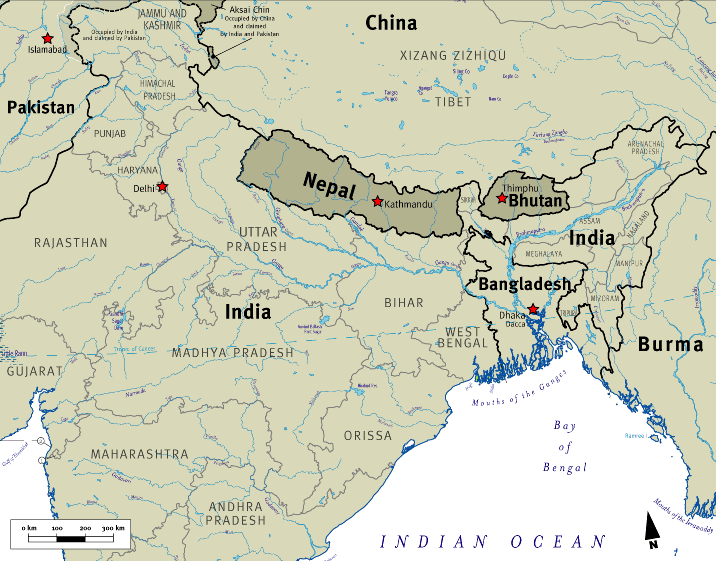
Before I give you the highlights from the WSJ, this is how we came to have tens of thousands of Bhutanese refugees in America.  After nearly 20 years of a stalemate between the tiny countries of Nepal and Bhutan, the United Nations basically got sick of running the camps in Nepal (unlike the Palestinian camps they have been running for 60+ years).

The Bhutanese refugees are ethnic Nepalis (mostly Hindus) who had lived in Bhutan for decades, but were expelled by the government trying to keep Bhutan for its religious (mostly Buddhists) and ethnic majority.  Nepal didn’t want them back either.

So, the US State Department (under Bush Asst. Secretary Ellen Sauerbrey) announced in 2007 that we would resettle the lions’ share of the refugees—60,000.  How we had any national interest in this situation is still beyond me, and I don’t know how we couldn’t have persuaded (with some international aid) those two small countries to work it out is troubling.

Honestly, I am so cynical now I believe we brought them here for cheap docile captive LEGAL laborers!  And, the resettlement contractors needed more bodies to resettle since they are paid by the head to bring ’em to your towns and cities.

And, maybe, just maybe, every ethnic group in the world is not going to melt in the mythical American melting pot! How would you like to have been protected and cared for in a camp for your whole life and then dropped into the heart of some American city—often in slum neighborhoods—and expected to make it!

Here is what the WSJ said (emphasis mine):

Before Menuka Poudel left the refugee camp in Nepal where she and her family sheltered for almost two decades after being displaced from Bhutan, the 18-year-old spoke to me about her hopes of pursing her college education and living the American dream.

Just over a year later, on Nov. 30, 2010, she was found by her mother hanging in an apartment in Phoenix Arizona, where her family had moved a month before. They had hoped to begin a new life under a resettlement program for Bhutanese refugees who had fled cultural and religious persecution.

Ms. Poudel, who was still breathing when her mother found her, was taken to St. Joseph’s Hospital and Medical Center in Phoenix where she was pronounced dead the following day, according to her family.

The young woman was one of over 30 Bhutanese refugees who have taken their lives in the U.S. since the summer of 2008 when the resettlement program began.

The problem of suicide in the community seems to be worsening: Since the start of Nov. 2013, seven Bhutanese refugees have killed themselves after resettling in the U.S.

[….]

As of Oct. 2013, there were around 71,000 Bhutanese refugees living in the U.S., according to the United Nations High Commissioner for Refugees.   [Originally we were only taking 60,000!—ed]

Mismatch between their idea of the American dream and the work they do in America (yeh, like working the line in a slaughter plant, if they even find a job!).

“Different psychological stressors occur at each stage of the resettlement process,” the study said. Once refugees are relocated, factors such as inability to find work, increased family conflict and symptoms of anxiety, depression and psychological distress are associated with suicidal thoughts, it added.

After resettlement, many young Bhutanese adults seem to find a mismatch between their idea of the American dream and the availability of work and quality of pay in the U.S. [What! We are told all the time that refugees are finding plenty of employment!—ed]

Those working with the Bhutanese community in America say there is a lack of support and provision to deal with the problem.

Organizations that resettled them are responsible for solving the suicide problem!  Hah!  Don’t hold your breath unless they get some (more!) taxpayer grants to do it.

Mr. Subedi [community volunteer in Philadelphia] says that to tackle the problem properly and highlight the issue among Bhutanese refugees, a U.S.-wide campaign by the organizations responsible for the resettlement program is required because the community in general is a self-contained and introverted culture.

We have written many posts on the Bhutanese resettlement.  Click here for all of them.  Here are our posts on Bhutanese suicide.  We are also putting this into our Health issues category as it relates to what we have been saying lately about refugee mental health problems.

Pittsburgh: Language barriers complicate refugee mental health treatment

A radio station reporter has discovered that Pittsburgh, PA has taken a lot of refugees in need of health treatment (including mental health treatment) that they may not be getting.  I’ll bet it’s happening where you live too, and partly because no one is available to translate for the mental health provider.

Esar Met was not normal in the camp. If a reporter figured that out, surely the US State Dept. knew.

The issue of cities and counties being responsible for appropriate interpreters came up the other day when we wrote about the Utah murder case where the Salt Lake City police must have figured any Burmese person would do to communicate with the newly arrested Esar Met.  Met is a Muslim, probably a Rohingya.  If he is Rohingya he speaks a Bengali dialect.

So, think about it, according to federal law, local governments are required to provide interpreters, not just in law enforcement cases, but when helping refugees get the appropriate medical treatment and in the hundreds of languages and dialects spoken by refugees.

Increasingly, we are hearing of mental health problems in the refugee community going unattended.  Add the cost of all this (treatment and translators) when determining if yours is to be a “welcoming” community for refugees.

The US State Department resettles refugees with mental problems as they surely knew Esar Met was not normal.

In the Utah rape/murder case an article in the Salt Lake Tribune in 2008 tells us this about the accused murderer (below).  Interestingly his mother did not want to come to America, but the US State Department figured Met would make a good addition to a multicultural America—help diversify Utah!

A challenged son » About a mile away, people at Mae La knew Esar Met was not normal. He often sat alone, talking and laughing to himself in the Muslim section of the camp where his family lived. Or he played with children years younger, shooting rubber bands in the camp’s narrow lanes, flicking marbles across the rocky, dirt patches that were his neighbors’ yards.

He was the eldest of eight children, but when he argued with his younger brothers, he was the one to cry.

As a boy, he could not remember what he learned in class. His mother, Ra He Mar, knew her son was not very smart and worried he might become even slower as he grew older. After he had to repeat second grade, she let him drop out of school.

Friends told her the family should find someone to “check his brain,” but Esar’s parents thought they couldn’t afford to have him tested.

I’m surprised there is no insanity plea in the case yet, maybe it is still coming.

Reporter Erika Beras: no system in place when refugees are new to the town.

Back to Pittsburgh where there is NO SYSTEM IN PLACE for dealing with mental health issues and language barriers.

From 90.5 WESA (NPR in Pittsburgh), thanks to reader Joanne:

Refugees to the region face a number of challenges, unfamiliarity with a different language is even more complicated when trying to obtain health care.

90.5 WESA Behavioral Health Reporter Erika Beras is embarking on a month-long series on the challenges refugees face in the Pittsburgh area to obtain health care. She says her interest in the topic was sparked by the high population of refugees in Pittsburgh.

“The refugee community here has grown and grown. And in that time I’d been talking to providers and I’d been in different situations at specialty courts and I keep hearing stories about different refugees who have come in with different issues and how people are struggling to meet their needs. They don’t quite have a system in place after the first few months a refugee is in town.”

Mental health challenges throughout the US:

As Project Editor for the Reporting on Health Collaborative, William Heisel also finds the system to be often unprepared or overwhelmed by immigrant mental health cases.

“When you’re talking about refugees, they’re coming with acute needs…Refugees are coming from conflicts that most of us will never experience and so they, in addition to having the trauma they need to get over, they have language barriers that make it difficult for them to access health care, many of them have low income status, they’re disconnected from their communities and so we are seeing this throughout the U.S. as a pretty big challenge.”

So who is responsible for refugees when they first arrive in Pittsburgh?   Catholic Charities, Jewish Family & Children Services and AJAPO (Acculturation for Justice, Access & Peace Outreach) (here).   Ms. Beras needs to start her investigation right here—with these three federal contractors.

For ambitious readers, this is our 190th post on health problems and refugees.  See Health issues category here.

Utah refugee trial opens with paramedic describing “horror scene”

Esar Met in the courtroom yesterday in Salt Lake City showed no emotion as translators kept him informed. http://m.sltrib.com/sltrib/mobile3/57363092-219/met-girl-police-trial.html.csp

Yesterday we reported that jury selection had begun in the trial of a Burmese refugee accused of raping and murdering a 7-year-old fellow refugee in 2008.

From KSL.com (Utah):

SALT LAKE CITY — Paramedic Andrew Maurer well remembers being led into a South Salt Lake basement where the body of 7-year-old missing girl had just been found.

“It was spooky that night,” he testified Tuesday, noting the dark basement and all the flashes going off from police investigators taking pictures. “It just looked like a horror scene to me.”

Maurer was one of 10 people who testified on the first day of the murder trial of Esar Met, which began nearly six years after the body of young Hser Ner Moo was found in Met’s basement bathroom.

Met, 26, is charged with aggravated murder and child kidnapping, first-degree felonies, in the March 31, 2008, death of the Burmese refugee girl. Her disappearance sparked a wide search effort, leading to the discovery of her body the next day.

Maurer and former South Salt Lake Fire Capt. Paul Rasmussen were called by police to the basement of Met’s apartment to confirm what detectives already suspected, that the little girl was dead.

“I observed a body that was in the bottom of a shower area. I was taken back by what I saw,” Rasmussen testified. “She had a lot of blood all over her.”

Hser’s hair was matted with blood. Rasmussen bent down to touch her skin and try to move her leg, and found she was “very, very cold.” Rigor mortis had already set in.

“I saw the girl in the bottom of the shower stall, curled up, face down, her head was away from us,” Maurer testified. “I could see that (her left arm) was bent back, broken.”

The testimony of the paramedics describing the gruesome crime scene was accompanied by graphic photos that were shown to the jury.

One of the things the defense is arguing is that Esar Met and the girl were friends and thus her DNA might have already been on his clothes (yeh, right!).  However, when you watch the news clip associated with this story, note that Met had only arrived at the apartment complex a month before, so one wonders how close a “friendship” this could have been.

I would love to know which resettlement contractor placed him, a Muslim, in a building housing Christian Karen people.  Do you think the contractor learned any lessons?

The murder happened in 2008, but the trial was delayed (and the death penalty removed) due to an “extreme language barrier”:

Though the girl was killed in March 2008, the case has stalled due to language barriers and the Burmese man’s struggles to understand the court process. Translators are being rotated during the court hearings, constantly interpreting to Met what others are saying. Several times during Tuesday’s hearing, attorneys were asked to slow down while questioning witnesses so the translator could relate everything to Met. Met wore a set of headphones as the interpreters spoke softly into a microphone so he could hear.

Because of the extreme language barrier the case has presented, Salt Lake County District Attorney Sim Gill decided not to seek the death penalty in the case.

We will keep you posted as the trial progresses.  Don’t hold your breath for any reference to the alleged murderer’s religion (is he a Rohingya Muslim?).

See this line in the Salt Lake Tribune report:

But defense attorneys painted a picture of Met’s relationship with his four roommates as cold — stemming from their being from different ethnic groups.

They just can’t say the ‘M’ word!